Reviews / Waykar
Waykar 80 Pint ENERGY STAR
A capable large-room unit wearing a number that invites exactly the wrong comparison. Both figures are real; only one of them can be set against another brand's.
#adThis page contains affiliate links. We earn a commission on qualifying purchases, at no cost to you, and it never changes a ranking. Full disclosure.

The short answer
Marketed as 80 pints a day with a 5,000 sq ft coverage claim. That headline is not a DOE-condition rating - on the scale used for cross-brand comparison this sits in the 50-pint class, alongside every other large portable on this site. It adds a 90-degree auto-swing louvre and a 30% humidistat floor.
The number problem, stated once and clearly
Since June 2019, US portable dehumidifiers have been rated at 65F and 60% relative humidity under the Department of Energy's test procedure. That is the number on a certified unit and the only one comparable across brands.
An 80-pint headline on a portable in 2026 is not that figure. It is a capacity measured at a hotter, wetter condition - the same convention that lets a crawl space unit be sold as 113 pints while its certified DOE rating is 36.33. Waykar's certified 50-pint entries compute to between 443 W and 488 W, which is where this machine actually lives. The full explanation.
Quick picks
| # | Product | Best for | Draw | Price |
|---|---|---|---|---|
| 1 |  Waykar 80 Pint ENERGY STAR DehumidifierSold on an 80-pint headline that is a saturation figure; the DOE rating behind it is in the same 50-pint class as everything else on this page. Waykar 80 Pint ENERGY STAR DehumidifierSold on an 80-pint headline that is a saturation figure; the DOE rating behind it is in the same 50-pint class as everything else on this page. | A large open basement or a shop floor | Not published |
Waykar
Waykar 80 Pint ENERGY STAR Dehumidifier
Best for: A large open basement or a shop floor
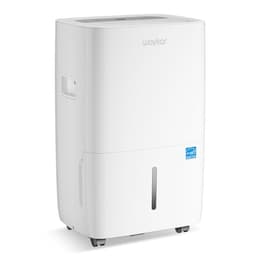
Sold on an 80-pint headline that is a saturation figure; the DOE rating behind it is in the same 50-pint class as everything else on this page.
Average draw
Not published
No published wattage. Waykar's certified 50-pint entries - JD026CE-150, CHWA150A/B/E, CTH150A/B and the YD-150 family - compute to between 443 W and 488 W. The identity of the exact certified model behind this listing is not stated, so the band stands in for a number.
What is good
- Sets to 30% RH, lower than most units will go
- 90-degree auto swing louvre, which genuinely helps in a long open basement
- Continuous drainage support and a larger tank than Waykar's smaller units
- Auto defrost for cold running
What is not
- The 80-pint headline is not a DOE rating and should not be compared against one
- No published wattage and no single certified model to map to
- 5,000 sq ft is the second-highest coverage claim in this registry
Who it is for
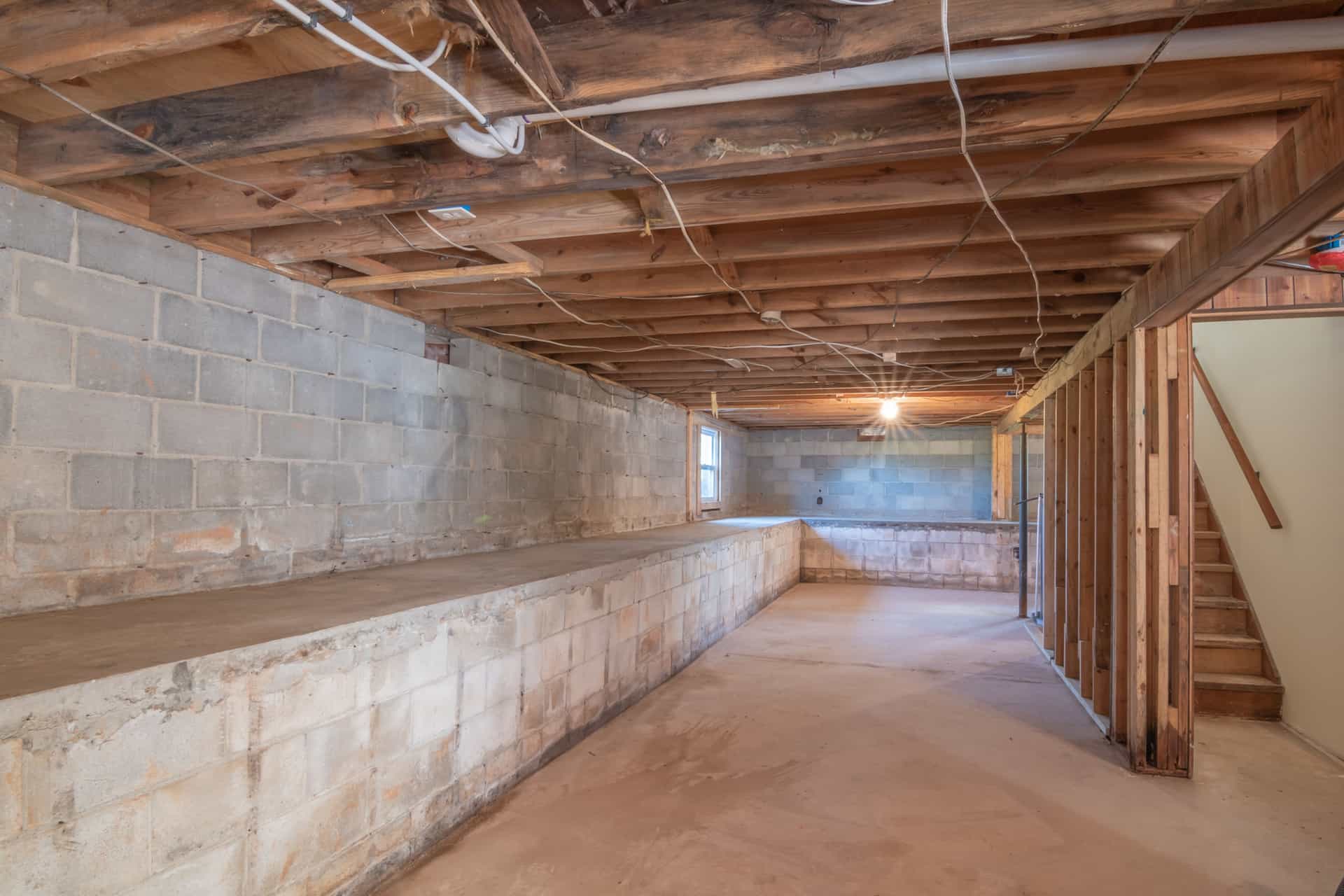
A large, open, genuinely wet basement or shop, where air movement matters as much as extraction.
Skip it if
Skip it if you are comparing it against a 50-pint unit on the strength of the 80. They are the same class of machine - the numbers are measured differently.
What it actually adds over a standard 50-pint
Two things, and one of them is genuinely uncommon:
- A 30% humidistat floor. Most units stop at 40%. Going lower matters when you are drying a space out after a leak rather than holding it at a comfortable level - and it is the same capability that makes Waykar's smaller units interesting. For everyday running you would set 45 to 50% and never use it.
- A 90-degree auto-swing louvre. In a long open basement, distributing the dry air rather than pointing it at one wall is a real advantage. Air movement is genuinely part of the job in a big space, and most portables just blow straight ahead.
- A 1.14 gallon tank, larger than Waykar's smaller units, though still a bucket you would rather not use.
The wattage, and the same model-number ambiguity
Waykar publishes no power figure, and as with its 34-pint unit it sells this capacity under several certified model numbers rather than one. The certified 50-pint Waykar entries - JD026CE-150, CHWA150A/B/E, CTH150A/B and the YD-150 family - compute to between 443 W and 488 W.
We do not know which of those this listing corresponds to, so the band is what we publish. It is worth noting that the low end of that band, 443 W, is among the better figures in the 50-pint class - the class median is 488 - so some Waykar units are genuinely efficient. We just cannot tell you whether this is one of them. How the wattages are computed.
The coverage claim is the second-highest we track
5,000 square feet. Only hOmeLabs claims more for a comparable machine, at 7,000 and 7,500. As always there is no test procedure behind any of these figures, and units with identical certified capacity claim numbers 1.9x apart.
Treat it as a signal that Waykar considers this a large-room unit - which it is - and size from the room's measured humidity instead. Why coverage claims are not a spec.
Who should buy something else
- Anyone whose drain is above the machine. Gravity only. No pump. Pump versus gravity.
- Anyone buying it because of the 80. If the headline is what sold you, the comparison you made was not a comparison. A standard 50-pint unit is the same class and often cheaper.
- Anyone in a small or partitioned space. The swing louvre and the capacity are for open volume. A bedroom wants a 30-pint unit. The 30-pint roundup.
- Anyone who needs a specific efficiency figure. The band spans 443 to 488 W and we cannot narrow it.
We have not run this unit, measured its noise, or verified the swing louvre's effect on distribution - which for a machine sold partly on air movement is the thing we would most like to have measured.
FAQ
Questions
Is the Waykar 80 pint really 80 pints?
How many watts does the Waykar 80 pint use?
Does the Waykar 80 pint have a pump?
Waykar 80 pint or a 50-pint from another brand?
Sources
Sources
- Waykar 80 Pints, 5,000 sq ft, 90-degree auto swing, 30-80% humidity control - manufacturer listing (retrieved 2026-09-01)
- ENERGY STAR Certified Dehumidifiers list - Waykar's certified 50-pint entries (JD026CE-150, CHWA150A/B/E, CTH150A/B, YD-150 family), 443-488 W computed (retrieved 2026-09-01)
- ENERGY STAR - Dehumidifier Testing and Capacity: the 65F / 60% RH test condition
Read next
- What the pint number on a dehumidifier actually meansThe 2019 DOE test change, the official conversion table, and the saturation rating that is 3x the certified one.
- The best 50-pint dehumidifiersSix 50-pint units and the certified data behind them: a 443-490 W range and a coverage claim that varies 1.9x.
- The square footage on the box is not a specificationIdentical certified capacity, coverage claims 1.9x apart. What the number is, and what to size from instead.
- Waykar 34 Pint ENERGY STARSets to 30% RH where most stop at 40 - and a 34-pint headline that is certified at 10.16.
- How many watts a dehumidifier actually usesWattage for every capacity class, computed from certified data, with the formula and the cross-check.