Best / Roundup
The best dehumidifiers for a bathroom
A bathroom is the hardest room in the house for a dehumidifier, and for a mechanical reason worth understanding before you spend anything.
#adThis page contains affiliate links. We earn a commission on qualifying purchases, at no cost to you, and it never changes a ranking. Full disclosure.
The short answer
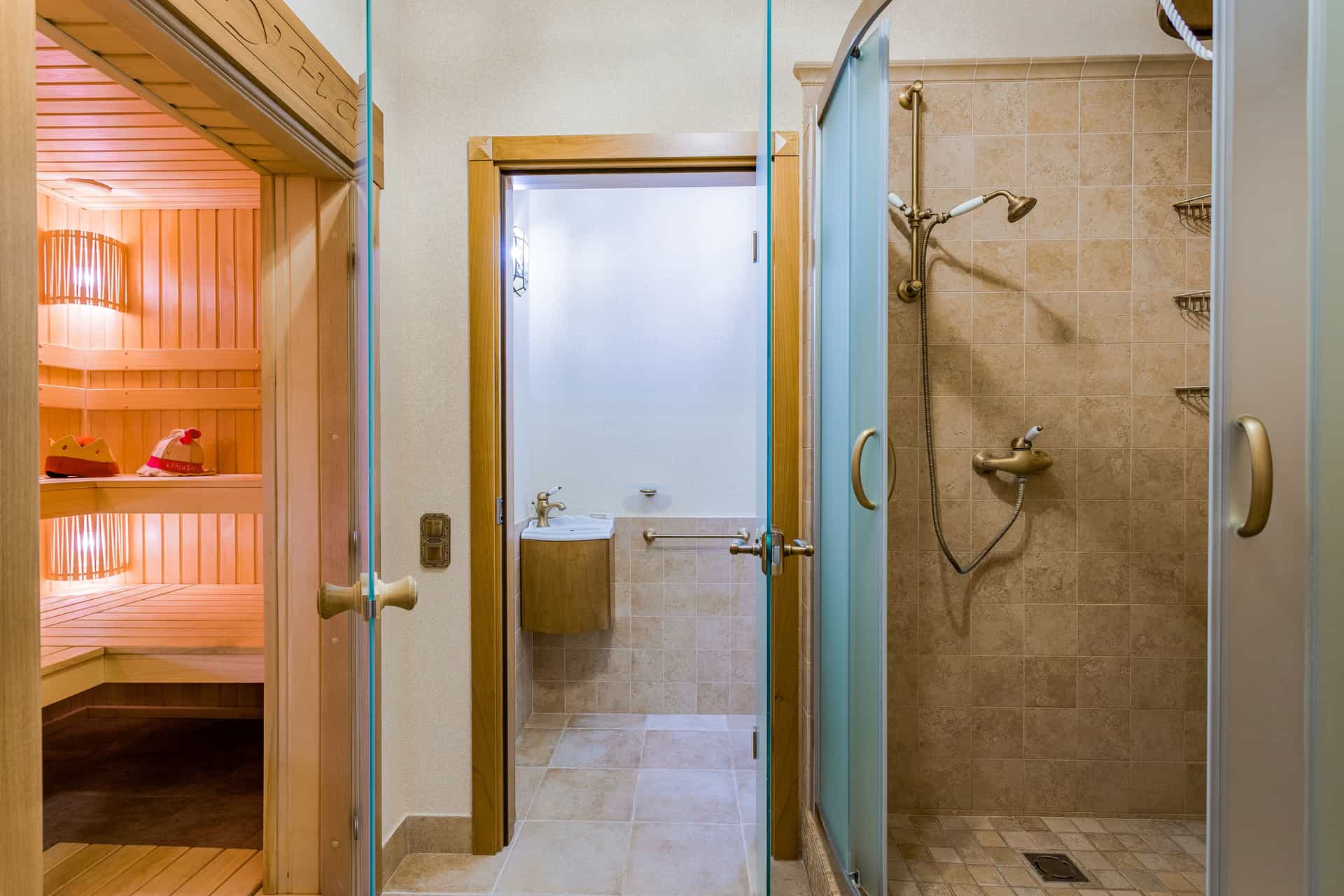
A bathroom needs a small unit, and a desiccant one if the room is cold. But the honest first answer is an extractor fan: it removes moisture from the building, where a dehumidifier condenses it into a tank in the same room. Use a dehumidifier where a fan is impossible or insufficient.
Why bathrooms defeat dehumidifiers
Every other room in the house has a slow, steady moisture load. A basement gains humidity through the slab and the walls, continuously, all summer. A humidistat-driven machine handles that beautifully: it runs, it reaches the target, it idles.
A bathroom does the opposite. A ten-minute shower puts a large amount of water vapor into a small volume almost instantly, condenses it onto every cold surface, and then the room sits cold and wet for hours. A dehumidifier cannot get ahead of the burst, and afterwards it is working against liquid water on tile rather than vapor in air - which it cannot reach at all.
That is why the honest ranking starts with an extractor fan. A fan vented outside removes the vapor from the building during the burst, which is exactly when it can be caught. A dehumidifier deals with what the fan missed.
When a dehumidifier is the right call
- No fan and no way to fit one - an internal bathroom in a rental, a basement shower, a boat.
- A fan that vents into a loft rather than outside, which is common and which moves the problem rather than solving it. Fix the duct if you can; run a dehumidifier if you cannot.
- Persistent damp between showers - black spotting in grout, a musty smell when the room has been shut. That is a background humidity problem the fan is not designed for, and it is what a small unit running continuously actually fixes. Musty smells, and where they come from.
- A cold bathroom. Below about 60F a compressor unit loses most of its output. This is the room where desiccant units earn their higher running cost.
Quick picks
| # | Product | Best for | Draw | Price |
|---|---|---|---|---|
| 1 |  Ivation 13 Pint Desiccant DehumidifierThe small desiccant, for spaces that are cold and enclosed rather than large and damp. Ivation 13 Pint Desiccant DehumidifierThe small desiccant, for spaces that are cold and enclosed rather than large and damp. | A cold closet, attic or bathroom | Not published | $269.99View on Amazon #ad Price as of October 16, 2026. How we are funded |
| 2 |  Pro Breeze Electric Mini DehumidifierA thermoelectric unit that removes about one pint a day, which is roughly one fiftieth of a 50-pint machine and needs saying out loud before anyone buys one for a basement. Pro Breeze Electric Mini DehumidifierA thermoelectric unit that removes about one pint a day, which is roughly one fiftieth of a 50-pint machine and needs saying out loud before anyone buys one for a basement. | A wardrobe, and honestly not much more | 23 W | $43.99View on Amazon #ad Price as of October 16, 2026. How we are funded |
| 3 |  hOmeLabs 8 Pint DehumidifierA real compressor unit at a size where most competitors sell thermoelectric toys, which makes it the smallest machine here that actually removes meaningful water. hOmeLabs 8 Pint DehumidifierA real compressor unit at a size where most competitors sell thermoelectric toys, which makes it the smallest machine here that actually removes meaningful water. | A closet, a boat, or a single small room | Not published | $174.99View on Amazon #ad Price as of October 16, 2026. How we are funded |
| 4 |  Ivation 19 Pint Desiccant DehumidifierThe only technology here that does not lose to the cold, which makes it the right answer in exactly the rooms where a compressor is the wrong one. Ivation 19 Pint Desiccant DehumidifierThe only technology here that does not lose to the cold, which makes it the right answer in exactly the rooms where a compressor is the wrong one. | An unheated garage in winter | Not published | $299.99View on Amazon #ad Price as of October 16, 2026. How we are funded |
Ivation
Ivation 13 Pint Desiccant Dehumidifier
Best for: A cold closet, attic or bathroom
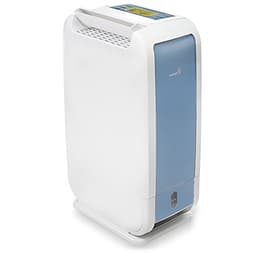
The small desiccant, for spaces that are cold and enclosed rather than large and damp.
Average draw
Not published
The listing states 470 W on high and 280 W on low at 120 V. Those are mode ratings rather than an average draw, and desiccant units are not represented in the ENERGY STAR certified list, so there is no certified figure to compute an average from.
What is good
- Works in the cold, unlike every compressor unit on this site
- Small and light enough to move between an attic and a closet
- Continuous drain hose supported at this size, which the compressor minis do not offer
- Quiet - no compressor to cycle
What is not
- 270 sq ft is a genuinely small room
- No published wattage
- Warms the space it dries
Who it is for
Closets, attics, bathrooms and RV interiors in a cold climate.
Skip it if
Skip it if you need real capacity. Thirteen pints a day is a maintenance machine, not a recovery machine.
Pro Breeze
Pro Breeze Electric Mini Dehumidifier
Best for: A wardrobe, and honestly not much more
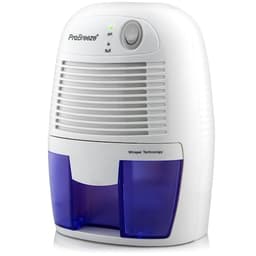
A thermoelectric unit that removes about one pint a day, which is roughly one fiftieth of a 50-pint machine and needs saying out loud before anyone buys one for a basement.
Average draw
23 W
Stated on the listing as 23 W. Thermoelectric units are outside the ENERGY STAR dehumidifier program, so this is the maker's figure rather than a computed one. A Peltier module draws far less than any compressor here - but less power and less water are the same fact, not two selling points.
What is good
- Genuinely silent - there is no compressor to cycle on and off next to your head
- Small and light enough to sit on a shelf inside a wardrobe
- Auto shut-off when the 17 oz tank fills
- Cheap enough to buy two for two closets
What is not
- About one pint a day. A 50-pint unit removes fifty times as much
- Stops working below 41F, which rules out the unheated spaces people usually buy it for
- No drain option - the tank is the only outlet
Who it is for
A wardrobe, a gun safe, a bathroom cabinet, or a single small enclosed space with a musty smell.
Skip it if
Skip it for any room. This is the single most common mis-purchase in the category: it is not a small dehumidifier, it is a different class of device, and no number of them adds up to a basement machine.
hOmeLabs
hOmeLabs 8 Pint Dehumidifier
Best for: A closet, a boat, or a single small room
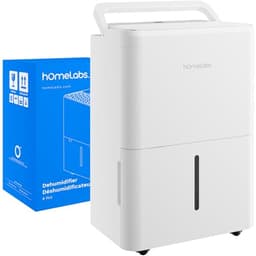
A real compressor unit at a size where most competitors sell thermoelectric toys, which makes it the smallest machine here that actually removes meaningful water.
Average draw
Not published
Not published. The certified 8-13 pint class runs 92-128 W with a median of 105 W across 39 models, and the median unit in that class uses 117 kWh a year.
What is good
- A compressor at 8 pints, so it keeps working where a Peltier unit stops
- Roughly a fifth of the power of a 50-pint machine
- Wi-Fi and auto shut-off, unusual at this size
- Small enough to sit in a wardrobe or a berth
What is not
- 1,800 sq ft coverage for 8 DOE pints is not a serious claim
- Bucket only - no continuous drain at this size
- Not ENERGY STAR certified, so no published IEF
Who it is for
Closets, gun safes, boat cabins, and single small rooms where a large machine is absurd.
Skip it if
Skip it for any room where you can feel the damp. Eight pints a day is a maintenance dose, not a cure.
Ivation
Ivation 19 Pint Desiccant Dehumidifier
Best for: An unheated garage in winter
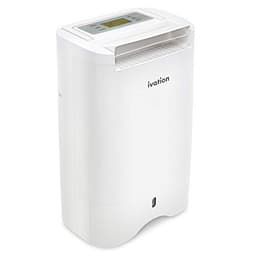
The only technology here that does not lose to the cold, which makes it the right answer in exactly the rooms where a compressor is the wrong one.
Average draw
Not published
Not published, and desiccant units are not represented in the ENERGY STAR certified dehumidifier list, which covers compressor portables and whole-home units. Desiccant machines use a resistive heater to regenerate the rotor, so their draw is roughly flat with temperature rather than falling off with it - the opposite trade to a compressor. We will not print a number for this one without a published source.
What is good
- Keeps extracting at temperatures where a compressor's coil ices and its output collapses
- No compressor, so it is quieter and lighter than any refrigerant unit here
- Continuous drain hose included
- Warm, dry exhaust, which is useful in a cold room and a nuisance in a warm one
What is not
- No published wattage, and desiccant units are generally less efficient than compressors at normal room temperature
- 410 sq ft coverage - this is a small-space machine
- It heats the room, which is the last thing a summer basement needs
Who it is for
Unheated garages, boats, sheds and crawl spaces in winter, where a compressor unit spends its time defrosting.
Skip it if
Skip it for a warm summer basement. Above roughly 65F a compressor removes more water per kWh, and the desiccant's waste heat works against you.
Where to put it, and the safety part
A dehumidifier is a mains appliance. In a bathroom that is a real constraint, not a formality: it needs to be well clear of the bath and shower, on a socket appropriate for the room, and somewhere it cannot be knocked into water. Where the room has no suitable socket at all, the answer is not an extension cord - it is a passive absorbent tub, or an electrician.
Beyond that, the practical points are ordinary. Leave clearance around the intake and exhaust. If the unit has a continuous drain and the room has a shower tray or a floor drain, use it - tanks at this size hold hours, not days. And close the door while it runs; a small machine trying to dry the whole floor of the house will never get there.
What we would skip
Any dehumidifier bought instead of fixing the extractor fan
A bathroom's moisture arrives in a ten-minute burst and then sits there. An extractor fan removes it from the building. A dehumidifier condenses it back into a tank inside the same room, using electricity, more slowly. Where a working fan is possible, it is the better machine and it is not close.
A full-size compressor unit in a small bathroom
It will not fit anywhere sensible, it will be loud in a tiled room that reflects every sound, and mains-powered appliances near a bath or shower are a genuine electrical-safety consideration. This is the one room where the biggest unit is clearly the wrong one.
How we picked
- Small enough to live somewhere permanent in a bathroom without being in the way.
- Capable of running in a room that is cold most of the day and hot for ten minutes - which favors desiccant over compressor.
- Continuous drain, if there is anywhere to put it, because tanks at this size are tiny.
- Not placed anywhere a mains appliance should not be. Every unit here needs a socket well clear of the bath and shower zones.
- Not tested by us.
We did not test these units. The full criteria and their weighting are on the methodology page.
FAQ
Questions
Do I need a dehumidifier if I have an extractor fan?
Will a dehumidifier stop mold in a bathroom?
Is a desiccant dehumidifier better for a bathroom?
Can I leave a dehumidifier running in a bathroom all day?
Sources
Sources
Read next
- Desiccant or compressor?11.8 pints against 2.9 at 41F, and the crossover point where the obvious answer stops being right.
- The best dehumidifiers for a bedroomFour options for a room you sleep in, ranked on cycling behavior rather than a decibel figure nobody measured.
- What to set it to45 to 50 percent, why lower is only more expensive, and the setting that doubles your bill.
- What size dehumidifier do I need?A four-step method that uses measured humidity instead of the square-footage claim on the box.
- The best dehumidifiers for condensationCondensation is a cold surface meeting a high dew point. Four units, and the cases where glass is the real problem.
- The best dehumidifiers for a closetOunces a day, not pints - and the first specification is whether there is an outlet at all.