Best / Roundup
The best dehumidifiers for a closet
This is the one place in the house where the small silent machines everyone else dismisses are the correct answer - and where a 50-pint basement unit would be actively absurd.
#adThis page contains affiliate links. We earn a commission on qualifying purchases, at no cost to you, and it never changes a ranking. Full disclosure.
The short answer
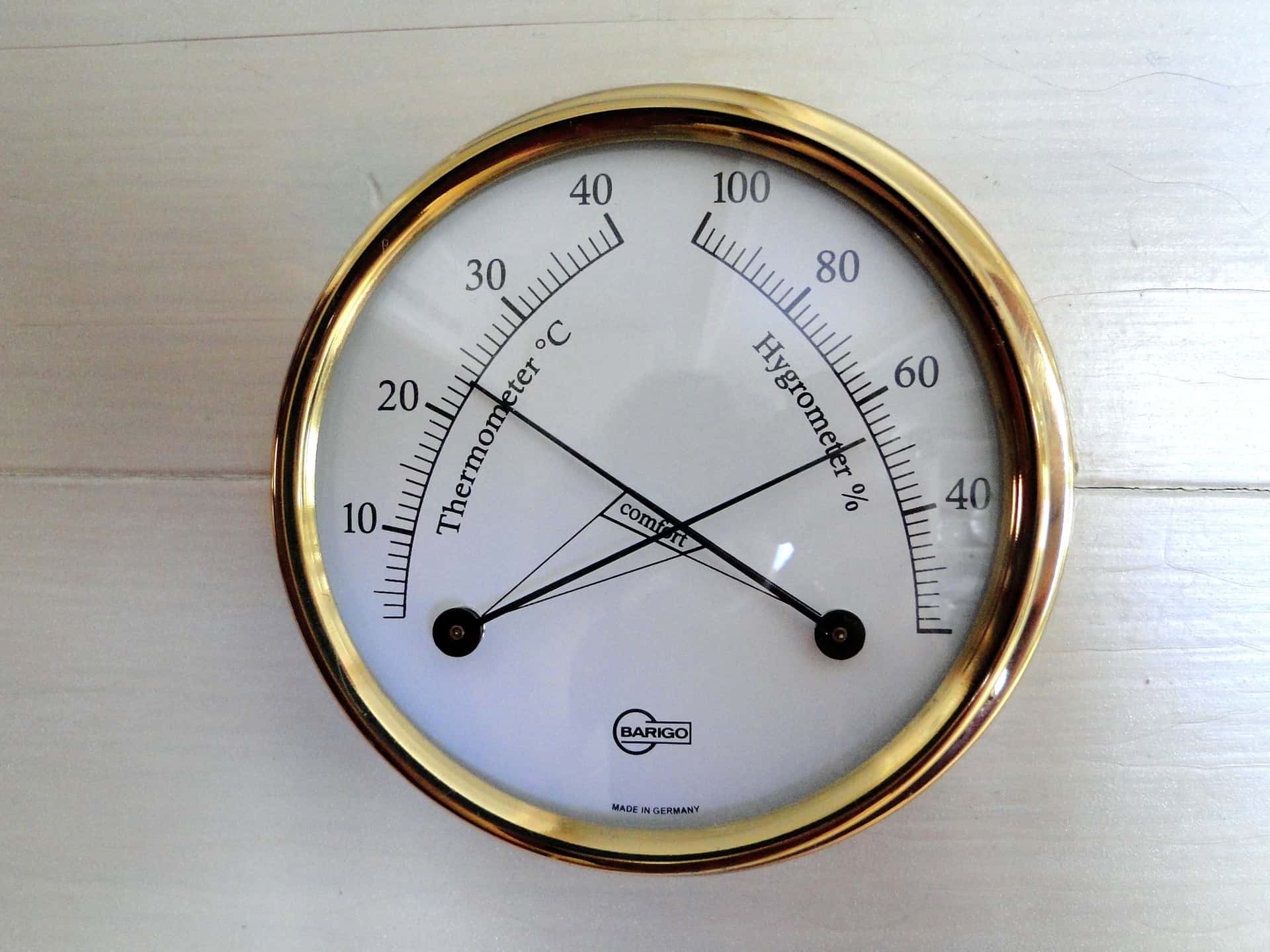
A closet needs a machine rated in ounces a day, not pints. Thermoelectric minis remove on the order of a pint a day, which is the right scale for an enclosed space and roughly a fiftieth of what a basement unit does. The real constraints are physical size, whether there is an outlet, and how often you are willing to empty a small tank.
The scale problem, stated once
1 vs 50
Pints per day: a thermoelectric mini against a basement unit
The Pro Breeze mini on this page is rated at 17 ounces a day - about one pint. A 50-pint compressor unit removes fifty. Both numbers are correct; they describe machines for completely different jobs.
Everywhere else on this site, a thermoelectric unit is the wrong answer and we say so bluntly. A closet is the exception. The moisture load in a sealed two-foot-deep space behind a door is tiny, and a machine that removes a pint a day is genuinely sufficient - while a compressor unit would cycle briefly, cost more to run, make noise in a bedroom and not fit anyway.
Three questions that decide this entirely
- 1Is there an outlet? This comes first because it eliminates most of the market. A great many closets have no power, and stringing an extension lead into a fabric-filled space to run an appliance unattended is not something we are going to recommend. No outlet means either a passive rechargeable desiccant tub, which we do not sell, or conditioning the room outside the closet instead.
- 2How big is the space, really? A reach-in wardrobe, a walk-in closet and a cedar storage room are three different problems. Anything you can walk into is closer to a small room and should be sized like one - a 13 to 20-pint unit rather than a mini.
- 3Is the closet cold? Closets against an outside wall or over an unheated space run colder than the room, and a thermoelectric unit's output falls as the temperature drops. In a genuinely cold closet a desiccant machine is the one that keeps working.
Why closets go damp in the first place
Three mechanisms, and the fix is different for each:
- Still air against a cold surface. A closet on an exterior wall has no air movement and a wall that runs several degrees below room temperature. Water comes out of the air onto that wall, and the clothes against it are the first thing to smell. Here a dehumidifier genuinely helps - and so does leaving a gap between hanging clothes and the wall.
- Moisture brought in. Damp coats, gym kit, towels, shoes worn in rain. This is a behavior problem more than a humidity one, and no machine outruns a wet coat hung up daily.
- A whole-house humidity problem that shows up here first, because a closet is the least ventilated volume in the building. If the rest of the house reads above 60 percent, the closet is a symptom and the house is the patient. Whole-home options.
The tank is the constraint you will actually feel
None of these machines can be plumbed - there is nowhere for a hose to go - so everything comes down to how often you open the door and carry a small reservoir to a sink.
A mini collecting a pint a day with a pint-and-a-bit reservoir is a daily chore in a genuinely damp closet and a weekly one in a marginal case. That is the honest trade: the machine that fits is the machine you have to attend to. A larger unit sitting outside the closet with the door left ajar needs emptying far less often, and is worth considering if the closet is the only problem in an otherwise dry house. Capacity versus tank size.
Quick picks
| # | Product | Best for | Draw | Price |
|---|---|---|---|---|
| 1 |  Pro Breeze Electric Mini DehumidifierA thermoelectric unit that removes about one pint a day, which is roughly one fiftieth of a 50-pint machine and needs saying out loud before anyone buys one for a basement. Pro Breeze Electric Mini DehumidifierA thermoelectric unit that removes about one pint a day, which is roughly one fiftieth of a 50-pint machine and needs saying out loud before anyone buys one for a basement. | A wardrobe, and honestly not much more | Not published | $42.99View on Amazon #ad Price as of September 14, 2026. How we are funded |
| 2 |  hOmeLabs 8 Pint DehumidifierA real compressor unit at a size where most competitors sell thermoelectric toys, which makes it the smallest machine here that actually removes meaningful water. hOmeLabs 8 Pint DehumidifierA real compressor unit at a size where most competitors sell thermoelectric toys, which makes it the smallest machine here that actually removes meaningful water. | A closet, a boat, or a single small room | Not published | |
| 3 |  Ivation 13 Pint Desiccant DehumidifierThe small desiccant, for spaces that are cold and enclosed rather than large and damp. Ivation 13 Pint Desiccant DehumidifierThe small desiccant, for spaces that are cold and enclosed rather than large and damp. | A cold closet, attic or bathroom | Not published | $269.99View on Amazon #ad Price as of September 14, 2026. How we are funded |
Pro Breeze
Pro Breeze Electric Mini Dehumidifier
Best for: A wardrobe, and honestly not much more
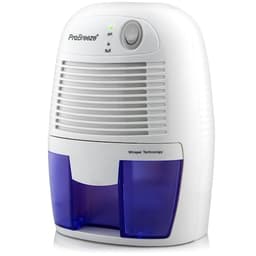
A thermoelectric unit that removes about one pint a day, which is roughly one fiftieth of a 50-pint machine and needs saying out loud before anyone buys one for a basement.
Average draw
Not published
Not published, and thermoelectric units are outside the ENERGY STAR dehumidifier program entirely. Peltier modules of this size draw far less than any compressor here - but less power and less water are the same fact, not two selling points. It removes 17 oz a day, which is 1.06 pints.
What is good
- Genuinely silent - there is no compressor to cycle on and off next to your head
- Small and light enough to sit on a shelf inside a wardrobe
- Auto shut-off when the 17 oz tank fills
- Cheap enough to buy two for two closets
What is not
- About one pint a day. A 50-pint unit removes fifty times as much
- Stops working below 41F, which rules out the unheated spaces people usually buy it for
- No drain option - the tank is the only outlet
Who it is for
A wardrobe, a gun safe, a bathroom cabinet, or a single small enclosed space with a musty smell.
Skip it if
Skip it for any room. This is the single most common mis-purchase in the category: it is not a small dehumidifier, it is a different class of device, and no number of them adds up to a basement machine.
hOmeLabs
hOmeLabs 8 Pint Dehumidifier
Best for: A closet, a boat, or a single small room
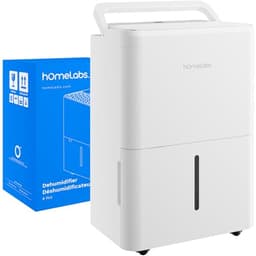
A real compressor unit at a size where most competitors sell thermoelectric toys, which makes it the smallest machine here that actually removes meaningful water.
Average draw
Not published
Not published. The certified 8-13 pint class runs 92-128 W with a median of 105 W across 39 models, and the median unit in that class uses 117 kWh a year.
What is good
- A compressor at 8 pints, so it keeps working where a Peltier unit stops
- Roughly a fifth of the power of a 50-pint machine
- Wi-Fi and auto shut-off, unusual at this size
- Small enough to sit in a wardrobe or a berth
What is not
- 1,800 sq ft coverage for 8 DOE pints is not a serious claim
- Bucket only - no continuous drain at this size
- Not ENERGY STAR certified, so no published IEF
Who it is for
Closets, gun safes, boat cabins, and single small rooms where a large machine is absurd.
Skip it if
Skip it for any room where you can feel the damp. Eight pints a day is a maintenance dose, not a cure.
Ivation
Ivation 13 Pint Desiccant Dehumidifier
Best for: A cold closet, attic or bathroom
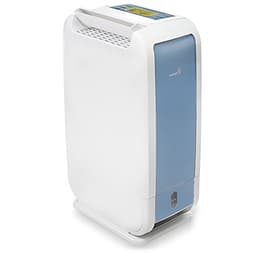
The small desiccant, for spaces that are cold and enclosed rather than large and damp.
Average draw
Not published
Not published. Not represented in the ENERGY STAR certified list, which does not cover desiccant units.
What is good
- Works in the cold, unlike every compressor unit on this site
- Small and light enough to move between an attic and a closet
- Continuous drain hose supported at this size, which the compressor minis do not offer
- Quiet - no compressor to cycle
What is not
- 270 sq ft is a genuinely small room
- No published wattage
- Warms the space it dries
Who it is for
Closets, attics, bathrooms and RV interiors in a cold climate.
Skip it if
Skip it if you need real capacity. Thirteen pints a day is a maintenance machine, not a recovery machine.
What these cost to run
Almost nothing, and it is the one place in this category where running cost is genuinely not a decision factor. A thermoelectric mini draws on the order of 20 to 25 watts against a 50-pint compressor unit's 488. Running one continuously for a month costs roughly a dollar at the US average residential rate of 18.34 cents per kWh.
The desiccant option is the exception - it uses a heater to regenerate its rotor, so it is the least efficient technology per liter removed, and it warms the space. In a cold closet that is a small bonus. Running cost by size.
What we did not do
We have not run these units, measured a closet, or tested how long a tank lasts in a real wardrobe. Extraction figures are the manufacturers' own, quoted with the listing dated. Where a maker publishes no wattage we say so rather than estimating. How we work.
What we would skip
A full-size compressor unit
It will not fit, it will not be quiet, and it is sized for a moisture load hundreds of times larger than a closet produces. A 50-pint machine in a wardrobe is not thorough, it is a category error.
Any unit chosen on its coverage claim
Small units carry square-footage claims too, and they are just as unmoored from any test procedure as the big ones. A closet is measured in cubic feet of still air behind a door, which no coverage figure describes.
A powered machine in a closet with no outlet
Running an extension lead into a closet to power a dehumidifier is a genuinely bad idea in a space full of fabric. If there is no outlet, the honest answer is a passive rechargeable desiccant tub - which we do not sell and are not going to pretend otherwise - or conditioning the room the closet opens onto.
How we picked
- Sized to the actual moisture load of an enclosed space, which is ounces a day rather than pints.
- Judged on physical footprint first: a machine that does not fit is not a candidate.
- Noise weighted heavily, because closets sit inside bedrooms and hallways.
- Tank capacity against realistic extraction, because none of these can be plumbed.
- Not tested by us. Every figure is quoted from the manufacturer or computed from certified data, with the source named.
We did not test these units. The full criteria and their weighting are on the methodology page.
FAQ
Questions
What size dehumidifier do I need for a closet?
Do mini dehumidifiers actually work in a closet?
How do I dehumidify a closet with no outlet?
Why does my closet smell musty?
How often do you empty a closet dehumidifier?
Sources
Sources
- Pro Breeze Electric Mini Dehumidifier, 215 sq ft, 17 oz per day - manufacturer listing (retrieved 2026-09-01)
- ENERGY STAR Certified Dehumidifiers product list - the certified compressor class figures used for comparison (retrieved 2026-09-01)
- EIA Electric Power Monthly, Table 5.6.A, June 2026 - the electricity rate used
Read next
- Pro Breeze Electric Mini17 ounces a day, silent, and the single most mis-bought product in the category.
- The best dehumidifiers for a musty smellThe smell is the exhaust of a damp problem. Four units for the room producing it, and the search that comes first.
- Capacity and tank size are not the same numberHours to a full bucket, by tank size and capacity - the number no manufacturer prints.
- Desiccant or compressor?11.8 pints against 2.9 at 41F, and the crossover point where the obvious answer stops being right.
- The best dehumidifiers for a bedroomFour options for a room you sleep in, ranked on cycling behavior rather than a decibel figure nobody measured.