Best / Roundup
The best dehumidifiers for dust mites and allergies
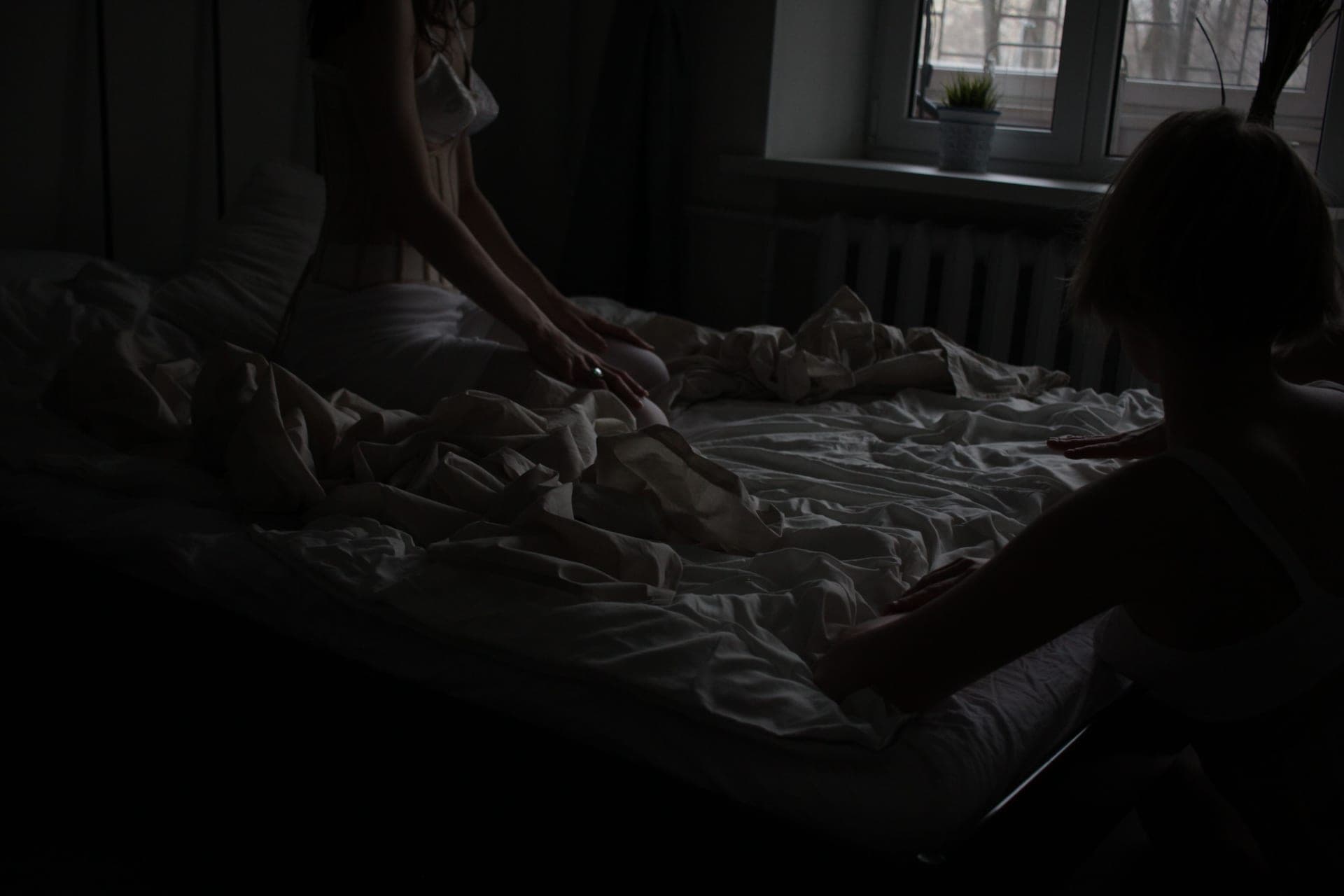
Dust mites do not drink. They absorb moisture from the air, which makes indoor humidity the one household variable that decides whether a population survives - and the one a machine can actually change.
#adThis page contains affiliate links. We earn a commission on qualifying purchases, at no cost to you, and it never changes a ranking. Full disclosure.
The short answer
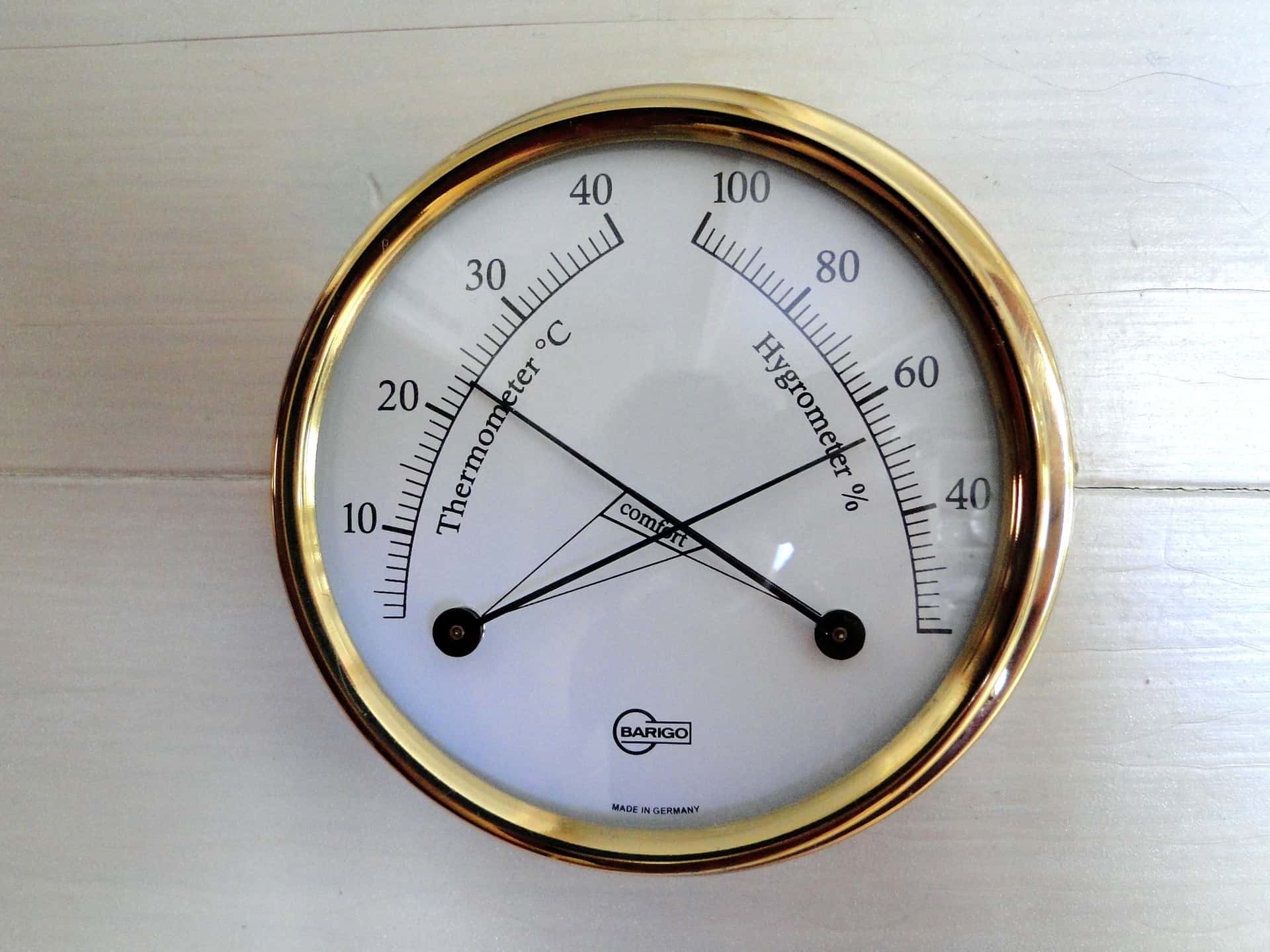
Dust mites absorb water vapor from the air rather than drinking, so they cannot survive prolonged low humidity. EPA-funded research recorded live mite counts falling from 401.2 per gram of dust to 6.7 per gram in homes that held indoor relative humidity below 51 percent. The EPA's own asthma guidance is to maintain 30 to 50 percent relative humidity.
The number this whole page rests on
401.2 to 6.7
Live dust mites per gram of dust, in homes held below 51% relative humidity
EPA-funded research project, Factors Controlling the Dust Mite Population in the Indoor Environment. Count at the start of the study against the count at its end in October 1999, in homes that maintained indoor relative humidity under 51 percent. Quoted, not computed by us.
That is a 98 percent reduction from one environmental change, and it is why humidity gets talked about so much in this context. A mite has no way to drink. It takes up water vapor directly from the air through its cuticle, and below roughly half-saturation it loses more than it can take in.
The EPA's asthma guidance states the practical version: "Maintain low indoor humidity, ideally between 30-50% relative humidity." The same page notes that body parts and droppings from dust mites can trigger asthma in people allergic to them, and that inhaling mold spores can trigger an attack in people sensitive to mold. Both of those are humidity-dependent.
Where the humidity actually needs to be held
Not the whole house - the rooms where the exposure happens. Mite allergen concentrates where people spend hours in contact with soft material, which in practice means:
- The bedroom. Eight hours a night, face-down on the largest piece of upholstered furniture you own. This is the room that matters most and it is where a quiet machine earns its price.
- The living room, specifically the sofa and any carpet.
- Any carpeted room over a cool slab or an unconditioned crawl space, because the floor stays cold and the humidity at carpet level runs higher than the reading at chest height.
- Not the basement, unless it is finished and occupied. Conditioning it is still worth doing for the house as a whole, but it is not where the exposure is.
One measured caution: a reading taken standing up in the middle of a room is not the reading at the surface of a mattress or the base of a carpet, which is usually higher. Set the target a few points lower than you think you need.
How we judged these picks
Holding a comfortable room at 45 percent is a genuinely different job from pulling a wet basement down from 75, and the machine that wins one loses the other.
- 1Noise, first. A compressor cycling on and off four feet from your head is the complaint nobody anticipates. Nobody in this category publishes comparable decibel figures and we have measured none, so we judge it mechanically: fewer, longer cycles beat many short ones, which favors a correctly sized unit over an oversized one. Quiet dehumidifiers.
- 2The humidistat, second. This job is about holding a set point for months, not about maximum extraction. A unit that cycles cleanly around 45 percent is worth more here than one with twenty more pints of capacity.
- 3Capacity third, and smaller than you would pick for a basement. A bedroom at 58 percent needs a 30-pint machine, not a 50-pint one. Oversizing means short cycles, more noise and more money.
- 4Running cost fourth. This runs through every humid month, so the gap between 318 W and 488 W compounds - about $11 a month at twelve hours a day. Calculate yours.
Quick picks
| # | Product | Best for | Draw | Price |
|---|---|---|---|---|
| 1 |  hOmeLabs 32 Pint DehumidifierThe one hOmeLabs unit with a named entry in the ENERGY STAR list, so it is the one where the running cost is a published figure rather than a class estimate. hOmeLabs 32 Pint DehumidifierThe one hOmeLabs unit with a named entry in the ENERGY STAR list, so it is the one where the running cost is a published figure rather than a class estimate. | A bedroom that is damp but not wet | 318 W | $234.99View on Amazon #ad Price as of September 14, 2026. How we are funded |
| 2 |  Honeywell Smart Wi-Fi 30 Pint Dehumidifier (TP50AWKN)The anti-spill design is the actual selling point here, and it is a better reason to buy than the voice control the listing leads with. Honeywell Smart Wi-Fi 30 Pint Dehumidifier (TP50AWKN)The anti-spill design is the actual selling point here, and it is a better reason to buy than the voice control the listing leads with. | A room you want to run on a schedule | Not published | $308.53View on Amazon #ad Price as of September 14, 2026. How we are funded |
| 3 |  Midea Cube 50 Pint DehumidifierThe only unit here that solves the real basement problem, which is not capacity but where the water goes when you are not standing next to it. Midea Cube 50 Pint DehumidifierThe only unit here that solves the real basement problem, which is not capacity but where the water goes when you are not standing next to it. | A basement you visit once a month | 487 W | $303.56View on Amazon #ad Price as of September 14, 2026. How we are funded |
| 4 |  hOmeLabs 8 Pint DehumidifierA real compressor unit at a size where most competitors sell thermoelectric toys, which makes it the smallest machine here that actually removes meaningful water. hOmeLabs 8 Pint DehumidifierA real compressor unit at a size where most competitors sell thermoelectric toys, which makes it the smallest machine here that actually removes meaningful water. | A closet, a boat, or a single small room | Not published |
hOmeLabs
hOmeLabs 32 Pint Dehumidifier
Best for: A bedroom that is damp but not wet
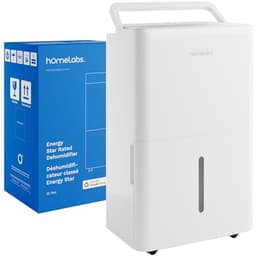
The one hOmeLabs unit with a named entry in the ENERGY STAR list, so it is the one where the running cost is a published figure rather than a class estimate.
Average draw
318 W
Computed from the ENERGY STAR certified entry hOmeLabs HME0089: 32.46 pt/day at IEF 2.01 L/kWh. This is the only hOmeLabs capacity in this registry with a named certified entry, which is why it is the only one carrying a number rather than a band.
What is good
- 318 W against the 50-pint class median of 488 W - about 35% less to run, hour for hour
- Named in the ENERGY STAR certified list, so its IEF is public
- Quiet enough for a bedroom in a way that a 50-pint compressor generally is not
- Wi-Fi and auto shut-off at a small-unit price
What is not
- 32 DOE pints is genuinely less water than 50 - undersizing a wet basement costs more than the machine saved
- Gravity drainage only
- 4,500 sq ft coverage for 32 pints is another claim to ignore
Who it is for
A bedroom, a home office, or a small basement that is humid rather than actively wet.
Skip it if
Skip it if the floor is ever damp to the touch or the walls sweat. That is a 50-pint problem, and a 32-pint machine will run continuously and still lose.
Honeywell
Honeywell Smart Wi-Fi 30 Pint Dehumidifier (TP50AWKN)
Best for: A room you want to run on a schedule
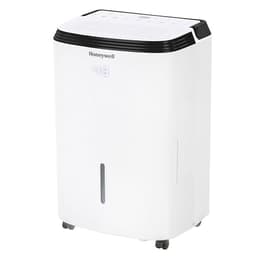
The anti-spill design is the actual selling point here, and it is a better reason to buy than the voice control the listing leads with.
Average draw
Not published
Not published. Honeywell's certified 32-pint entries, the TPFIT32AWK and TPFIT32WK, compute to 318 W at 32.46 pt/day and IEF 2.01. This is a different product line, so that figure sits in the note rather than in the spec table.
What is good
- Anti-spill bucket, which matters more than any app feature if the machine lives upstairs
- Scheduling through the app, so it can run when electricity is cheapest
- ENERGY STAR certified at a small-room capacity
- Alerts on the phone rather than only a beep in an empty room
What is not
- No published wattage, and the certified list carries a different Honeywell line
- 3,000 sq ft for 30 pints is an optimistic claim
- Depends on Honeywell's app remaining supported
Who it is for
An upstairs room or a rental where a spilled bucket is somebody's ceiling, and where scheduling is genuinely useful.
Skip it if
Skip it if the machine will sit on concrete next to a drain. You would be paying for spill protection and scheduling that a floor drain makes irrelevant.
Midea
Midea Cube 50 Pint Dehumidifier
Best for: A basement you visit once a month
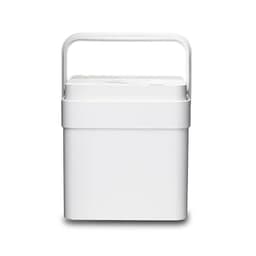
The only unit here that solves the real basement problem, which is not capacity but where the water goes when you are not standing next to it.
Average draw
487 W
Computed from the ENERGY STAR certified entry for Midea MAD50S1QWT-A, the 50 pt / 4,500 sq ft Cube without a pump: 49.67 pt/day at IEF 2.01 L/kWh. Midea's own US product page confirms MAD50S1QWT-A is this configuration. Midea publishes no wattage on the Amazon listing or on that page.
What is good
- The body separates, so the tank half can sit lower than the compressor half and the hose gets a genuine downhill run
- Certified at 49.67 pt/day, which is a real 50-pint machine rather than a saturation number
- IEF 2.01 L/kWh puts it exactly on the median for the 50-pint class - neither a bargain nor a penalty
- Wi-Fi that tells you it has stopped, which is the only smart feature that matters in a basement
What is not
- No pump, so the drain has to run downhill the whole way
- Midea publishes no wattage anywhere, so the 487 W above is computed rather than quoted
- The 4,500 sq ft coverage claim is marketing, not a spec - see the sizing guide
Who it is for
Someone with a floor drain, a sump, or a window well lower than the machine, who wants to set it once and stop thinking about it.
Skip it if
Skip it if the only drain in the room is higher than the unit. Without a pump, gravity is the entire drainage system, and no setting fixes an uphill hose.
hOmeLabs
hOmeLabs 8 Pint Dehumidifier
Best for: A closet, a boat, or a single small room
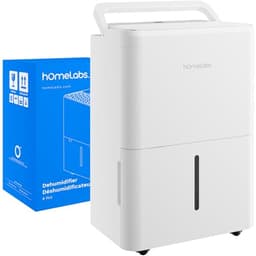
A real compressor unit at a size where most competitors sell thermoelectric toys, which makes it the smallest machine here that actually removes meaningful water.
Average draw
Not published
Not published. The certified 8-13 pint class runs 92-128 W with a median of 105 W across 39 models, and the median unit in that class uses 117 kWh a year.
What is good
- A compressor at 8 pints, so it keeps working where a Peltier unit stops
- Roughly a fifth of the power of a 50-pint machine
- Wi-Fi and auto shut-off, unusual at this size
- Small enough to sit in a wardrobe or a berth
What is not
- 1,800 sq ft coverage for 8 DOE pints is not a serious claim
- Bucket only - no continuous drain at this size
- Not ENERGY STAR certified, so no published IEF
Who it is for
Closets, gun safes, boat cabins, and single small rooms where a large machine is absurd.
Skip it if
Skip it for any room where you can feel the damp. Eight pints a day is a maintenance dose, not a cure.
What holding a bedroom at 45 percent costs
A 30 to 32-pint unit in a bedroom
(318 W / 1000) x 12 h x $0.1834/kWh = $0.70 per day
0.318
kWh per hour
$21.30
per month, 12 h/day
$42.61
per month, 24 h/day
Rate is the US residential average of 18.34 cents/kWh from the EIA Electric Power Monthly, June 2026. Yours will differ - use the calculator.
The trap is buying the smaller machine to save that difference and then undersizing the room. An undersized unit never reaches its target, never cycles off and draws full power around the clock - which comes to more than a correctly sized larger unit costs on a twelve-hour schedule, with the room still damp. 30 versus 50 pint.
What a dehumidifier will not do here
- It does not remove allergen already in the mattress or carpet. Killing a mite population does not clear what it has already deposited. That is a cleaning and encasement job, and it is the half of the problem a machine cannot touch.
- It does not work at a setting you never reach. Most units stop at a 40 percent floor, which is fine - the target here is around 45 - but a machine that cannot hold its set point in your room is doing nothing.
- It does nothing about pollen or pet dander, which are airborne particles rather than humidity-dependent populations. Dehumidifier versus air purifier.
- It will not fix a room that keeps being re-humidified from an unsealed crawl space, an adjoining bathroom with no fan, or an open window in July.
What we did not do
We have not tested these units, we have not counted mites, and we make no claim of our own about health outcomes. The research figure above is the EPA's, quoted with its project record linked. The humidity band is the EPA's. The wattages are computed from the ENERGY STAR certified list with the arithmetic shown. How we work.
What we would skip
A dehumidifier bought instead of seeing a doctor
This is a page about humidity control, not a medical page. We are not qualified to tell you what is causing your symptoms and we are not going to pretend otherwise. What we can tell you is what the EPA publishes about humidity and dust mites, with the source linked, so you can take it to someone who is qualified.
An air purifier as a dust mite solution
Mite allergen is heavy. It settles into mattresses, carpet and upholstery rather than staying airborne, which is why a filter that cleans the air does comparatively little about it. Humidity control attacks the population itself. The two solve different problems - a purifier is genuinely useful for airborne particles.
Running a bedroom at 30 percent because lower must be better
The EPA band is 30 to 50 percent, and the bottom of it is not a target to aim for. Below about 40 percent a room starts to feel dry - throat, sinuses, static - for no additional benefit, and it costs more to hold. Set 45 and leave it alone.
How we picked
- Judged on holding a stable humidity in an occupied room, which is a different job from drying a basement out.
- Noise weighted heavily, because three of the four rooms that matter here are bedrooms.
- Capacity from the post-2019 DOE rating, matched to room size rather than to a coverage claim.
- Average draw computed from the model's certified capacity and Integrated Energy Factor.
- Not tested by us, and we make no health claim of our own. Every figure is quoted or computed, with the source named.
We did not test these units. The full criteria and their weighting are on the methodology page.
FAQ
Questions
What humidity kills dust mites?
Do dehumidifiers help with allergies?
Where should I put a dehumidifier for dust mites?
What size dehumidifier do I need for a bedroom?
Is a dehumidifier or an air purifier better for dust mites?
Sources
Sources
- US EPA, Asthma Triggers: Gain Control - "Maintain low indoor humidity, ideally between 30-50% relative humidity", and dust mite droppings and body parts as asthma triggers
- US EPA research project, Factors Controlling the Dust Mite Population in the Indoor Environment - live mite counts of 401.2/g falling to 6.7/g in homes maintaining indoor RH below 51 percent
- US EPA - A Brief Guide to Mold, Moisture and Your Home: the 30-50 percent band
- ENERGY STAR Certified Dehumidifiers product list - certified capacity and IEF for every unit on this page (retrieved 2026-09-01)
Read next
- The best dehumidifiers for a bedroomFour options for a room you sleep in, ranked on cycling behavior rather than a decibel figure nobody measured.
- Dehumidifier or air purifier?One removes water and no particles; the other removes particles and no water. Not substitutes.
- What to set it to45 to 50 percent, why lower is only more expensive, and the setting that doubles your bill.
- The quietest dehumidifiersFour quiet options, and a plain statement of what we can say about noise without having measured it.
- 30-pint versus 50-pint170 watts and $11 a month apart, with one failure mode that makes the cheaper machine cost more.