Compare / Comparison
Dehumidifier or just open a window?
The free option sometimes works and sometimes actively floods the room, and which one you get depends on a number almost nobody checks. Here is how to tell before you open anything.

The short answer
Opening a window dries a room only if the outside air contains less water per unit of air than the inside air. On a warm humid day it usually contains more, so ventilating a cool basement in summer adds water rather than removing it. In cold dry weather, opening a window works and costs nothing.
The mistake, and why it is so easy to make
Relative humidity is relative. It tells you how close air is to saturation at its own temperature, not how much water it is carrying. Two bodies of air can both read 70% and hold completely different amounts of water, because warm air can hold far more before it saturates.
That is the whole trap. You check a weather app, see the outside humidity is about the same as your basement, open a window for the day - and the basement gets damper. The outside air was warmer, so 70% out there was a great deal more actual water than 70% down there.
Why a basement is the worst case
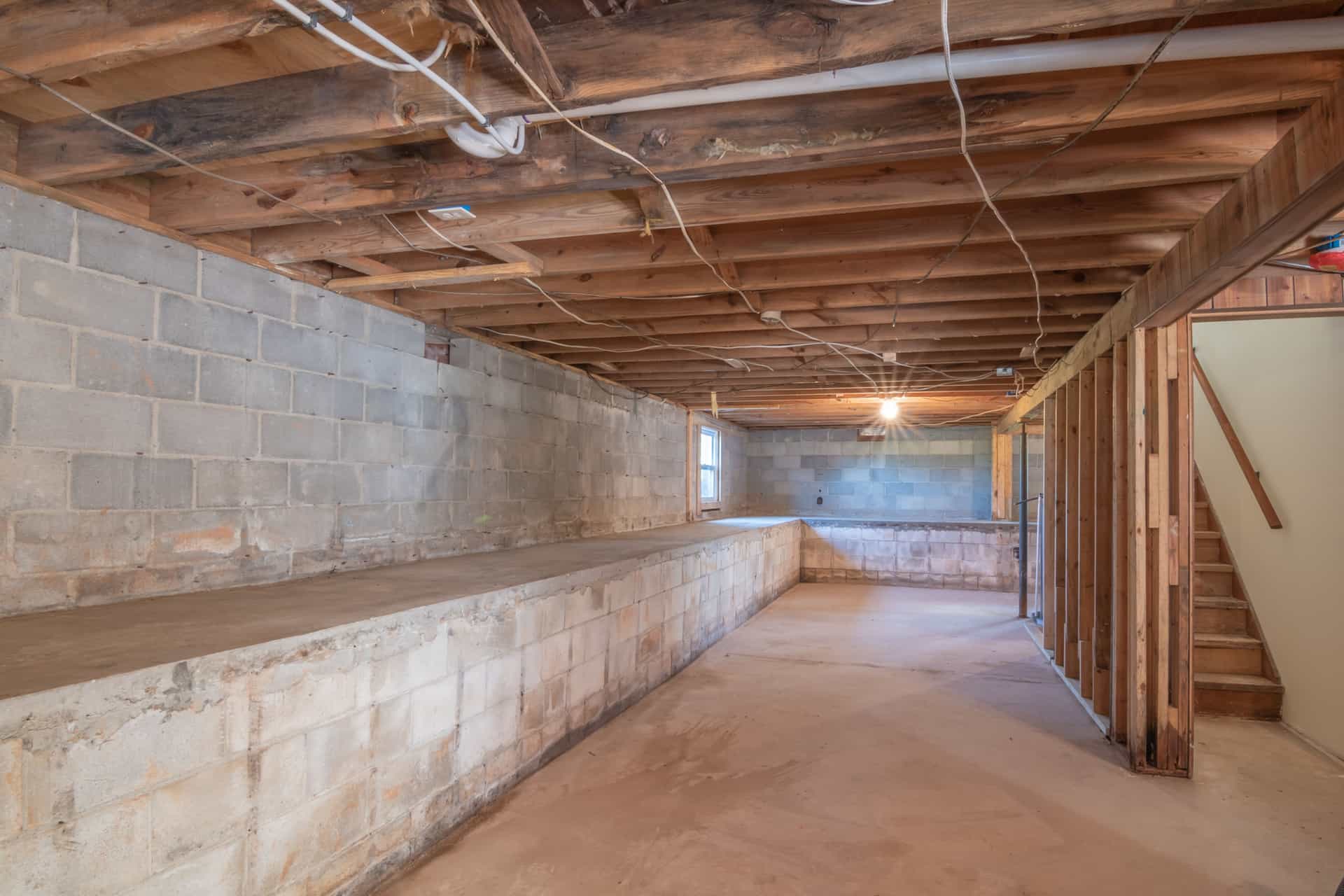
A below-grade room is cool - often 60 to 68F through the summer - because the ground around it is. Warm outdoor air at, say, a 68F dew point meets those cool surfaces, and the water it is carrying condenses out onto them. That is the same mechanism that puts beads on a cold glass, applied to your walls and floor - and on the glass itself.
So the summer instinct - it smells musty down here, let some air in - is precisely backwards. The room feels stuffy because it is humid, and the fresh air is what is making it humid.
When opening a window genuinely wins
- Cold, dry outdoor air. Winter air has a low dew point almost everywhere in the US. Bringing it in and warming it drops the relative humidity substantially - which is why houses get dry in winter rather than damp.
- A dry spell after rain has passed. When the outdoor dew point drops below your indoor one, ventilating is free and fast.
- Removing a burst of moisture at the source. A bathroom after a shower, a kitchen while something boils. That is a large amount of water in a small volume, and getting it out of the building beats condensing it back out of the air. An extractor fan is the better version of this. Bathrooms.
- Air quality rather than humidity. Ventilation does things a dehumidifier cannot - it dilutes odors, CO2 and indoor pollutants. If that is the problem, ventilate.
When the dehumidifier wins
- Any humid warm-weather day, which in most of the US is the entire season you actually have a damp problem.
- Any space that has to stay dry regardless of the weather - a store room, a workshop with tools, a crawl space. A machine holds a setpoint; a window follows the outdoors.
- Anywhere unattended. A humidistat runs the machine when the room needs it. Nobody opens and closes a window on a dew-point schedule.
- Where the window is also a security or rain problem, which is most basements and most ground-floor rooms.
| Outdoor dew point vs indoor | Season, typically | Do this |
|---|---|---|
| Lower outside | Winter, dry spells | Open the window. It is free and it works |
| About the same | Shoulder seasons | Ventilating achieves little either way; run the machine if the room is above 60% |
| Higher outside | Summer, and after rain | Keep it shut and run the dehumidifier. Ventilating adds water |
Compare dew points, not relative humidities. Two rooms at the same relative humidity and different temperatures hold different amounts of water.
The combination that wastes the most money
Running a dehumidifier with a window open. The machine will work exactly as designed, remove water continuously, never reach its target, and cost you the full running figure every month - because the room it is drying is connected to the outdoors, which is effectively infinite.
A 50-pint unit running against an open window
(488 W / 1000) x 12 h x $0.1834/kWh = $1.07 per day
0.488
kWh per hour
$32.69
per month, 12 h/day
$65.38
per month, 24 h/day
Rate is the US residential average of 18.34 cents/kWh from the EIA Electric Power Monthly, June 2026. Yours will differ - use the calculator.
That figure assumes the machine reaches its target and idles. With a window open it never idles, so the real number is the 24-hour column. Sealing the space is free and it is the single biggest lever most people have. Running it for less.
What neither of them fixes
Water coming in. If the floor is wet after rain, if there is a white bloom on the block, or if a patch is damp regardless of the weather, that is ingress. Ventilation will not stop it and a dehumidifier will run against it forever. Gutters, grading, a working sump and a plumber come first; the machine is for the humidity that remains afterwards.
FAQ
Questions
Is it better to open a window or use a dehumidifier?
Does opening windows reduce humidity in a basement?
Should I open windows while running a dehumidifier?
Why does my basement smell musty when I air it out?
Can I use a fan instead of a dehumidifier?
Sources
Sources
- US EPA, Mold Course Chapter 2 - indoor relative humidity should be kept below 60 percent, ideally between 30 and 50 percent
- ENERGY STAR Certified Dehumidifiers product list - the 50-pint class median draw used in the cost figure (retrieved 2026-09-01)
- EIA Electric Power Monthly, Table 5.6.A, June 2026 - the electricity rate used
Read next
- Running it for lessSix changes ranked by what they save, three that save nothing, and one that costs you money.
- It will not get below 60 percentFive causes ranked by likelihood, with the actual fault last because it is the least likely.
- The best dehumidifiers for a basementFive basement units ranked on drainage first, with computed running costs and a unit we would not buy.
- What to set it to45 to 50 percent, why lower is only more expensive, and the setting that doubles your bill.
- Dehumidifier or air conditioner?Same physics, different plumbing - and why an air conditioner cannot dry a 62-degree basement.
- The best dehumidifiers for condensationCondensation is a cold surface meeting a high dew point. Four units, and the cases where glass is the real problem.