Drainage / Guide
Hoses, threads and adapters
Most US portables use a garden hose thread, which is convenient and is also why so many drain lines kink. There are better options and they cost almost nothing.
The short answer
Most US portable dehumidifiers have a threaded drain port that accepts a standard garden hose fitting. Garden hose works but is stiff and kinks. Clear vinyl tubing sized to the port, or a short washing-machine hose, routes better and lets you see a blockage.
What is on the machine
Almost every household portable sold in the US uses the same arrangement: a threaded plastic port on the back or side, behind the bucket recess, sized for a standard garden hose fitting. Frigidaire's own listing describes it as a threaded outlet to which you can connect a garden hose, with a cap that covers it so the machine drains into its tank when the cap is in place.
Crawl space and commercial units are different. They generally use a barbed spigot for flexible tubing, and several ship with a length of it, because those machines are installed rather than plugged in and nobody expects a garden hose in a crawl space.
The four hose options, ranked
| Option | Good | Bad | Use when |
|---|---|---|---|
| Clear vinyl tubing | Soft, no coil memory, you can see a blockage forming | Needs the right internal diameter, can crush under a heavy object | Almost always. This is the default recommendation |
| Washing-machine hose | Proper fittings, will not kink, cheap and everywhere | Stiff, so it needs a fairly direct route | Short runs with a straightforward path |
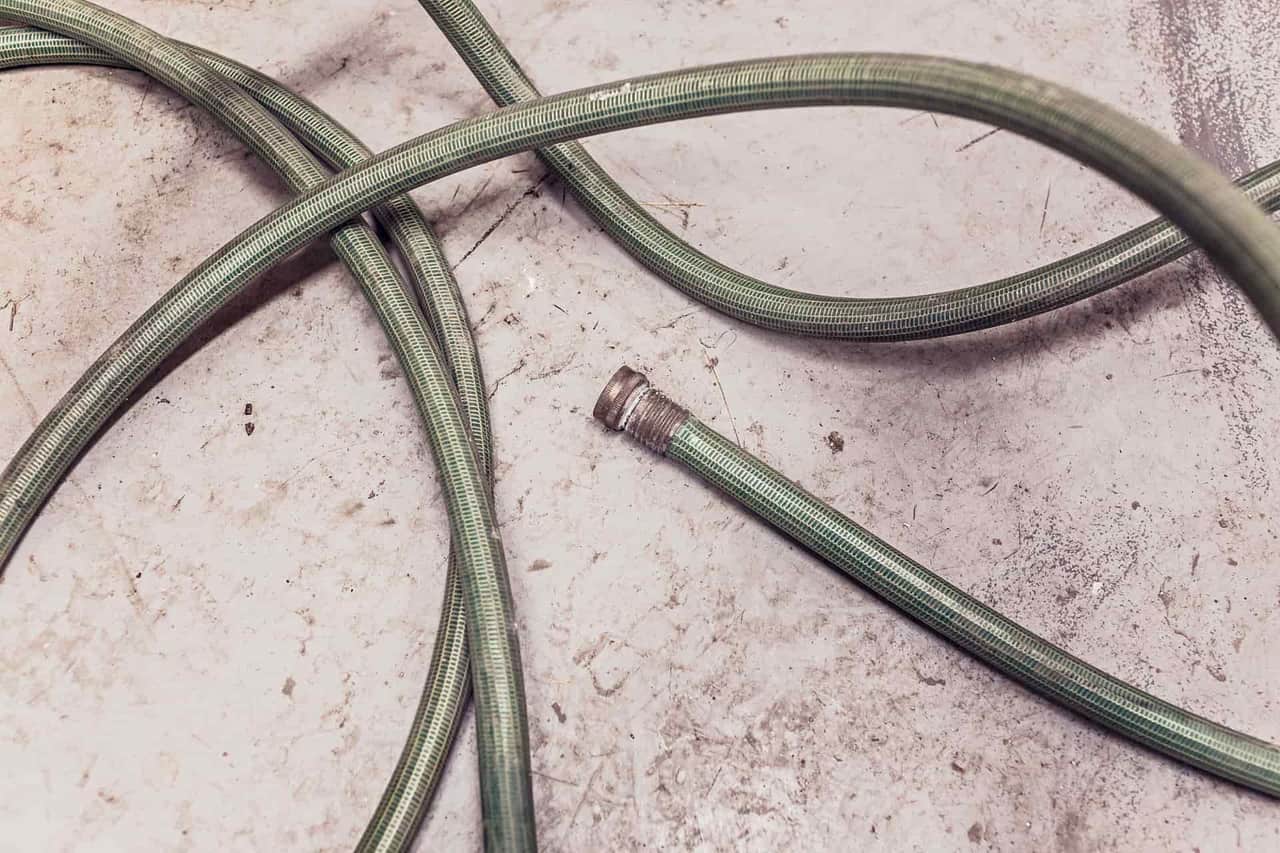
| Garden hose | Threads straight on, you probably own one | Coil memory pulls it into a loop, which becomes a sag, which blocks the line | You have nothing else and the run is short and straight |
| The hose that came in the box | Correct fitting guaranteed, correct length assumed | Often too short for a good route, which tempts a bad one | It reaches your drain with fall to spare |
Adapters worth having
- Garden hose thread to barb. Turns the machine's threaded port into a spigot for vinyl tubing. This is the single most useful fitting in this category and costs very little.
- A hose washer. The port is plastic and hand-tightened. A washer stops the slow weep that otherwise appears a few weeks in.
- A short female-to-female coupler, if you are joining two lengths. Keep joins to a minimum - each one is a place a leak starts and a place a blockage catches.
Adapters that create problems
- Quick-release garden fittings. Fine on a tap, poor here: they add height, they add a joint, and the release collar can be knocked open.
- Anything that reduces the internal diameter. A narrow section is where a blockage forms, and there is nothing pushing the water through but gravity.
- A pump discharge routed into a smaller hose than the pump shipped with. Condensate pumps are specified with their hose - narrowing it raises the back pressure and reduces the reach the maker published.
- Elbows, at all. Every 90-degree turn is a place a hose kinks. Use a gentle curve with a wide radius instead.
Getting the length right
Shorter is better, and the temptation is always to leave the excess coiled behind the machine. Do not - a coil is a sag by another name, and it is exactly where the water will sit. Measure the route, add a few inches, and cut.
The exception is a pump model, where the manufacturer's published reach is measured with a specific hose. GE states 16 feet of hose for its 50-pint pump model; running a longer one than the maker specified takes you outside a figure they were willing to publish, which is a poor place to be when the alternative is a puddle.
FAQ
Questions
What size hose does a dehumidifier use?
Can I extend the drain hose on a dehumidifier?
Why does my drain hose leak at the connection?
Sources
Sources
Read next
- Setting up a continuous drainA five-step method, the plastic cap that causes most failures, and the sag that causes the rest.
- The continuous drain has stopped workingSeven checks in order of likelihood, and the two that solve most cases without a tool.
- How far will the pump actually push it?Three of seven pump models state a lift. What they say, and how to plan when a maker states nothing.
- There is water on the floorUnplug it, then six causes in order. Most are the drain rather than the machine.
- The best dehumidifiers with a drain hoseFive units with a usable gravity port, and the one check that decides whether a hose works in your room.