Drainage / Roundup
The best dehumidifiers with a drain hose
Continuous drainage is the difference between an appliance and a chore. A gravity hose does it with no moving parts, no failure mode and no extra cost - as long as one condition is true about your room.
#adThis page contains affiliate links. We earn a commission on qualifying purchases, at no cost to you, and it never changes a ranking. Full disclosure.
The short answer
A gravity drain hose works when the outlet is lower than the machine's drain port the entire way. It needs no power, has no moving parts and costs nothing to run, which makes it more reliable than a pump. If the only drain in the room is higher than the unit, gravity is not an option and you need a pump model instead.
The one rule, and how to check it in two minutes
Water falls. That is the entire specification. The drain port on most portable dehumidifiers sits somewhere between six and fourteen inches off the floor, and everything downstream of it has to be lower than that, continuously, all the way to wherever the water is going.
Before buying anything, walk the route. Stand where the machine will go, look at where the water needs to end up, and ask whether the line falls the whole way. Three things disqualify a route:
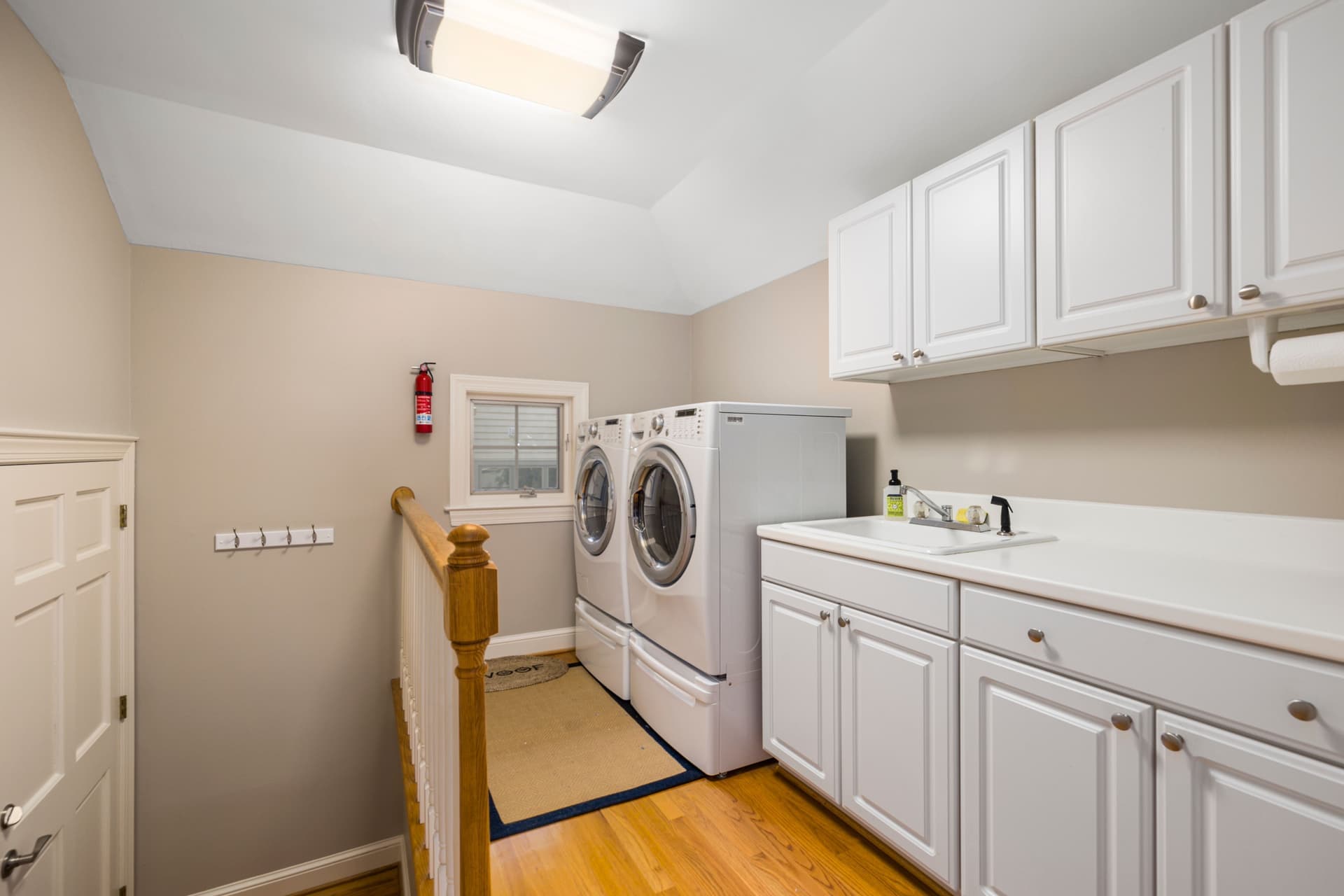
- The destination is higher than the port. A laundry sink, a utility tub on legs, a window well. Gravity cannot do it.
- The route dips and rises again. A hose that sags into a low spot and climbs back out holds a slug of water, and that standing section is where algae grows and where the blockage eventually forms. A route that falls and then climbs even once is not a gravity route.
- There is no destination at all. Some finished basements genuinely have no floor drain, no sump and no accessible standpipe. That is a pump-and-a-long-run problem, or a bucket problem.
Why a hose beats a pump when it is possible
| Gravity hose | Built-in pump | |
|---|---|---|
| Works with the drain above the unit | No | Yes - this is the entire reason to pay for one |
| Moving parts that can fail | None | A pump, a float switch and a check valve |
| Extra running cost | None worth measuring | Negligible - it runs for seconds at a time |
| Purchase premium | None | Real, and varies by model |
| Failure mode | Blocked or kinked line, which you can see | Pump stops; the unit falls back to the bucket, or overflows |
| Noise | Silent | A brief cycle whenever the reservoir fills |
| Published reach figures | Not applicable | Almost nobody publishes lift or run. Pump lift and distance |
The pump is not a premium feature; it is a workaround for a room that cannot do gravity. Where gravity is possible, it is the better engineering and the cheaper purchase.
That is the honest hierarchy this site keeps returning to: pump beats gravity beats bucket only in the sense of removing constraints. On reliability, gravity wins outright, because nothing in it can break.
What to check on the listing before you buy
- 1Is a hose included, or is it a separate purchase? Some makers include one; most describe a port and leave you to buy the hose. Neither is wrong, but it changes what arrives in the box.
- 2What thread does the port take? Most portables use a standard garden-hose thread, which means any hardware-store hose fits. A few use a push-fit spigot sized for a specific internal diameter. Hose sizes and adapters.
- 3Where on the body is the port? Low and at the back is best. A port high on the side reduces the fall you have to work with before you have even started.
- 4Does the bucket still work as a fallback? It should - if the hose blocks, a machine that keeps collecting into the tank has bought you time instead of putting water on the floor.
- 5Is it a pump model you are paying extra for and will never use? If your route falls, it is.
Quick picks
| # | Product | Best for | Draw | Price |
|---|---|---|---|---|
| 1 |  Midea Cube 50 Pint DehumidifierThe only unit here that solves the real basement problem, which is not capacity but where the water goes when you are not standing next to it. Midea Cube 50 Pint DehumidifierThe only unit here that solves the real basement problem, which is not capacity but where the water goes when you are not standing next to it. | A basement you visit once a month | 487 W | $303.56View on Amazon #ad Price as of September 14, 2026. How we are funded |
| 2 |  hOmeLabs 50 Pint DehumidifierA capable 50-pint machine attached to the least plausible coverage claim on this page, and the gap between those two facts is worth understanding before you buy anything in this category. hOmeLabs 50 Pint DehumidifierA capable 50-pint machine attached to the least plausible coverage claim on this page, and the gap between those two facts is worth understanding before you buy anything in this category. | Reading a coverage claim critically | Not published | $269.99View on Amazon #ad Price as of September 14, 2026. How we are funded |
| 3 |  Waykar 80 Pint ENERGY STAR DehumidifierSold on an 80-pint headline that is a saturation figure; the DOE rating behind it is in the same 50-pint class as everything else on this page. Waykar 80 Pint ENERGY STAR DehumidifierSold on an 80-pint headline that is a saturation figure; the DOE rating behind it is in the same 50-pint class as everything else on this page. | A large open basement or a shop floor | Not published | |
| 4 |  hOmeLabs 32 Pint DehumidifierThe one hOmeLabs unit with a named entry in the ENERGY STAR list, so it is the one where the running cost is a published figure rather than a class estimate. hOmeLabs 32 Pint DehumidifierThe one hOmeLabs unit with a named entry in the ENERGY STAR list, so it is the one where the running cost is a published figure rather than a class estimate. | A bedroom that is damp but not wet | 318 W | $234.99View on Amazon #ad Price as of September 14, 2026. How we are funded |
| 5 |  AlorAir Sentinel HD55 Crawl Space DehumidifierThe clearest example on this site of why the number on the box is not the number that matters: sold as 113 pints, certified at 36.33. AlorAir Sentinel HD55 Crawl Space DehumidifierThe clearest example on this site of why the number on the box is not the number that matters: sold as 113 pints, certified at 36.33. | A crawl space you cannot stand up in | 344 W |
Midea
Midea Cube 50 Pint Dehumidifier
Best for: A basement you visit once a month
The only unit here that solves the real basement problem, which is not capacity but where the water goes when you are not standing next to it.
Average draw
487 W
Computed from the ENERGY STAR certified entry for Midea MAD50S1QWT-A, the 50 pt / 4,500 sq ft Cube without a pump: 49.67 pt/day at IEF 2.01 L/kWh. Midea's own US product page confirms MAD50S1QWT-A is this configuration. Midea publishes no wattage on the Amazon listing or on that page.
What is good
- The body separates, so the tank half can sit lower than the compressor half and the hose gets a genuine downhill run
- Certified at 49.67 pt/day, which is a real 50-pint machine rather than a saturation number
- IEF 2.01 L/kWh puts it exactly on the median for the 50-pint class - neither a bargain nor a penalty
- Wi-Fi that tells you it has stopped, which is the only smart feature that matters in a basement
What is not
- No pump, so the drain has to run downhill the whole way
- Midea publishes no wattage anywhere, so the 487 W above is computed rather than quoted
- The 4,500 sq ft coverage claim is marketing, not a spec - see the sizing guide
Who it is for
Someone with a floor drain, a sump, or a window well lower than the machine, who wants to set it once and stop thinking about it.
Skip it if
Skip it if the only drain in the room is higher than the unit. Without a pump, gravity is the entire drainage system, and no setting fixes an uphill hose.
hOmeLabs
hOmeLabs 50 Pint Dehumidifier
Best for: Reading a coverage claim critically
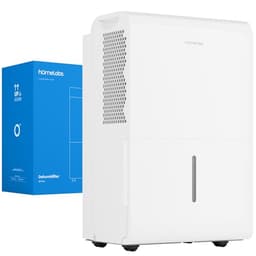
A capable 50-pint machine attached to the least plausible coverage claim on this page, and the gap between those two facts is worth understanding before you buy anything in this category.
Average draw
Not published
hOmeLabs publishes no wattage and has no 50-pint entry in the ENERGY STAR certified list - its certified models are the HME0088 at 24.48 pt/day (276 W) and the HME0089 at 32.46 pt/day (318 W). For a 50-pint compressor unit the certified class band is 443-490 W with a median of 488 W.
What is good
- States both numbers - 50 pints at the DOE condition and 120 at saturation - instead of quietly using the bigger one
- Wi-Fi control at a price below the Midea Cube
- Auto shut-off and a straightforward continuous-drain port
- Widely sold, so replacement filters are easy
What is not
- A 7,000 sq ft coverage claim for a 50-pint machine is roughly 50% higher than any comparable unit claims for the same capacity
- Not in the ENERGY STAR certified list at this capacity
- No published wattage
Who it is for
A budget-conscious buyer who understands that the coverage number is marketing and the pint number is the specification.
Skip it if
Skip it if you were buying it because of the 7,000 sq ft figure. Size from the room and the dampness, not from the largest number on the box - the sizing guide explains why.
Waykar
Waykar 80 Pint ENERGY STAR Dehumidifier
Best for: A large open basement or a shop floor
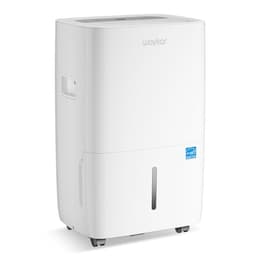
Sold on an 80-pint headline that is a saturation figure; the DOE rating behind it is in the same 50-pint class as everything else on this page.
Average draw
Not published
No published wattage. Waykar's certified 50-pint entries - JD026CE-150, CHWA150A/B/E, CTH150A/B and the YD-150 family - compute to between 443 W and 488 W. The identity of the exact certified model behind this listing is not stated, so the band stands in for a number.
What is good
- Sets to 30% RH, lower than most units will go
- 90-degree auto swing louvre, which genuinely helps in a long open basement
- Continuous drainage support and a larger tank than Waykar's smaller units
- Auto defrost for cold running
What is not
- The 80-pint headline is not a DOE rating and should not be compared against one
- No published wattage and no single certified model to map to
- 5,000 sq ft is the second-highest coverage claim in this registry
Who it is for
A large, open, genuinely wet basement or shop, where air movement matters as much as extraction.
Skip it if
Skip it if you are comparing it against a 50-pint unit on the strength of the 80. They are the same class of machine - the numbers are measured differently.
hOmeLabs
hOmeLabs 32 Pint Dehumidifier
Best for: A bedroom that is damp but not wet
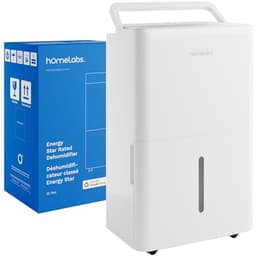
The one hOmeLabs unit with a named entry in the ENERGY STAR list, so it is the one where the running cost is a published figure rather than a class estimate.
Average draw
318 W
Computed from the ENERGY STAR certified entry hOmeLabs HME0089: 32.46 pt/day at IEF 2.01 L/kWh. This is the only hOmeLabs capacity in this registry with a named certified entry, which is why it is the only one carrying a number rather than a band.
What is good
- 318 W against the 50-pint class median of 488 W - about 35% less to run, hour for hour
- Named in the ENERGY STAR certified list, so its IEF is public
- Quiet enough for a bedroom in a way that a 50-pint compressor generally is not
- Wi-Fi and auto shut-off at a small-unit price
What is not
- 32 DOE pints is genuinely less water than 50 - undersizing a wet basement costs more than the machine saved
- Gravity drainage only
- 4,500 sq ft coverage for 32 pints is another claim to ignore
Who it is for
A bedroom, a home office, or a small basement that is humid rather than actively wet.
Skip it if
Skip it if the floor is ever damp to the touch or the walls sweat. That is a 50-pint problem, and a 32-pint machine will run continuously and still lose.
AlorAir
AlorAir Sentinel HD55 Crawl Space Dehumidifier
Best for: A crawl space you cannot stand up in
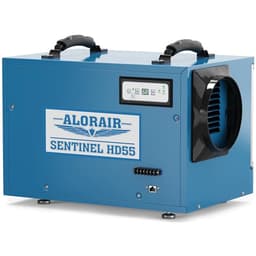
The clearest example on this site of why the number on the box is not the number that matters: sold as 113 pints, certified at 36.33.
Average draw
344 W
Computed from the ENERGY STAR certified entry ALORAIR Sentinel HD55S: 36.33 pt/day at IEF 2.08 L/kWh, 379 kWh a year. The retail listing is the HD55; the certified entry carries the S suffix. At IEF 2.08 it is more efficient than the median 50-pint portable while removing about three quarters as much water.
What is good
- Built low and flat to fit between floor joists, which no portable unit does
- Auto defrost and low-temperature operation, both essential in an unheated crawl space
- IEF 2.08 is above the 50-pint class median of 2.01 despite the smaller capacity
- No tank at all, so there is nothing to forget to empty
What is not
- The 113-pint headline is a saturation figure at 95F and 90% RH; the DOE-condition rating is 36.33
- 1,200 sq ft coverage, less than most 50-pint portables claim, for considerably more money
- Needs a drain or a condensate pump - there is no bucket fallback
Who it is for
Crawl spaces, low-clearance basements and unheated storage where a standing portable will not fit or will freeze.
Skip it if
Skip it for a normal basement. A 50-pint portable removes more water at the DOE condition for less money; you are paying for the form factor and the temperature range.
What these cost to run
The median certified 50-pint unit, plumbed and left alone
(488 W / 1000) x 12 h x $0.1834/kWh = $1.07 per day
0.488
kWh per hour
$32.69
per month, 12 h/day
$65.38
per month, 24 h/day
Rate is the US residential average of 18.34 cents/kWh from the EIA Electric Power Monthly, June 2026. Yours will differ - use the calculator.
Worth noting that a plumbed machine and a bucket machine of identical capacity do not cost the same in practice, even though their wattages are identical. The bucket machine spends hours switched off with a full tank while the humidity climbs back, then works harder to recover. Continuous drainage is the configuration in which a dehumidifier's rated capacity is actually available to you. Calculate yours.
Setting it up so it keeps working
- Shortest practical run. Every extra foot is another foot that can sag.
- Continuous fall, no loops. Clip or tape the line so it cannot be nudged into a dip by a passing foot.
- No hose end sitting in standing water. A submerged outlet can siphon and can draw debris back.
- Check it twice a season. Pull the hose, look for algae in the low points, flush it. This is a five-minute job that prevents the most common continuous-drain failure.
- Leave the bucket in place if the machine allows it, so a blockage fills a tank rather than a floor.
What we did not do
We have not installed any of these units, measured a drain fall or timed a hose blockage. What is above is each maker's stated drainage provision, the certified capacity and computed draw from the ENERGY STAR list, and the arithmetic shown rather than asserted. How we work.
What we would skip
Gravity drainage in a room whose only outlet is above the machine
This is the single mistake that makes a good dehumidifier useless. Water does not climb. If the nearest drain is a laundry sink four feet up a wall, no hose, no setting and no amount of goodwill fixes it - you need a pump model and the extra cost is not optional. Pump versus gravity.
Any unit chosen on a coverage claim rather than a drain port
In our registry, 50-pint machines claim coverage from 4,000 to 7,500 square feet for the same certified capacity - a 1.9x spread with no test procedure behind it. Whether the drain port is usable in your room is a fact about your room; the square footage is a copywriter's decision.
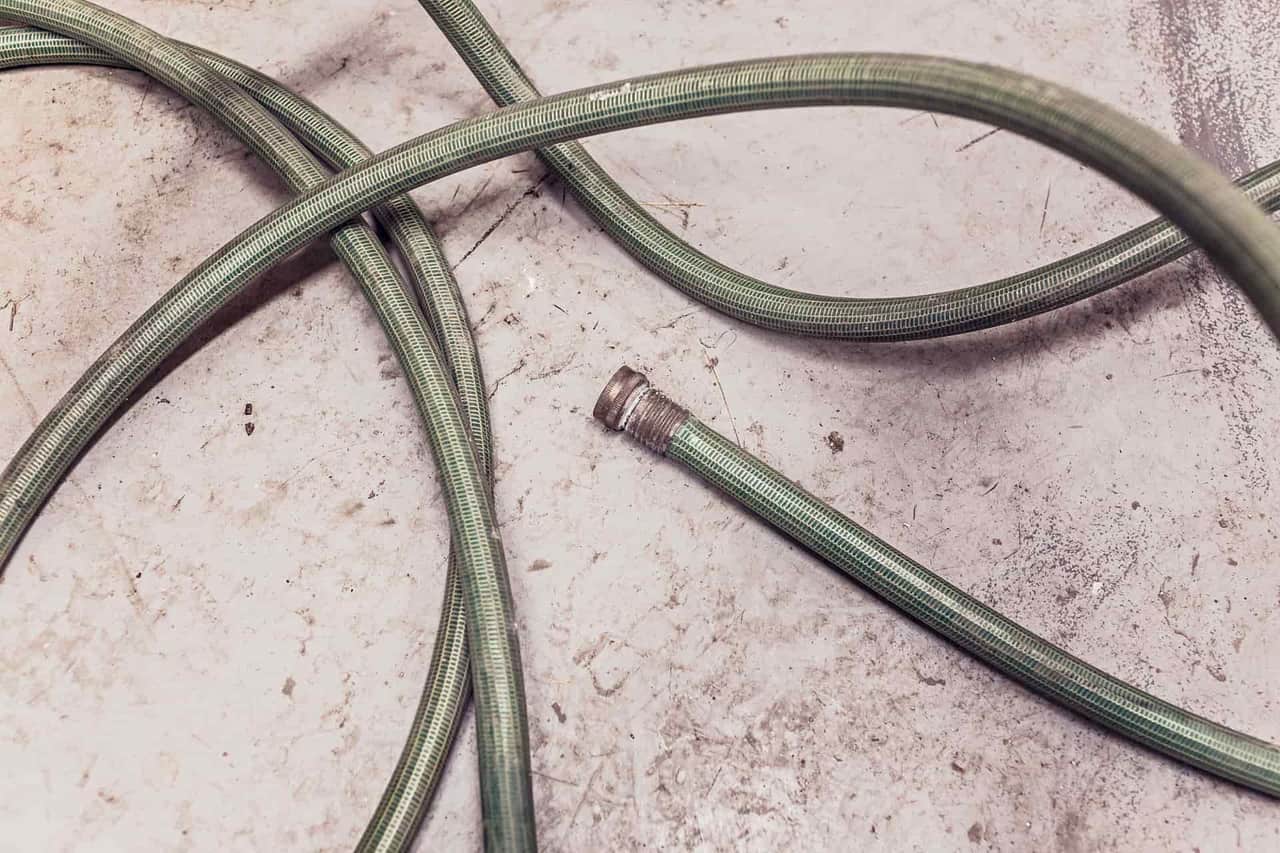
A thin vinyl hose left coiled on the floor
Most kinked, backed-up continuous drains are not a machine fault. A hose that dips below its outlet holds water, algae grows in the standing section, and the line blocks. Keep the run short, keep it falling the whole way, and check it twice a season. When the drain stops working.
How we picked
- Every unit here has a manufacturer-stated continuous-drain port, not an improvised one.
- Ranked on unattended running: this whole page exists so the machine never stops on a full bucket.
- Capacity from the post-2019 DOE rating, never a saturation headline.
- Average draw computed from certified capacity and IEF where a named entry exists; the class band where it does not.
- Bucket size still recorded, because it is the fallback when a hose blocks.
- Not tested by us. Every figure is quoted or computed, with the source named.
We did not test these units. The full criteria and their weighting are on the methodology page.
FAQ
Questions
Do all dehumidifiers come with a drain hose?
Can a dehumidifier drain hose go up?
How do I stop my dehumidifier drain hose blocking?
Is a drain hose or a pump better?
What size hose does a dehumidifier use?
Sources
Sources
Read next
- Setting up a continuous drainA five-step method, the plastic cap that causes most failures, and the sag that causes the rest.
- Pump or gravity: decide this before anything elseA five-minute test that eliminates half the market, and the middle option most buyers miss.
- Hoses, threads and adaptersWhich hose, which adapters, and the four fittings that turn a working drain into a leak.
- The continuous drain has stopped workingSeven checks in order of likelihood, and the two that solve most cases without a tool.
- The best dehumidifiers for a basementFive basement units ranked on drainage first, with computed running costs and a unit we would not buy.