Best / Roundup
The best dehumidifiers for a garage
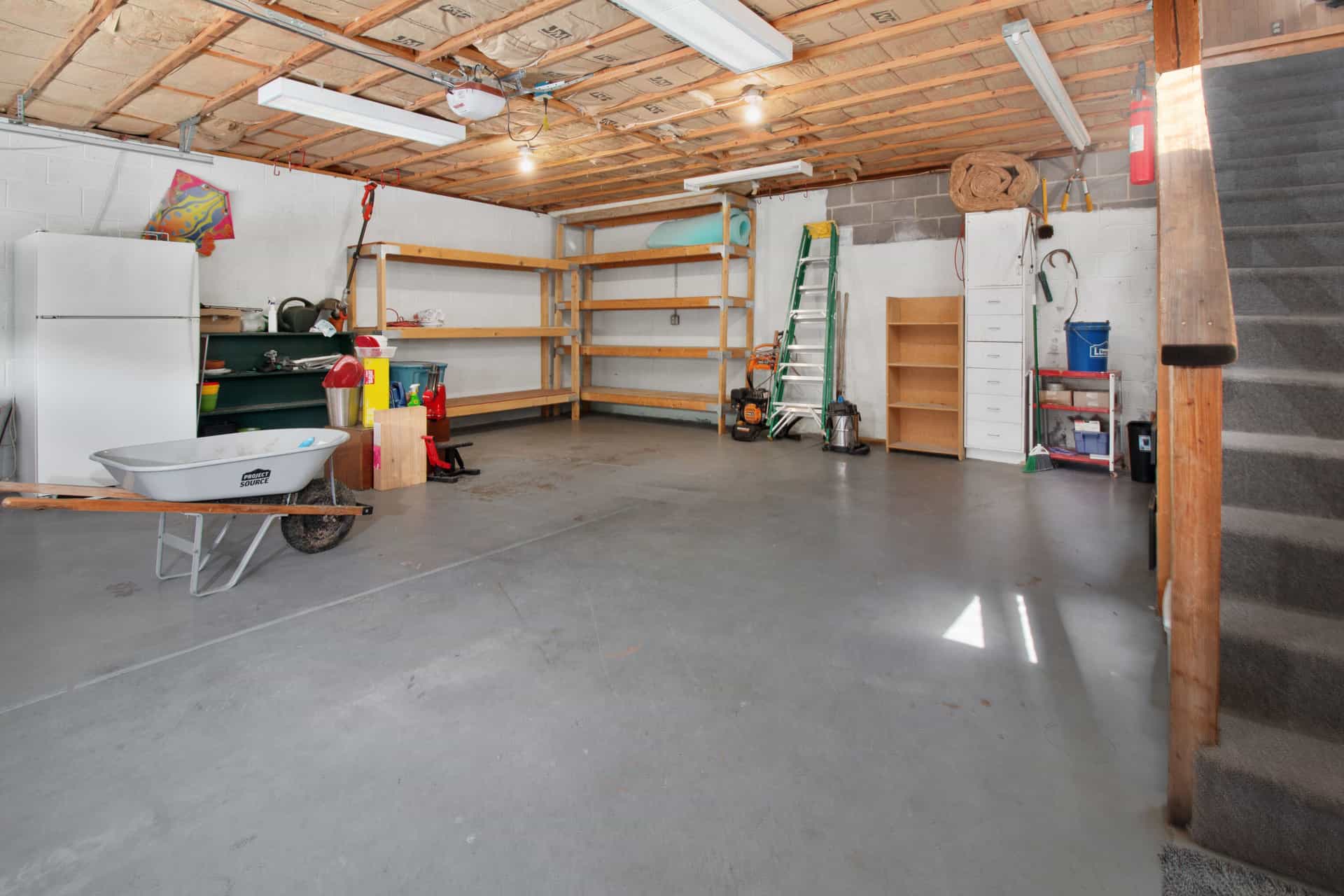
In summer this is an ordinary large-room problem. In winter it is a different machine entirely, and the switchover point is somewhere most buying guides never mention.
#adThis page contains affiliate links. We earn a commission on qualifying purchases, at no cost to you, and it never changes a ranking. Full disclosure.
The short answer
For a garage used in summer, a 50-pint compressor unit with a hose to a floor drain. For an unheated garage in a cold-winter climate, a desiccant unit, because a compressor's output collapses as the coil approaches freezing and a desiccant rotor keeps working.
The temperature question, which decides everything else
A compressor dehumidifier works by making a coil colder than the air's dew point so water condenses onto it. As the room gets colder, two things happen: the air holds less water to begin with, and the coil has to run closer to freezing to catch what is left. Below roughly 41F it ices, and the machine spends its time defrosting rather than drying.
A desiccant unit does not use a cold coil at all. It passes air through a rotor coated in a water-absorbing material and then drives the moisture back out of the rotor with a heater. That process does not care much about room temperature, which is why the same manufacturers who sell both will tell you the desiccant wins in the cold. Ivation's own listing puts numbers on it: at 41F a desiccant rotor removes 11.8 pints of water a day where a compressor removes 2.9.
4x
Desiccant advantage over a compressor at 41F, per Ivation's published figures
11.8 pints/day versus 2.9 pints/day. Ivation's own listing copy, retrieved 2026-09-01. Above about 65F the advantage reverses and a compressor removes more water per kWh.
And the trade the other way
Desiccant units heat the room. That is not a side effect to tolerate; it is how they work. In a cold garage in February it is a small bonus. In the same garage in August it is exactly the wrong thing, and the machine is also less efficient there than a compressor.
So the honest answer for a year-round garage in a four-season climate is that no single machine is ideal, and the practical compromise most people should make is: buy the compressor unit, run it from spring to autumn, and switch it off when the garage drops below about 50F. Below that, either accept the humidity, heat the space, or add a small desiccant unit for the winter months. A detached shed is a harder version of the same problem - colder, smaller and often barely powered. The best dehumidifiers for a shed covers it separately.
Quick picks
| # | Product | Best for | Draw | Price |
|---|---|---|---|---|
| 1 |  Waykar 80 Pint ENERGY STAR DehumidifierSold on an 80-pint headline that is a saturation figure; the DOE rating behind it is in the same 50-pint class as everything else on this page. Waykar 80 Pint ENERGY STAR DehumidifierSold on an 80-pint headline that is a saturation figure; the DOE rating behind it is in the same 50-pint class as everything else on this page. | A large open basement or a shop floor | Not published | |
| 2 |  Ivation 19 Pint Desiccant DehumidifierThe only technology here that does not lose to the cold, which makes it the right answer in exactly the rooms where a compressor is the wrong one. Ivation 19 Pint Desiccant DehumidifierThe only technology here that does not lose to the cold, which makes it the right answer in exactly the rooms where a compressor is the wrong one. | An unheated garage in winter | Not published | $299.99View on Amazon #ad Price as of October 16, 2026. How we are funded |
| 3 |  AlorAir Sentinel HD55 Crawl Space DehumidifierThe clearest example on this site of why the number on the box is not the number that matters: sold as 113 pints, certified at 36.33. AlorAir Sentinel HD55 Crawl Space DehumidifierThe clearest example on this site of why the number on the box is not the number that matters: sold as 113 pints, certified at 36.33. | A crawl space you cannot stand up in | 344 W | |
| 4 |  Frigidaire 50 Pint Dehumidifier with Wi-FiFrigidaire's current no-pump 50-pint: certified by exact model number, Wi-Fi equipped, and a 2.7 gallon bucket that is among the largest of any 50-pint unit we track. Frigidaire 50 Pint Dehumidifier with Wi-FiFrigidaire's current no-pump 50-pint: certified by exact model number, Wi-Fi equipped, and a 2.7 gallon bucket that is among the largest of any 50-pint unit we track. | A Frigidaire with a drain below it | 488 W | $310.63View on Amazon #ad Price as of October 16, 2026. How we are funded |
| 5 |  GE 50 Pint DehumidifierGE's current no-pump 50-pint, with a 30 percent humidistat floor and Smart Dry fan control - and no ENERGY STAR claim on the listing, which is the change worth noticing. GE 50 Pint DehumidifierGE's current no-pump 50-pint, with a 30 percent humidistat floor and Smart Dry fan control - and no ENERGY STAR claim on the listing, which is the change worth noticing. | A garage or shop with a floor drain | Not published |
Waykar
Waykar 80 Pint ENERGY STAR Dehumidifier
Best for: A large open basement or a shop floor
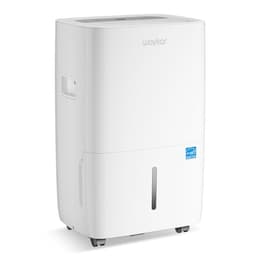
Sold on an 80-pint headline that is a saturation figure; the DOE rating behind it is in the same 50-pint class as everything else on this page.
Average draw
Not published
No published wattage. Waykar's certified 50-pint entries - JD026CE-150, CHWA150A/B/E, CTH150A/B and the YD-150 family - compute to between 443 W and 488 W. The identity of the exact certified model behind this listing is not stated, so the band stands in for a number.
What is good
- Sets to 30% RH, lower than most units will go
- 90-degree auto swing louvre, which genuinely helps in a long open basement
- Continuous drainage support and a larger tank than Waykar's smaller units
- Auto defrost for cold running
What is not
- The 80-pint headline is not a DOE rating and should not be compared against one
- No published wattage and no single certified model to map to
- 5,000 sq ft is the second-highest coverage claim in this registry
Who it is for
A large, open, genuinely wet basement or shop, where air movement matters as much as extraction.
Skip it if
Skip it if you are comparing it against a 50-pint unit on the strength of the 80. They are the same class of machine - the numbers are measured differently.
Ivation
Ivation 19 Pint Desiccant Dehumidifier
Best for: An unheated garage in winter
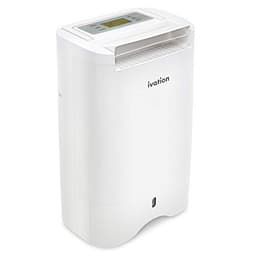
The only technology here that does not lose to the cold, which makes it the right answer in exactly the rooms where a compressor is the wrong one.
Average draw
Not published
Not published, and desiccant units are not represented in the ENERGY STAR certified dehumidifier list, which covers compressor portables and whole-home units. Desiccant machines use a resistive heater to regenerate the rotor, so their draw is roughly flat with temperature rather than falling off with it - the opposite trade to a compressor. We will not print a number for this one without a published source.
What is good
- Keeps extracting at temperatures where a compressor's coil ices and its output collapses
- No compressor, so it is quieter and lighter than any refrigerant unit here
- Continuous drain hose included
- Warm, dry exhaust, which is useful in a cold room and a nuisance in a warm one
What is not
- No published wattage, and desiccant units are generally less efficient than compressors at normal room temperature
- 410 sq ft coverage - this is a small-space machine
- It heats the room, which is the last thing a summer basement needs
Who it is for
Unheated garages, boats, sheds and crawl spaces in winter, where a compressor unit spends its time defrosting.
Skip it if
Skip it for a warm summer basement. Above roughly 65F a compressor removes more water per kWh, and the desiccant's waste heat works against you.
AlorAir
AlorAir Sentinel HD55 Crawl Space Dehumidifier
Best for: A crawl space you cannot stand up in
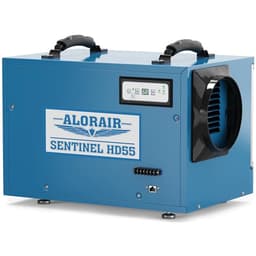
The clearest example on this site of why the number on the box is not the number that matters: sold as 113 pints, certified at 36.33.
Average draw
344 W
Computed from the ENERGY STAR certified entry ALORAIR Sentinel HD55S: 36.33 pt/day at IEF 2.08 L/kWh, 379 kWh a year. The retail listing is the HD55; the certified entry carries the S suffix. At IEF 2.08 it is more efficient than the median 50-pint portable while removing about three quarters as much water.
What is good
- Built low and flat to fit between floor joists, which no portable unit does
- Auto defrost and low-temperature operation, both essential in an unheated crawl space
- IEF 2.08 is above the 50-pint class median of 2.01 despite the smaller capacity
- No tank at all, so there is nothing to forget to empty
What is not
- The 113-pint headline is a saturation figure at 95F and 90% RH; the DOE-condition rating is 36.33
- 1,200 sq ft coverage, less than most 50-pint portables claim, for considerably more money
- Needs a drain or a condensate pump - there is no bucket fallback
Who it is for
Crawl spaces, low-clearance basements and unheated storage where a standing portable will not fit or will freeze.
Skip it if
Skip it for a normal basement. A 50-pint portable removes more water at the DOE condition for less money; you are paying for the form factor and the temperature range.
Frigidaire
Frigidaire 50 Pint Dehumidifier with Wi-Fi
Best for: A Frigidaire with a drain below it
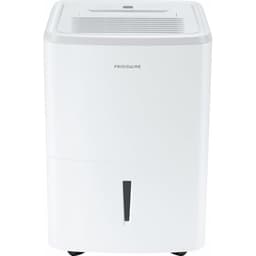
Frigidaire's current no-pump 50-pint: certified by exact model number, Wi-Fi equipped, and a 2.7 gallon bucket that is among the largest of any 50-pint unit we track.
Average draw
488 W
Computed from the ENERGY STAR certified entry for Frigidaire FHDD5034Y1 - the same model number as this listing: 49.71 pt/day at IEF 2.01 L/kWh. Frigidaire's Canadian product page states 115 V, 8.8 A and 470 W; those figures do not reconcile with each other and are nameplate rather than average values, so 488 W is the running-cost figure.
What is good
- Exact certified model match, so the 488 W figure describes this machine rather than a sibling
- 2.7 gallon bucket - roughly ten hours of condensate at full rated capacity if you ever run it without a hose
- Continuous drain, three fan speeds and operation down to 41F
- Wi-Fi and the Frigidaire app for scheduling and remote control
What is not
- Gravity only. The drain must be below the machine
- The Wi-Fi depends on Frigidaire's app remaining supported
- Frigidaire's own published wattage and amperage do not agree with each other
Who it is for
Someone with a floor drain who wants a certified, well-documented 50-pint unit and has a use for scheduling.
Skip it if
Skip it if the only drain is above the machine. That is the one job a gravity unit cannot do, whatever else it has.
GE
GE 50 Pint Dehumidifier
Best for: A garage or shop with a floor drain
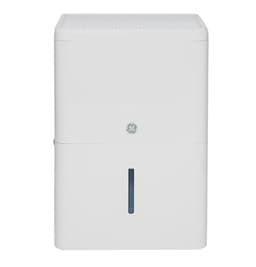
GE's current no-pump 50-pint, with a 30 percent humidistat floor and Smart Dry fan control - and no ENERGY STAR claim on the listing, which is the change worth noticing.
Average draw
Not published
Not published by GE. The ADHE50 series does not appear by name in the ENERGY STAR certified list and this listing makes no ENERGY STAR claim - its predecessor did. The certified 50-pint class runs 443-490 W with a median of 488 W, and a non-certified unit is more likely to sit at the top of that band than below it.
What is good
- Humidistat sets down to 30 percent where most units stop at 35 or 40
- Smart Dry adjusts fan speed to room humidity rather than running flat out
- Bucket-full alarm sounds for ten seconds rather than only lighting an icon
- Clean-filter alert, which is the maintenance nobody remembers to do
What is not
- No ENERGY STAR certification claimed, and no certified entry to compute a draw from
- Gravity drainage only
- A 5,000 sq ft coverage claim, up from its predecessor's 4,000 on the same capacity - a reminder that coverage claims are not a spec
Who it is for
A garage, workshop or utility room with a floor drain, where a low humidistat floor is useful and efficiency certification is not the deciding factor.
Skip it if
Skip it if it will run all season and efficiency matters. A certified 50-pint unit costs about $8 a month less by ENERGY STAR's own figure.
Garage-specific practicalities
- The slab is a moisture source. Concrete wicks ground water continuously. A garage with no vapor barrier under the slab will never get properly dry, and the dehumidifier is managing a symptom.
- Seal the big gaps first. A garage door with a failed bottom seal admits more humid air in an hour than a 50-pint machine removes in one. It is the cheapest improvement available.
- Filters clog fast. Sawdust, tire rubber and general grit load a garage filter far faster than a basement one, and a starved coil ices even in warm weather. Check it monthly rather than seasonally. Cleaning and maintenance.
- Run the drain outside if there is no floor drain. A short hose through the wall above grade is simpler than any pump, and there is nothing in condensate that a garden needs protecting from.
- Watch the extension cord. A 488 W appliance running for hours is not a job for a thin cord. Plug it into a wall socket.
What we would skip
A compressor unit as your winter garage solution
Below about 41F most compressor dehumidifiers stop doing useful work: the coil ices, the defrost cycle runs more than the compressor does, and the machine spends the day heating its own evaporator. If the garage is unheated and you live somewhere with a real winter, a compressor unit is a summer appliance.
Any unit with a bucket, in a garage
Garages are the room people visit least deliberately. A tank that fills in six hours will be full and the machine off for weeks before anyone notices. Run a hose to a floor drain or out through the wall, or buy a unit with a pump.
How we picked
- Capacity for a large, poorly sealed volume with a concrete slab supplying moisture from below.
- Low-temperature behavior, which is the whole question in an unheated garage.
- Drainage that does not depend on anyone visiting: gravity to a floor drain, out through the wall, or a pump.
- Tolerance of dust. A garage filter clogs faster than a basement one, and a clogged filter is what makes a coil ice.
- Not tested by us.
We did not test these units. The full criteria and their weighting are on the methodology page.
FAQ
Questions
Will a dehumidifier work in an unheated garage in winter?
What size dehumidifier for a two-car garage?
Will a dehumidifier stop tools rusting in a garage?
Can I drain a garage dehumidifier outside?
Sources
Sources
Read next
- Desiccant or compressor?11.8 pints against 2.9 at 41F, and the crossover point where the obvious answer stops being right.
- The coil has iced upNormal below 60F, a filter problem above it, and the one cause that is a warranty call.
- The best 50-pint dehumidifiersSix 50-pint units and the certified data behind them: a 443-490 W range and a coverage claim that varies 1.9x.
- Setting up a continuous drainA five-step method, the plastic cap that causes most failures, and the sag that causes the rest.
- Keeping it workingFour jobs on four schedules, and the five-minute one that prevents most faults on this hub.
- Ivation 19 Pint DesiccantThe one technology that does not lose to the cold - and the one unit here with no published efficiency data at all.
- The best dehumidifiers for a gun safeThe interior is a desiccant job we do not sell. The room around it is the half a machine actually fixes.
- The best dehumidifiers for an RV or boatUnheated storage is the case that decides it - and it is the case a compressor unit cannot work in.