Reviews / Ivation
Ivation 19 Pint Desiccant
The only machine we cover that does not lose to the cold - which makes it right in exactly the rooms where every compressor unit on this site is wrong, and wrong in the rooms where they are right.
#adThis page contains affiliate links. We earn a commission on qualifying purchases, at no cost to you, and it never changes a ranking. Full disclosure.
The short answer
A desiccant dehumidifier rated 19 pints a day for spaces up to 410 sq ft, with a continuous drain hose. It has no compressor, so its output does not collapse in the cold. Ivation's own figures put a desiccant rotor at 11.8 pints a day at 41F against a compressor's 2.9.
How it works, and why that changes where it belongs
A compressor dehumidifier chills a coil below the air's dew point so water condenses onto it. That is efficient in a warm room and increasingly hopeless in a cold one: as the room cools, the coil has to run colder to keep condensing, and below roughly 41F it ices faster than the defrost cycle can clear it. The machine then spends its time defrosting rather than drying.
A desiccant unit has no cold coil. Air passes through a rotor coated in a water-absorbing material, and a heater drives the collected moisture back out of the rotor to be condensed in a separate stream. Nothing has to be below freezing for that to work, so performance is roughly flat with temperature instead of falling off a cliff. The full mechanism.
11.8 vs 2.9
Pints per day at 41F: desiccant rotor against compressor
Quoted from Ivation's own listing copy, retrieved 2026-09-01. A four-fold difference in the conditions an unheated garage or shed actually sits at through winter. Above roughly 65F the advantage reverses.
Quick picks
| # | Product | Best for | Draw | Price |
|---|---|---|---|---|
| 1 |  Ivation 19 Pint Desiccant DehumidifierThe only technology here that does not lose to the cold, which makes it the right answer in exactly the rooms where a compressor is the wrong one. Ivation 19 Pint Desiccant DehumidifierThe only technology here that does not lose to the cold, which makes it the right answer in exactly the rooms where a compressor is the wrong one. | An unheated garage in winter | Not published | $299.99View on Amazon #ad Price as of October 21, 2026. How we are funded |
Ivation
Ivation 19 Pint Desiccant Dehumidifier
Best for: An unheated garage in winter
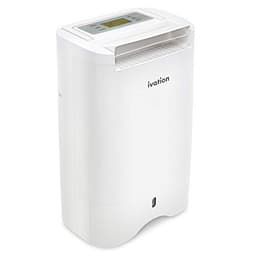
The only technology here that does not lose to the cold, which makes it the right answer in exactly the rooms where a compressor is the wrong one.
Average draw
Not published
Not published, and desiccant units are not represented in the ENERGY STAR certified dehumidifier list, which covers compressor portables and whole-home units. Desiccant machines use a resistive heater to regenerate the rotor, so their draw is roughly flat with temperature rather than falling off with it - the opposite trade to a compressor. We will not print a number for this one without a published source.
What is good
- Keeps extracting at temperatures where a compressor's coil ices and its output collapses
- No compressor, so it is quieter and lighter than any refrigerant unit here
- Continuous drain hose included
- Warm, dry exhaust, which is useful in a cold room and a nuisance in a warm one
What is not
- No published wattage, and desiccant units are generally less efficient than compressors at normal room temperature
- 410 sq ft coverage - this is a small-space machine
- It heats the room, which is the last thing a summer basement needs
Who it is for
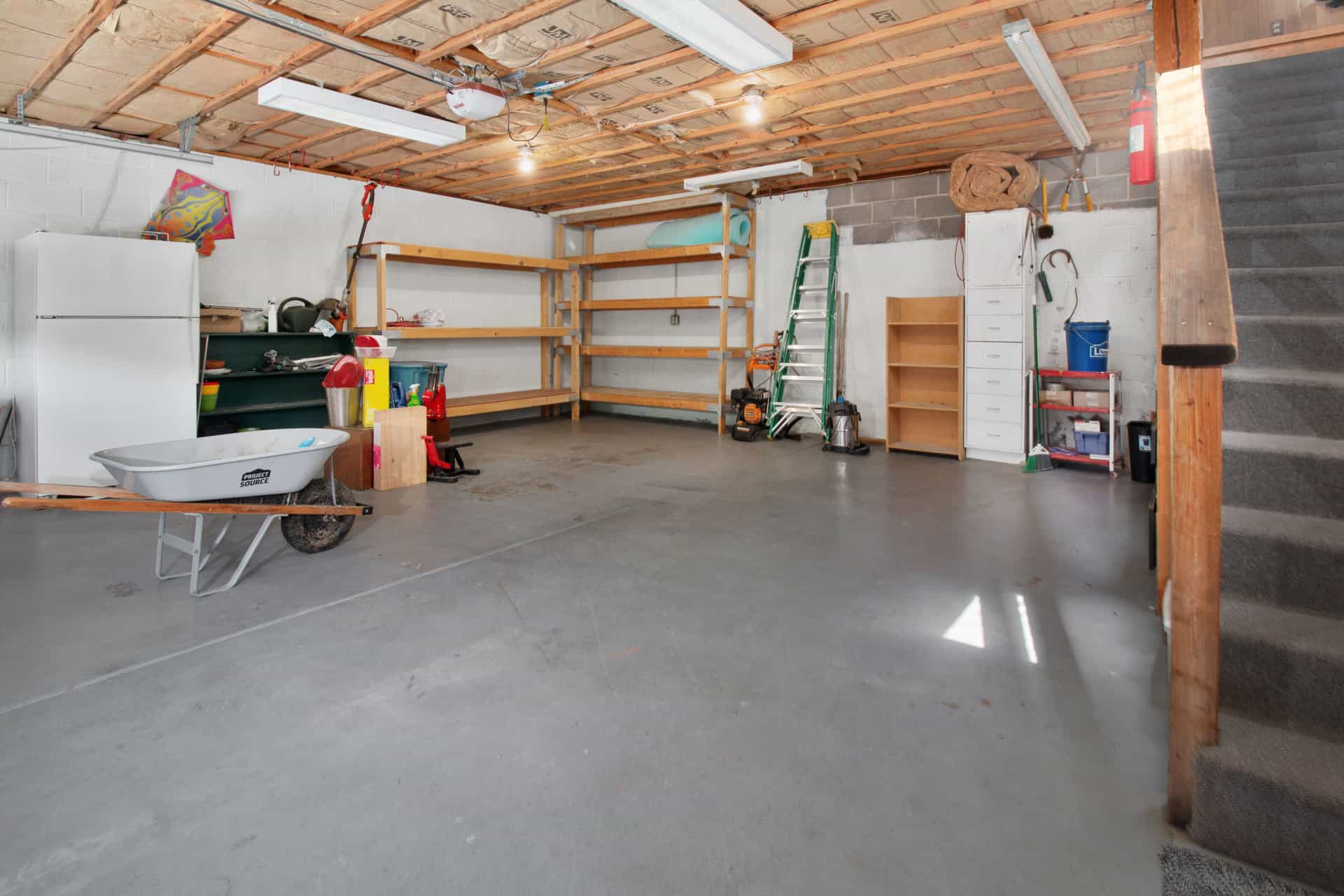
Unheated garages, boats, sheds and crawl spaces in winter, where a compressor unit spends its time defrosting.
Skip it if
Skip it for a warm summer basement. Above roughly 65F a compressor removes more water per kWh, and the desiccant's waste heat works against you.
The three costs of that capability
- 1It heats the room. Not as a by-product - the heater is the mechanism. In a cold garage in February that is a small bonus. In a warm basement in August it is exactly wrong, and it works against any air conditioning upstairs. Blowing warm air.
- 2It is less efficient where a compressor works well. In the temperature range where both function, refrigeration moves more water per kilowatt-hour than a resistive heater does.
- 3There is no published efficiency figure at all. Desiccant units are not represented in the ENERGY STAR certified dehumidifier list, which covers compressor portables and whole-home units. Ivation publishes no wattage either. So for this machine there is genuinely no number to give you, and we are not going to estimate one.
That third point deserves emphasis because it is unusual on this site. For most units we can compute a draw from certified data even when the maker publishes nothing. Here the dataset does not cover the technology. Data unavailable is the honest answer. How we handle missing data.
410 square feet is the real constraint
Coverage claims are marketing rather than specifications, and this site says so repeatedly. But the direction of this one is informative: 410 sq ft is a modest claim in a category where 50-pint units claim up to 7,500. Ivation is signalling that this is a small-space machine, and at 19 pints a day that is consistent.
So the honest framing is: a genuinely capable machine for a small cold space, not a basement machine that happens to work in the cold. A two-car garage is bigger than this unit's comfortable range. Why coverage claims are not a spec.

The seasonal-compromise question
Most people asking about desiccant units have a space that is hot in August and near-freezing in January - a garage, a workshop, an outbuilding. No single machine is ideal for both, and pretending otherwise is where a lot of buying advice in this category goes wrong.
The practical answer for a four-season climate is usually: run a compressor unit spring to autumn, switch it off below about 50F rather than leaving it running and wondering why the bucket is empty, and add a small desiccant for the winter months only if the space genuinely needs to stay dry through them. Buying this as a year-round single solution means accepting worse efficiency and unwanted heat for the two-thirds of the year when a compressor would have been better. Desiccant versus compressor.
Who should buy something else
- Anyone with a heated basement. A compressor unit is more efficient, higher capacity and cheaper. This is the wrong tool in a warm room.
- Anyone with a large space. 19 pints and 410 sq ft is a small-space machine.
- Anyone who needs a running-cost figure before buying. There is no published wattage and no certified data for desiccant units.
- Anyone who wants the room cool. It will make it warmer, by design.
We have not run this unit, and we have not verified the 11.8-versus-2.9 comparison independently - it is Ivation's own published figure, quoted and attributed as such.
FAQ
Questions
Is a desiccant dehumidifier better than a compressor?
How many watts does the Ivation 19 pint desiccant use?
Will the Ivation desiccant work in an unheated garage in winter?
Does a desiccant dehumidifier make the room hot?
Sources
Sources
- Ivation 19 Pint Small-Area Desiccant Dehumidifier, 410 sq ft, continuous drain hose, and the stated 11.8 pints/day at 41F for a desiccant rotor against 2.9 for a compressor - manufacturer listing (retrieved 2026-09-01)
- ENERGY STAR Certified Dehumidifiers product list - covers compressor portables and whole-home units; desiccant units are not represented (retrieved 2026-09-01)
Read next
- Desiccant or compressor?11.8 pints against 2.9 at 41F, and the crossover point where the obvious answer stops being right.
- The best dehumidifiers for a garageFive garage options and the temperature at which the obvious compressor choice becomes the wrong one.
- The coil has iced upNormal below 60F, a filter problem above it, and the one cause that is a warranty call.
- How a dehumidifier actually worksThe refrigeration cycle, why the machine warms the room, and why cold air defeats it.
- The best crawl space dehumidifiersFour crawl space options, and the 3.1x gap between the pint number on the box and the certified one.
- The best dehumidifiers for an RV or boatUnheated storage is the case that decides it - and it is the case a compressor unit cannot work in.