Best / Roundup
The best dehumidifiers for a shed
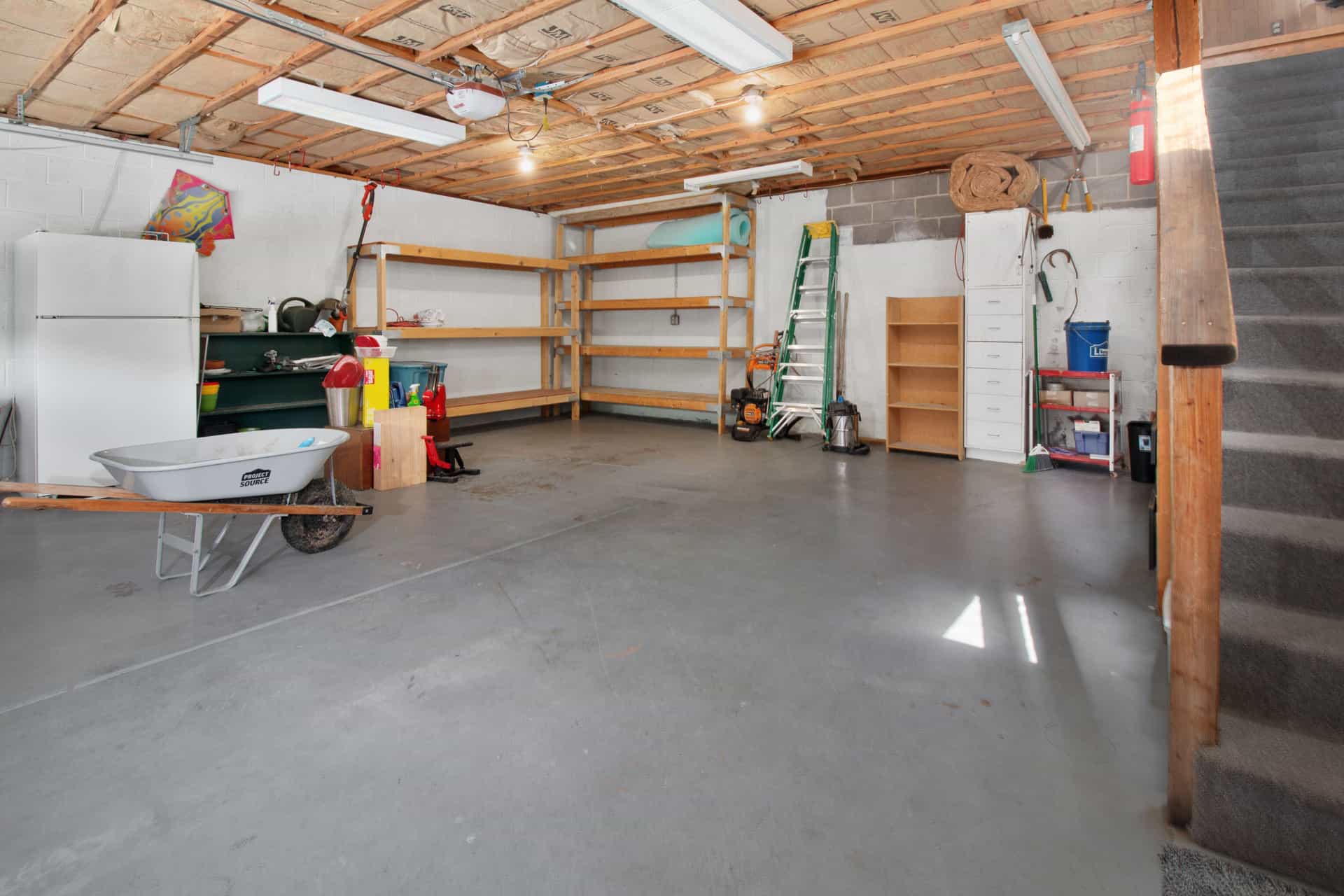
A shed is the hardest room on this site: cold in the months you need it, small enough that a 50-pint machine is absurd, and frequently at the end of an extension lead. The answer is rarely the biggest thing you can afford.
#adThis page contains affiliate links. We earn a commission on qualifying purchases, at no cost to you, and it never changes a ranking. Full disclosure.
The short answer
In an unheated shed, choose a desiccant unit: it has no cold coil to ice, so it keeps working at temperatures that stall a compressor. The Ivation 13-pint states a 33F to 104F range and the AEOCKY X1-Pro is a rotary desiccant drawing 340 W. If you only need to protect tools rather than dry the room, rechargeable desiccant containers beat any machine.
Why a shed defeats a normal dehumidifier
Three things are true of almost every shed, and each one breaks a different assumption that portable dehumidifiers are built on.
- 1It is not heated. A compressor dehumidifier needs the room warm enough that condensate stays liquid on the coil. Below roughly 41F it ices faster than it can defrost and spends the day de-icing rather than drying. That is precisely the season you bought it for.
- 2It is uninsulated and it leaks air. You are not drying a sealed volume, you are drying whatever is coming in through the gaps. A machine sized for a bedroom will run continuously and never reach its target.
- 3It is usually on a thin supply. A lot of sheds run off an extension lead or one spur circuit. A 500 W appliance running continuously on a long thin cable is worth thinking about before you buy it, not after.
Put together, those three make the shed the room where the biggest machine you can afford is most likely to be the wrong one.
The temperature floor decides the technology
33F to 104F
The Ivation desiccant's stated operating range - the widest published range of any unit we track
From the Ivation 19-pint listing, retrieved 2026-09-21; the 13-pint is the same small-area desiccant platform. For comparison, the Pro Breeze mini states 59F to 86F and stops below 41F, and the lowest floor any compressor unit we track publishes is 38F. The full comparison.
A desiccant dehumidifier passes air through a moisture-absorbing wheel and uses a heater to drive the captured water back out. There is no refrigerant and no chilled coil, so there is nothing for frost to form on. That is the entire reason it belongs in a shed, and it is worth more here than its efficiency disadvantage costs.
Two honest caveats. Desiccant units use meaningfully more power per pint of water removed than a compressor does above about 60F - the AEOCKY states 340 W for a peak of 10 pints a day, where a certified 50-pint compressor manages five times the water for around 485 W. And they warm the space, because the heater is part of the process. In a shed in November, most people count the warmth as a bonus. Desiccant or compressor has the full trade.
How we picked
- Whether it keeps working cold, because a shed in the months that matter is not a heated room. A published temperature floor beats a claim about defrost.
- Power draw against a realistic supply, because a lot of sheds are fed by a single socket or an extension lead from the house.
- Physical size, since a shed's floor is the thing you are short of.
- Where the water goes, because there is usually no drain and nobody is emptying a bucket in February.
- What we did not do: we have not run any of these in a shed, through a winter, or measured extraction at any temperature.
We did not test these units. The full criteria and their weighting are on the methodology page.
Quick picks
| # | Product | Best for | Draw | Price |
|---|---|---|---|---|
| 1 |  AEOCKY X1-Pro Rotary Desiccant DehumidifierA desiccant wheel at a compressor price, which is the trade this category rarely offers - and it buys cold-weather operation with a 340 W heater rather than efficiency. AEOCKY X1-Pro Rotary Desiccant DehumidifierA desiccant wheel at a compressor price, which is the trade this category rarely offers - and it buys cold-weather operation with a 340 W heater rather than efficiency. | A cold room where a compressor would spend the day defrosting | 340 W | $129.99View on Amazon #ad Price as of September 21, 2026. How we are funded |
| 2 |  Ivation 13 Pint Desiccant DehumidifierThe small desiccant, for spaces that are cold and enclosed rather than large and damp. Ivation 13 Pint Desiccant DehumidifierThe small desiccant, for spaces that are cold and enclosed rather than large and damp. | A cold closet, attic or bathroom | Not published | $279.99View on Amazon #ad Price as of September 21, 2026. How we are funded |
| 3 |  hOmeLabs 8 Pint DehumidifierA real compressor unit at a size where most competitors sell thermoelectric toys, which makes it the smallest machine here that actually removes meaningful water. hOmeLabs 8 Pint DehumidifierA real compressor unit at a size where most competitors sell thermoelectric toys, which makes it the smallest machine here that actually removes meaningful water. | A closet, a boat, or a single small room | Not published | |
| 4 |  Pro Breeze Electric Mini DehumidifierA thermoelectric unit that removes about one pint a day, which is roughly one fiftieth of a 50-pint machine and needs saying out loud before anyone buys one for a basement. Pro Breeze Electric Mini DehumidifierA thermoelectric unit that removes about one pint a day, which is roughly one fiftieth of a 50-pint machine and needs saying out loud before anyone buys one for a basement. | A wardrobe, and honestly not much more | 23 W | $43.99View on Amazon #ad Price as of September 21, 2026. How we are funded |
AEOCKY
AEOCKY X1-Pro Rotary Desiccant Dehumidifier
Best for: A cold room where a compressor would spend the day defrosting
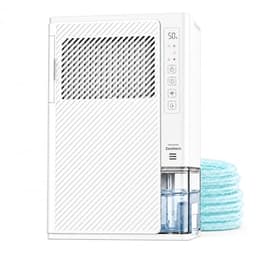
A desiccant wheel at a compressor price, which is the trade this category rarely offers - and it buys cold-weather operation with a 340 W heater rather than efficiency.
Average draw
340 W
Stated on the listing as a 340 W heat-based system. Desiccant dehumidifiers are not represented in the ENERGY STAR certified dehumidifier list at all - the program covers refrigerant units - so there is no certified figure to compute and no IEF to compare. 340 W for a stated peak of 10 pints a day is roughly a third of the water per watt that a certified 50-pint compressor manages at its own test condition, which is the honest cost of working in the cold.
What is good
- No coil means no icing, so it keeps working at temperatures that stall a compressor
- Light and small enough to actually move between a shed, a garage and a closet
- Publishes a wattage, which almost nothing in this category does
- Tank or continuous hose, with the hose in the box
What is not
- 340 W for 10 pints a day is poor water-per-watt next to any compressor unit above freezing
- The capacity figure is a lab peak, not a DOE test-condition rating, so it is not comparable to a pint number on a compressor box
- It warms the room - that is how the technology works, and the listing says so
- The listing copy is unusually aggressive marketing, which is not a reason to avoid it but is a reason to read the numbers rather than the adjectives
Who it is for
Someone drying a small unheated space - a shed, a boat, a garage in shoulder season - where a compressor unit would ice up and a mini Peltier box would do nothing.
Skip it if
Skip it for a heated basement. Above about 60F a 50-pint compressor removes five times the water for barely more power, and the running cost gap is not close.
Ivation
Ivation 13 Pint Desiccant Dehumidifier
Best for: A cold closet, attic or bathroom
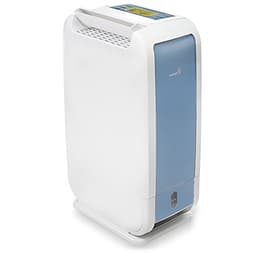
The small desiccant, for spaces that are cold and enclosed rather than large and damp.
Average draw
Not published
The listing states 470 W on high and 280 W on low at 120 V. Those are mode ratings rather than an average draw, and desiccant units are not represented in the ENERGY STAR certified list, so there is no certified figure to compute an average from.
What is good
- Works in the cold, unlike every compressor unit on this site
- Small and light enough to move between an attic and a closet
- Continuous drain hose supported at this size, which the compressor minis do not offer
- Quiet - no compressor to cycle
What is not
- 270 sq ft is a genuinely small room
- No published wattage
- Warms the space it dries
Who it is for
Closets, attics, bathrooms and RV interiors in a cold climate.
Skip it if
Skip it if you need real capacity. Thirteen pints a day is a maintenance machine, not a recovery machine.
hOmeLabs
hOmeLabs 8 Pint Dehumidifier
Best for: A closet, a boat, or a single small room
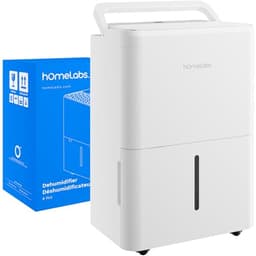
A real compressor unit at a size where most competitors sell thermoelectric toys, which makes it the smallest machine here that actually removes meaningful water.
Average draw
Not published
Not published. The certified 8-13 pint class runs 92-128 W with a median of 105 W across 39 models, and the median unit in that class uses 117 kWh a year.
What is good
- A compressor at 8 pints, so it keeps working where a Peltier unit stops
- Roughly a fifth of the power of a 50-pint machine
- Wi-Fi and auto shut-off, unusual at this size
- Small enough to sit in a wardrobe or a berth
What is not
- 1,800 sq ft coverage for 8 DOE pints is not a serious claim
- Bucket only - no continuous drain at this size
- Not ENERGY STAR certified, so no published IEF
Who it is for
Closets, gun safes, boat cabins, and single small rooms where a large machine is absurd.
Skip it if
Skip it for any room where you can feel the damp. Eight pints a day is a maintenance dose, not a cure.
Pro Breeze
Pro Breeze Electric Mini Dehumidifier
Best for: A wardrobe, and honestly not much more
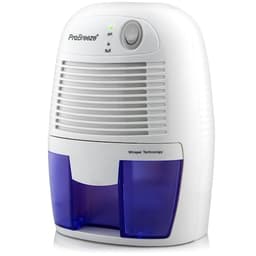
A thermoelectric unit that removes about one pint a day, which is roughly one fiftieth of a 50-pint machine and needs saying out loud before anyone buys one for a basement.
Average draw
23 W
Stated on the listing as 23 W. Thermoelectric units are outside the ENERGY STAR dehumidifier program, so this is the maker's figure rather than a computed one. A Peltier module draws far less than any compressor here - but less power and less water are the same fact, not two selling points.
What is good
- Genuinely silent - there is no compressor to cycle on and off next to your head
- Small and light enough to sit on a shelf inside a wardrobe
- Auto shut-off when the 17 oz tank fills
- Cheap enough to buy two for two closets
What is not
- About one pint a day. A 50-pint unit removes fifty times as much
- Stops working below 41F, which rules out the unheated spaces people usually buy it for
- No drain option - the tank is the only outlet
Who it is for
A wardrobe, a gun safe, a bathroom cabinet, or a single small enclosed space with a musty smell.
Skip it if
Skip it for any room. This is the single most common mis-purchase in the category: it is not a small dehumidifier, it is a different class of device, and no number of them adds up to a basement machine.
What the shed actually costs to run
AEOCKY X1-Pro, stated
(340 W / 1000) x 12 h x $0.1834/kWh = $0.75 per day
0.340
kWh per hour
$22.78
per month, 12 h/day
$45.55
per month, 24 h/day
Rate is the US residential average of 18.34 cents/kWh from the EIA Electric Power Monthly, June 2026. Yours will differ - use the calculator.
That is the figure to sit with before buying. A desiccant unit running continuously in an uninsulated shed is not a trivial line on a bill, and unlike a basement machine it will not cycle off much, because the space never reaches the target. Two ways to make it reasonable:
- Run it on a humidistat, not continuously. Every unit here has one. Set it at 55-60% rather than 45%: you are trying to stop corrosion and mold, not create a dry room. What to set it to.
- Close the gaps first. Draught-proofing a shed door costs almost nothing and does more for the running cost than any feature on any machine here.
When you should not buy a machine at all
This is the honest heart of the page. A lot of people searching for a shed dehumidifier do not have a damp shed problem - they have a rusting tools problem, or a damp cushions problem, or a mildew on the mower problem. Those are object problems, not room problems, and an object problem is far cheaper to solve.
- Rechargeable silica desiccant containers sit in a toolbox, a cupboard or a sealed bin, and go in a microwave or an oven to reset when the indicator changes color. No power, no drain, no winter failure mode. For protecting specific things in a small enclosed volume they outperform any machine on this page.
- A sealed container beats a dry room. Drying an uninsulated shed to protect one toolbox is a large amount of work for a small result.
- Ventilation is free. If the shed is damp because it never gets air, a vent costs less than a month of running a dehumidifier. Dehumidifier or just open a window.
If the shed has no power
Every machine on this page needs mains electricity, and none of them will run usefully off a battery - a 340 W continuous draw is not a power-bank job. There is no honest electric answer to an unpowered shed, so the choice is between running a supply out there properly, which is electrical work, and going with desiccant containers instead. We would rather say that plainly than recommend a machine that cannot be plugged in.
What we would skip
A Peltier mini dehumidifier in an unheated shed
Peltier units - the small, silent, cheap ones with no compressor - use a thermoelectric plate to make a cold surface. They are genuinely useful in a wardrobe or a small bathroom. In an unheated shed they are the wrong tool twice over: their extraction is measured in ounces a day, and the cold plate frosts over at exactly the temperatures a shed spends the winter at. Pro Breeze is honest enough to state it plainly - its operating range is 59F to 86F and it stops below 41F - which is more than most in that tier will tell you.
What we did not do
We have not run any of these units in a shed, over a winter, or at any temperature we controlled. The temperature ranges quoted come from each maker's own listing, the running cost is computed from a stated wattage at the cited national rate, and where a maker publishes nothing this page records the gap. How we work.
FAQ
Questions
Will a dehumidifier work in an unheated shed in winter?
What size dehumidifier do I need for a shed?
Do I need a dehumidifier in my shed or just ventilation?
Are mini dehumidifiers any good for sheds?
What can I use in a shed with no electricity?
Sources
Sources
- Ivation 19 Pint Small-Area Desiccant Dehumidifier, IVADDH09 - Amazon.com listing stating operation from 33F to 104F, the same small-area desiccant platform as the 13-pint (retrieved 2026-09-21)
- AEOCKY X1-Pro Rotary Desiccant Dehumidifier - Amazon.com listing stating a 340 W heat-based system and a 10 pint/day peak in constant lab conditions (retrieved 2026-09-21)
- EIA Electric Power Monthly, Table 5.6.A, June 2026 - the residential electricity rate used
Read next
- The best dehumidifiers for a cold roomFour makers state a temperature floor and twenty-five do not. What each claims, and when to change technology.
- The best dehumidifiers for a garageFive garage options and the temperature at which the obvious compressor choice becomes the wrong one.
- Desiccant or compressor?11.8 pints against 2.9 at 41F, and the crossover point where the obvious answer stops being right.
- The best dehumidifiers for a gun safeThe interior is a desiccant job we do not sell. The room around it is the half a machine actually fixes.
- Dehumidifier or a tub of absorbent?A few ounces over weeks against 50 pints a day, and the line between the two jobs.
- The coil has iced upNormal below 60F, a filter problem above it, and the one cause that is a warranty call.