Best / Roundup
The best dehumidifiers for water damage
A dehumidifier is the third thing you do after a leak, not the first. Get the order wrong and you are running a 490 W machine against standing water it was never going to win.
#adThis page contains affiliate links. We earn a commission on qualifying purchases, at no cost to you, and it never changes a ranking. Full disclosure.

The short answer
Buy the Hisense 50 Pint with Pump - a certified 49.95 pt/day unit that drains continuously uphill and claims operation down to 38F, which is what a wet basement in spring actually needs. Go bigger with the Waykar 145 Pint with Pump only if the space is large and already soaked. Before any of them: extract the standing water, because the EPA's sequence is extract, dehumidify, then fan - and you have 24 to 48 hours.
The window, and where the machine sits in it
This is the only number on the page that decides anything. The EPA states it twice, plainly: "It is important to dry water-damaged areas and items within 24-48 hours to prevent mold growth", and "If wet or damp materials or areas are dried 24-48 hours after a leak or spill happens, in most cases mold will not grow."
24-48 h
The EPA's window for drying water-damaged materials before mold grows
Quoted from the EPA's A Brief Guide to Mold, Moisture and Your Home. The same document sets the standing target for indoor air: keep humidity below 60 percent, "ideally between 30 and 50 percent".
That window is why the order of operations matters more than the machine you buy. The EPA's water-damage table for carpet and backing - the material most likely to be wet in a domestic leak - gives three actions in sequence, and the dehumidifier is the middle one.
| Step | The action | What it means for the purchase |
|---|---|---|
| 1 | "Remove water with water extraction vacuum." | A wet-vac or a pumped extraction. Nothing you buy on this page does this job, and no dehumidifier is a substitute for it. |
| 2 | "Reduce ambient humidity levels with dehumidifier." | This is the machine. Its job is to keep the air dry enough that water keeps leaving the material, for days, without being emptied. |
| 3 | "Accelerate drying process with fans." | Air movement across the wet surface. A box fan does more for drying time here than one capacity class of dehumidifier does. |
From Table 1, Water Damage - Cleanup and Mold Prevention, in the EPA's Mold Remediation in Schools and Commercial Buildings guide. The same table says wallboard "may be dried in place if there is no obvious swelling and the seams are intact" - and if not, to remove and replace it.
How we judged the picks, in order
| Criterion | Why it comes where it does |
|---|---|
| Continuous drainage | First, and not close. This job runs for days without supervision. A unit working hard in a wet room fills its bucket in hours; a pump or a gravity hose is what makes the difference between 72 hours of running and one evening of it. |
| Certified capacity | Second. The DOE test figure is the only capacity number that compares across brands. A 50-pint certified unit removes roughly two pints an hour at the test condition - and the saturation headlines on these listings, measured at 95F and 90 percent humidity, describe a condition your wet basement is not in. |
| Low-temperature operation | Third, and higher than it looks. Burst pipes happen in cold weather and basements are cool. Below roughly 41F a compressor coil ices faster than it can defrost, so a stated low-temperature floor is a working specification, not a footnote. Why cold breaks a compressor. |
| Cost of running it flat out | Fourth. Nobody runs a dry-out 12 hours a day, so the honest figure is the 24-hour one. At the 50-pint class's certified draw that is a couple of dollars a day at the US average rate - real, but small next to replacing a floor. |
| Headline pint numbers | Not a criterion. Every unit in the big tier is sold on a figure measured at 95F and 90 percent relative humidity. What the pint number means. |
Coverage claims are not used either. Units with identical certified capacity claim coverage 1.9x apart in our registry. Why.
Quick picks
| # | Product | Best for | Draw | Price |
|---|---|---|---|---|
| 1 |  Hisense 50 Pint Dehumidifier with PumpA certified 50-pint pump unit that claims operation down to 38F - lower than the 41F most compressor units state - which is the specification that matters in a cold basement. Hisense 50 Pint Dehumidifier with PumpA certified 50-pint pump unit that claims operation down to 38F - lower than the 41F most compressor units state - which is the specification that matters in a cold basement. | A cold basement where the pump has to keep working | 490 W | $308.95View on Amazon #ad Price as of October 17, 2026. How we are funded |
| 2 |  Waykar 145 Pint Dehumidifier with PumpThe only unit in this tier with a pump, and the only one whose listing states the condition behind its headline - 145 pints at 95F and 90% RH, which is not the test anyone's basement runs. Waykar 145 Pint Dehumidifier with PumpThe only unit in this tier with a pump, and the only one whose listing states the condition behind its headline - 145 pints at 95F and 90% RH, which is not the test anyone's basement runs. | The big-number tier when the water has to go uphill | Not published | $469.99View on Amazon #ad Price as of October 17, 2026. How we are funded |
| 3 |  Yaufey 150 Pint DehumidifierAnother exact model match with a headline three times its certified rating - JD026R-150 is in the file at 49.47 pints, and the 150 in the name is the model number, not the capacity. Yaufey 150 Pint DehumidifierAnother exact model match with a headline three times its certified rating - JD026R-150 is in the file at 49.47 pints, and the 150 in the name is the model number, not the capacity. | A big open basement where you want the largest certified 50-pint class unit | 485 W | |
| 4 |  AlorAir Sentinel HD55 Crawl Space DehumidifierThe clearest example on this site of why the number on the box is not the number that matters: sold as 113 pints, certified at 36.33. AlorAir Sentinel HD55 Crawl Space DehumidifierThe clearest example on this site of why the number on the box is not the number that matters: sold as 113 pints, certified at 36.33. | A crawl space you cannot stand up in | 344 W | |
| 5 |  Waykar 80 Pint ENERGY STAR DehumidifierSold on an 80-pint headline that is a saturation figure; the DOE rating behind it is in the same 50-pint class as everything else on this page. Waykar 80 Pint ENERGY STAR DehumidifierSold on an 80-pint headline that is a saturation figure; the DOE rating behind it is in the same 50-pint class as everything else on this page. | A large open basement or a shop floor | Not published |
Hisense
Hisense 50 Pint Dehumidifier with Pump
Best for: A cold basement where the pump has to keep working
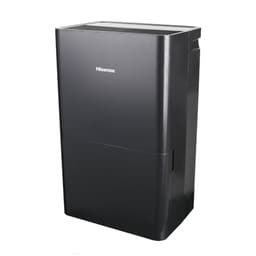
A certified 50-pint pump unit that claims operation down to 38F - lower than the 41F most compressor units state - which is the specification that matters in a cold basement.
Average draw
490 W
Computed from the ENERGY STAR certified entry for Hisense ADH50KP26 - the same model number as this listing: 49.95 pt/day at IEF 2.01 L/kWh. Hisense publishes no wattage on the listing.
What is good
- Claims operation down to 38F, three degrees below the usual compressor floor
- Exact certified model match, so the 490 W figure describes this machine
- Quick-connect hose included for the pump
- Three operating modes and three fan speeds, including an auto fan setting
What is not
- No pump lift, hose length or bucket capacity stated on the listing
- No Wi-Fi or app mentioned
- Below about 38F it is still a compressor unit, and a desiccant machine is the right tool
Who it is for
Someone with a cool basement or garage and a drain above the machine, where a few degrees of extra low-temperature headroom decides whether the unit keeps working in spring and autumn.
Skip it if
Skip it if your pump route is long or tall. Hisense does not state a lift, where GE and Quilo state 15 feet.
Waykar
Waykar 145 Pint Dehumidifier with Pump
Best for: The big-number tier when the water has to go uphill
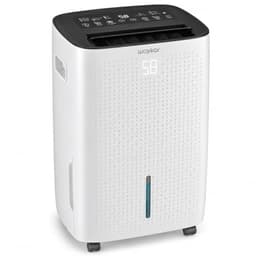
The only unit in this tier with a pump, and the only one whose listing states the condition behind its headline - 145 pints at 95F and 90% RH, which is not the test anyone's basement runs.
Average draw
Not published
No published wattage, and JD026CE-145PM does not appear by name in the ENERGY STAR certified list. Its immediate siblings do: JD026CE-150 and JD026CE-150PM are both certified at 49.47 pt/day and IEF 2.01, which computes to 485 W. The pump variant almost certainly sits alongside them, but the certified file does not carry this exact string and we do not pin one unit's number on another.
What is good
- States the test condition behind its headline figure, which is more than most of this tier does
- A built-in pump, so the drain can be above the machine
- Temperature and overload protection that suspends operation rather than failing
- Shipped and sold by Amazon
What is not
- The exact model string is not in the certified file, so its wattage is a sibling's figure and we will not present it as this machine's
- 145 pints at 95F / 90% RH tells you almost nothing about a 65F basement
- The pump reach is given as a metric range, 1 to 5 meters, which is a wide way to describe a specification
- No noise figure published
Who it is for
Someone shopping the big numbers who also needs a pump, and who would rather have the test condition printed than hidden.
Skip it if
Skip it if you want a computed running cost. The certified siblings suggest about 485 W, but this exact model is not in the file and this site will not pin a sibling's number to it.
Yaufey
Yaufey 150 Pint Dehumidifier
Best for: A big open basement where you want the largest certified 50-pint class unit
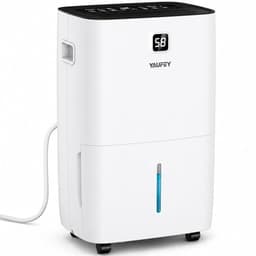
Another exact model match with a headline three times its certified rating - JD026R-150 is in the file at 49.47 pints, and the 150 in the name is the model number, not the capacity.
Average draw
485 W
Computed from the ENERGY STAR certified entry YAUFEY JD026R-150: 49.47 pt/day at IEF 2.01 L/kWh, 507 kWh a year. Exact model-number match. Note what the '-150' in the model number is doing: it is a factory platform code that also became the marketing headline.
What is good
- Exact certified model match, so both the 485 W and the 507 kWh/yr describe this machine
- 507 kWh/yr is at the efficient end of the certified 50-pint class, which runs 444 to 530
- Lighter than most of this tier at 38.5 lb
- Shipped and sold by Amazon rather than a third-party storefront
What is not
- The 150 is a model code that reads as a capacity, and the listing does nothing to correct the impression
- An 8,000 sq ft coverage claim on a 49-pint machine is not a specification, it is a marketing decision
- No pump
- No published wattage or noise figure from Yaufey - the numbers here are computed and certified, not stated
Who it is for
Someone who wants the most efficient certified unit in this tier and does not care what the box says, as long as the file backs it up.
Skip it if
Skip it if you genuinely need more than about 50 pints a day removed. Nothing in this tier delivers that, whatever the title says.
AlorAir
AlorAir Sentinel HD55 Crawl Space Dehumidifier
Best for: A crawl space you cannot stand up in
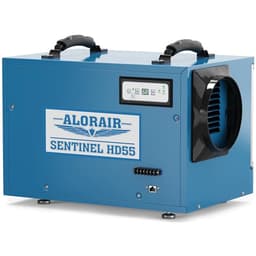
The clearest example on this site of why the number on the box is not the number that matters: sold as 113 pints, certified at 36.33.
Average draw
344 W
Computed from the ENERGY STAR certified entry ALORAIR Sentinel HD55S: 36.33 pt/day at IEF 2.08 L/kWh, 379 kWh a year. The retail listing is the HD55; the certified entry carries the S suffix. At IEF 2.08 it is more efficient than the median 50-pint portable while removing about three quarters as much water.
What is good
- Built low and flat to fit between floor joists, which no portable unit does
- Auto defrost and low-temperature operation, both essential in an unheated crawl space
- IEF 2.08 is above the 50-pint class median of 2.01 despite the smaller capacity
- No tank at all, so there is nothing to forget to empty
What is not
- The 113-pint headline is a saturation figure at 95F and 90% RH; the DOE-condition rating is 36.33
- 1,200 sq ft coverage, less than most 50-pint portables claim, for considerably more money
- Needs a drain or a condensate pump - there is no bucket fallback
Who it is for
Crawl spaces, low-clearance basements and unheated storage where a standing portable will not fit or will freeze.
Skip it if
Skip it for a normal basement. A 50-pint portable removes more water at the DOE condition for less money; you are paying for the form factor and the temperature range.
Waykar
Waykar 80 Pint ENERGY STAR Dehumidifier
Best for: A large open basement or a shop floor
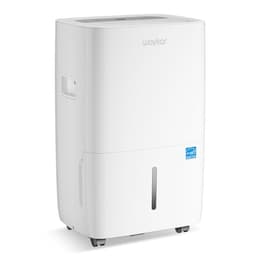
Sold on an 80-pint headline that is a saturation figure; the DOE rating behind it is in the same 50-pint class as everything else on this page.
Average draw
Not published
No published wattage. Waykar's certified 50-pint entries - JD026CE-150, CHWA150A/B/E, CTH150A/B and the YD-150 family - compute to between 443 W and 488 W. The identity of the exact certified model behind this listing is not stated, so the band stands in for a number.
What is good
- Sets to 30% RH, lower than most units will go
- 90-degree auto swing louvre, which genuinely helps in a long open basement
- Continuous drainage support and a larger tank than Waykar's smaller units
- Auto defrost for cold running
What is not
- The 80-pint headline is not a DOE rating and should not be compared against one
- No published wattage and no single certified model to map to
- 5,000 sq ft is the second-highest coverage claim in this registry
Who it is for
A large, open, genuinely wet basement or shop, where air movement matters as much as extraction.
Skip it if
Skip it if you are comparing it against a 50-pint unit on the strength of the 80. They are the same class of machine - the numbers are measured differently.
What it costs to run one for three days straight
A dry-out is the one use where the running cost is worth doing properly, because the duty cycle is nothing like normal use. The certified 50-pint class sits at about 490 W, and it is running continuously rather than cycling.
A certified 50-pint unit, run flat out
(490 W / 1000) x 12 h x $0.1834/kWh = $1.08 per day
0.490
kWh per hour
$32.83
per month, 12 h/day
$65.65
per month, 24 h/day
Rate is the US residential average of 18.34 cents/kWh from the EIA Electric Power Monthly, June 2026. Yours will differ - use the calculator.
Read the 24-hour column, not the 12-hour one. Three days of continuous running on a 50-pint machine is a single-digit dollar figure at the US average rate - which is the argument for buying rather than renting if the job is one room, and the argument for not worrying about efficiency differences between these models at all. Do it at your own rate.
Rent or buy
This is the real fork, and it is decided by what is wet rather than by how wet it is.
- Buy a certified portable if the water was clean, you caught it inside the EPA's window, and what is wet is contents and surfaces - carpet, a rug, boxes, the air in one room. You keep the machine, and a basement that flooded once usually has a humidity problem the rest of the year anyway.
- Rent a restoration-grade LGR if framing, subfloor or plaster is saturated and has to come back to a target moisture content. These are built for structural drying, they are rented by the day, and the crew that rents you one will also rent the air movers that do half the work.
- Call someone if the footprint is past the EPA's 10 square feet of growth, if the water was contaminated, or if it got into the ducts. Repair or replace is a different question from this one, but the same instinct applies: know which problem you have before you buy hardware for it.
After the dry-out, the machine has a second job
Once the material is dry, the target changes. You are no longer racing a window - you are holding a number. The EPA's standing advice is to keep indoor humidity below 60 percent and ideally between 30 and 50, and that is a humidistat setting rather than a continuous run. What to set it to, and what holding it costs.
It is also worth knowing what the machine will not do about what is already there. A dehumidifier removes the condition mold needs; it does not kill growth that has started. The mold page is explicit about that, and the EPA is blunter still: absorbent and porous materials "may have to be thrown away if they become moldy".
What we did not do
We have not flooded a room, run any of these machines, or measured how long a wet carpet takes to dry. Anyone quoting you a drying time without stating the material, its thickness, the air temperature, the airflow over it and the starting moisture content is guessing. Every capacity and efficiency figure here is read from the ENERGY STAR certified file under the model number the maker publishes, every drying instruction is quoted from EPA guidance, and where a model string is not in the certified file this page says so rather than borrowing a sibling's number. How we work.
What we would skip
Any dehumidifier, as the first thing you do
The EPA's own water-damage table puts a dehumidifier third: "Remove water with water extraction vacuum", then "Reduce ambient humidity levels with dehumidifier", then "Accelerate drying process with fans". A 50-pint machine removes about two pints an hour. A wet-vac removes gallons a minute. Running the dehumidifier while there is still standing water is not a shortcut, it is a four-day delay.
A thermoelectric mini, at any price, for a wet room
These remove on the order of a pint a day. The EPA window for preventing mold is 24-48 hours. A machine that needs a fortnight to move the water one spilled bath holds is not in the conversation, and the listings that market them for "damp" rooms are not talking about this.
A bucket-only unit you are not going to be standing next to
A 50-pint unit working hard in a wet room fills a typical bucket in a few hours and then stops. Water damage drying is the one job where continuous drainage is not a convenience feature - it is the difference between a machine that runs for three days and a machine that ran for one evening. Pump versus gravity.
A rented LGR, if the water was clean and the area is small
Restoration-grade low-grain-refrigerant machines are built for structural drying of saturated framing and plaster, and they are rented by the day with a deposit. For one wet room from a clean-water leak, caught early, a certified portable you keep costs less than two rental weeks and is still in the basement next winter.
How we picked
- Criteria stated before the picks: continuous drainage first, then certified capacity, then low-temperature operation, then what it costs to run flat out for days rather than hours.
- The drying sequence and the 24-48 hour window are quoted from EPA guidance, not from restoration-industry marketing.
- Capacity from each model's ENERGY STAR certified entry at the DOE test condition (65F, 60% RH), never a saturation headline. Where a model string is not in the certified file, this page says so instead of borrowing a sibling's number.
- Running cost computed at 24 hours a day, because that is how this job is actually done, from certified capacity and Integrated Energy Factor at the US average residential rate.
- Not tested by us. We have not flooded a room, timed a dry-out, or measured a drying rate, and we do not publish one. Every figure is quoted or computed, with the source named.
We did not test these units. The full criteria and their weighting are on the methodology page.
FAQ
Questions
How long should you run a dehumidifier after water damage?
Will a dehumidifier dry a wet carpet?
What size dehumidifier do I need for a flooded basement?
Should I rent an LGR dehumidifier or buy one?
When should I stop and call a professional?
Does a dehumidifier kill the mold that has already grown?
Sources
Sources
- US EPA, A Brief Guide to Mold, Moisture and Your Home - "It is important to dry water-damaged areas and items within 24-48 hours to prevent mold growth"; "keep indoor humidity below 60 percent (ideally between 30 and 50 percent) relative humidity" (retrieved 2026-10-17)
- US EPA, Mold Remediation in Schools and Commercial Buildings, Chapter 4, Table 1: Water Damage - Cleanup and Mold Prevention - carpet and backing: "Remove water with water extraction vacuum", "Reduce ambient humidity levels with dehumidifier", "Accelerate drying process with fans"; wallboard "may be dried in place if there is no obvious swelling and the seams are intact" (retrieved 2026-10-17)
- US EPA, Mold Cleanup in Your Home - the 10 square foot threshold for calling a professional, and "Absorbent or porous materials, such as ceiling tiles and carpet, may have to be thrown away if they become moldy" (retrieved 2026-10-17)
- ENERGY STAR Certified Dehumidifiers list - capacity, Integrated Energy Factor and annual energy use for every certified pick on this page (retrieved 2026-10-17)
- EIA Electric Power Monthly, Table 5.6.A, June 2026 - the residential electricity rate used
Read next
- The best dehumidifiers for moldA dehumidifier removes the humidity mold needs - it does not kill mold. Five units ranked on unattended running and cold-room performance.
- The best large capacity dehumidifiersNot one certified portable exceeds 50 pints a day. What the 70, 119 and 150 pint headlines measure, and which to buy.
- The best dehumidifiers for a basementFive basement units ranked on drainage first, with computed running costs and a unit we would not buy.
- Pump or gravity: decide this before anything elseA five-minute test that eliminates half the market, and the middle option most buyers miss.
- What to set it to45 to 50 percent, why lower is only more expensive, and the setting that doubles your bill.
- What the pint number on a dehumidifier actually meansThe 2019 DOE test change, the official conversion table, and the saturation rating that is 3x the certified one.