Best / Roundup
The best dehumidifiers for mold
No dehumidifier kills mold. What the right one does is take away the condition mold depends on, and keep taking it away while nobody is watching - which is a different specification list from every other roundup on this site.
#adThis page contains affiliate links. We earn a commission on qualifying purchases, at no cost to you, and it never changes a ranking. Full disclosure.
The short answer
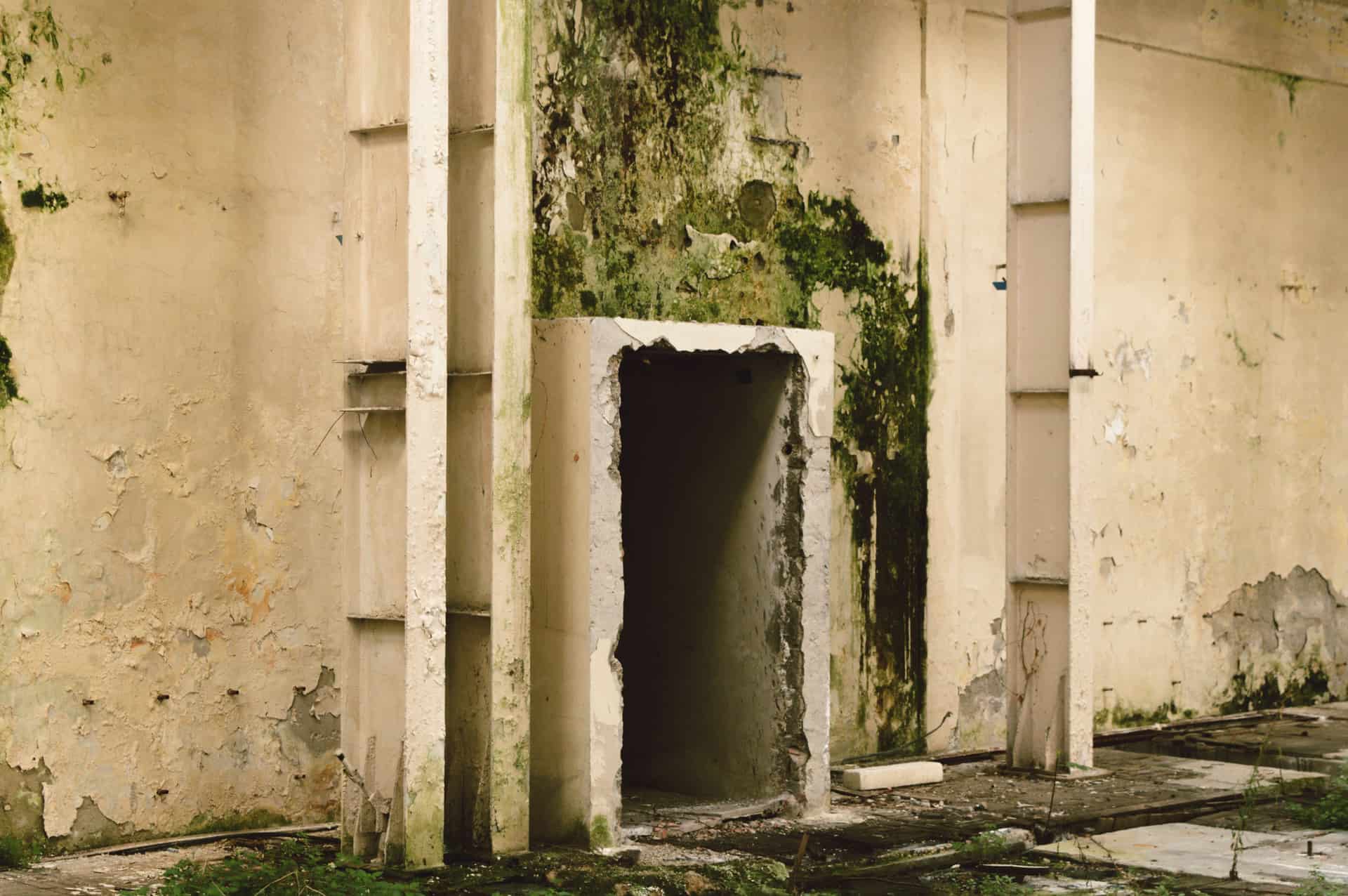
For most mold problems: a 50-pint DOE-rated unit with a built-in pump, so it runs unattended and holds the room below 60% relative humidity indefinitely. A dehumidifier does not kill mold - it removes the humidity mold needs. Existing growth still has to be cleaned, and the water getting in still has to be stopped. If the damp started with a leak or a flood rather than with the weather, start here instead - the first 48 hours are a different job.
What a dehumidifier does about mold, and what it does not
This is the part most pages in this category skip, and it is the part that decides whether the purchase works.
- It does not kill mold. There is no biocide in a dehumidifier. Growth already on a wall is unaffected by the machine running next to it.
- It does not clean anything. Spores settled on a surface stay there.
- It does not stop water coming in. A leak, a failed gutter, a slab with no vapor barrier - the machine will run against all of them forever and lose.
- What it does do is remove the condition. Mold needs moisture. Hold the air below the EPA's 60 percent threshold and existing growth stops advancing and new growth does not start. That is the entire mechanism, and it is genuinely worth having.
So the honest sequence is: stop the water, clean what is there, then run a dehumidifier to keep the conditions from coming back. A machine bought for step three while steps one and two are skipped is an expensive way to keep a wall damp.
The five things that matter, in order
A mold roundup ranks differently from every other roundup on this site, because the job is different. You are not drying a room once. You are holding a number down for months while nobody looks at the machine.
How we picked
- Can it run unattended for months? Ranked first, because a mold problem is a humidity problem that has already won once. A pump, or a gravity run to a drain, beats every other feature here.
- How low will the humidistat set? The EPA's band is below 60 percent and ideally 30 to 50. Most units stop at 40 percent, which is fine for holding; two here reach 30 percent, which matters while you are drying a space out.
- Does it work where mold actually grows? Basements and crawl spaces are cold. A compressor loses most of its output below about 60F, so cold-room capability is a mold specification rather than a nicety.
- Auto-restart after a power cut. A machine that stays off after a summer storm gives the humidity a free week.
- A filter you can actually clean. Airborne spores and dust load a filter, and a starved coil ices and stops extracting. Washable beats consumable.
- We did not test these units, and we did not measure spore counts. Every figure here is quoted from a named source or computed from published certification data.
We did not test these units. The full criteria and their weighting are on the methodology page.
The number to hold, and why 60 is the line
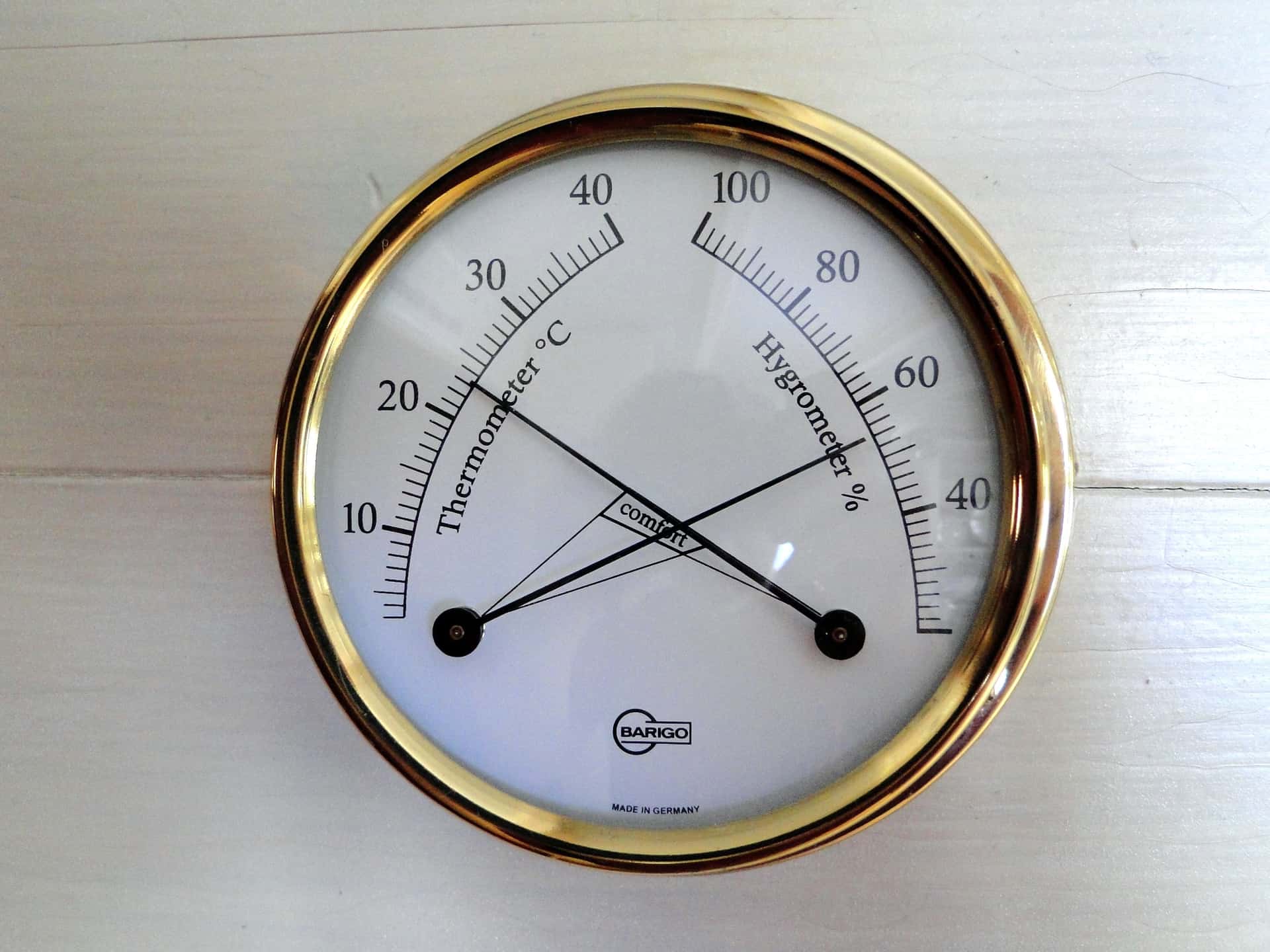
The EPA's guidance is to keep indoor relative humidity below 60 percent, ideally between 30 and 50 percent. Sixty is the line because that is roughly where mold and dust mites stop being able to thrive - below it, the biology does not have what it needs.
In practice, set 45 to 50 percent. It is comfortably inside the recommended band, it is well clear of 60 with margin for a humid week, and it is materially cheaper to hold than 40 percent - drier air yields less water for each unit of energy spent chilling the coil, so run time climbs steeply as the target falls. The full argument on settings.
The exception is drying a space out after a leak or a flood. There, going to 30 or 35 percent for a few days genuinely helps, and it is why the Waykar on this page - the only unit here whose humidistat reaches 30 percent - earns its place.
Quick picks
| # | Product | Best for | Draw | Price |
|---|---|---|---|---|
| 1 |  Midea Cube 50 Pint Dehumidifier with PumpThe stacking Midea Cube with a condensate pump added, which is the difference between a hose you can run and a hose you cannot. Midea Cube 50 Pint Dehumidifier with PumpThe stacking Midea Cube with a condensate pump added, which is the difference between a hose you can run and a hose you cannot. | A basement whose only drain is upstairs | 487 W | $248.89View on Amazon #ad Price as of October 17, 2026. How we are funded |
| 2 |  AlorAir Sentinel HD55 Crawl Space DehumidifierThe clearest example on this site of why the number on the box is not the number that matters: sold as 113 pints, certified at 36.33. AlorAir Sentinel HD55 Crawl Space DehumidifierThe clearest example on this site of why the number on the box is not the number that matters: sold as 113 pints, certified at 36.33. | A crawl space you cannot stand up in | 344 W | |
| 3 |  Waykar 80 Pint ENERGY STAR DehumidifierSold on an 80-pint headline that is a saturation figure; the DOE rating behind it is in the same 50-pint class as everything else on this page. Waykar 80 Pint ENERGY STAR DehumidifierSold on an 80-pint headline that is a saturation figure; the DOE rating behind it is in the same 50-pint class as everything else on this page. | A large open basement or a shop floor | Not published | |
| 4 |  hOmeLabs 32 Pint DehumidifierThe one hOmeLabs unit with a named entry in the ENERGY STAR list, so it is the one where the running cost is a published figure rather than a class estimate. hOmeLabs 32 Pint DehumidifierThe one hOmeLabs unit with a named entry in the ENERGY STAR list, so it is the one where the running cost is a published figure rather than a class estimate. | A bedroom that is damp but not wet | 318 W | |
| 5 |  Ivation 19 Pint Desiccant DehumidifierThe only technology here that does not lose to the cold, which makes it the right answer in exactly the rooms where a compressor is the wrong one. Ivation 19 Pint Desiccant DehumidifierThe only technology here that does not lose to the cold, which makes it the right answer in exactly the rooms where a compressor is the wrong one. | An unheated garage in winter | Not published | $299.99View on Amazon #ad Price as of October 17, 2026. How we are funded |
Midea
Midea Cube 50 Pint Dehumidifier with Pump
Best for: A basement whose only drain is upstairs
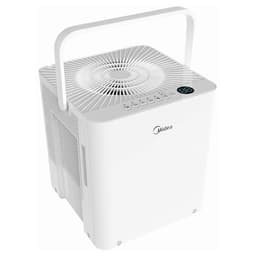
The stacking Midea Cube with a condensate pump added, which is the difference between a hose you can run and a hose you cannot.
Average draw
487 W
Computed from the ENERGY STAR certified entry for Midea MAD50PS1QWT-A, the pump variant of the same platform: 49.67 pt/day at IEF 2.01 L/kWh. The listing prints the unsuffixed MAD50PS1QWT, so the certified string carries a suffix the box does not; every Midea 50-pint revision in the certified list, pump or not, computes to 487-490 W, so neither the suffix nor the pump moves the number meaningfully. The pump itself only runs in bursts.
What is good
- Pump means the destination can be higher than the machine - a laundry sink, a window, a stack
- Identical DOE capacity and IEF to the non-pump Cube, so the pump costs you nothing in efficiency
- The split body still works, so you can also run it on gravity and keep the pump as the backup
- Certified 49.67 pt/day, an honest 50-pint rating
What is not
- Costs more than the identical machine without the pump
- A pump is one more thing that can fail, and when it does the unit stops rather than overflows
- No published wattage from Midea - the figure above is computed
Who it is for
Anyone whose drain is above the floor. That is most finished basements and nearly every crawl space.
Skip it if
Skip it if you already have a floor drain within hose reach and below the machine. You would be paying for a pump you will never switch on.
AlorAir
AlorAir Sentinel HD55 Crawl Space Dehumidifier
Best for: A crawl space you cannot stand up in
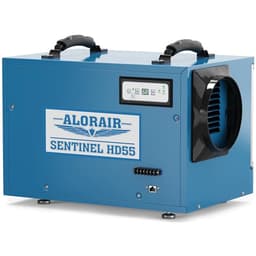
The clearest example on this site of why the number on the box is not the number that matters: sold as 113 pints, certified at 36.33.
Average draw
344 W
Computed from the ENERGY STAR certified entry ALORAIR Sentinel HD55S: 36.33 pt/day at IEF 2.08 L/kWh, 379 kWh a year. The retail listing is the HD55; the certified entry carries the S suffix. At IEF 2.08 it is more efficient than the median 50-pint portable while removing about three quarters as much water.
What is good
- Built low and flat to fit between floor joists, which no portable unit does
- Auto defrost and low-temperature operation, both essential in an unheated crawl space
- IEF 2.08 is above the 50-pint class median of 2.01 despite the smaller capacity
- No tank at all, so there is nothing to forget to empty
What is not
- The 113-pint headline is a saturation figure at 95F and 90% RH; the DOE-condition rating is 36.33
- 1,200 sq ft coverage, less than most 50-pint portables claim, for considerably more money
- Needs a drain or a condensate pump - there is no bucket fallback
Who it is for
Crawl spaces, low-clearance basements and unheated storage where a standing portable will not fit or will freeze.
Skip it if
Skip it for a normal basement. A 50-pint portable removes more water at the DOE condition for less money; you are paying for the form factor and the temperature range.
Waykar
Waykar 80 Pint ENERGY STAR Dehumidifier
Best for: A large open basement or a shop floor
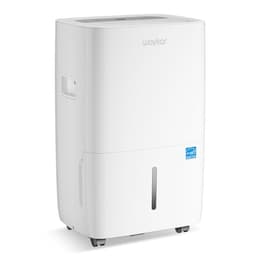
Sold on an 80-pint headline that is a saturation figure; the DOE rating behind it is in the same 50-pint class as everything else on this page.
Average draw
Not published
No published wattage. Waykar's certified 50-pint entries - JD026CE-150, CHWA150A/B/E, CTH150A/B and the YD-150 family - compute to between 443 W and 488 W. The identity of the exact certified model behind this listing is not stated, so the band stands in for a number.
What is good
- Sets to 30% RH, lower than most units will go
- 90-degree auto swing louvre, which genuinely helps in a long open basement
- Continuous drainage support and a larger tank than Waykar's smaller units
- Auto defrost for cold running
What is not
- The 80-pint headline is not a DOE rating and should not be compared against one
- No published wattage and no single certified model to map to
- 5,000 sq ft is the second-highest coverage claim in this registry
Who it is for
A large, open, genuinely wet basement or shop, where air movement matters as much as extraction.
Skip it if
Skip it if you are comparing it against a 50-pint unit on the strength of the 80. They are the same class of machine - the numbers are measured differently.
hOmeLabs
hOmeLabs 32 Pint Dehumidifier
Best for: A bedroom that is damp but not wet
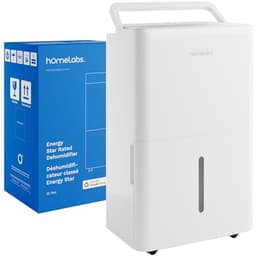
The one hOmeLabs unit with a named entry in the ENERGY STAR list, so it is the one where the running cost is a published figure rather than a class estimate.
Average draw
318 W
Computed from the ENERGY STAR certified entry hOmeLabs HME0089: 32.46 pt/day at IEF 2.01 L/kWh. This is the only hOmeLabs capacity in this registry with a named certified entry, which is why it is the only one carrying a number rather than a band.
What is good
- 318 W against the 50-pint class median of 488 W - about 35% less to run, hour for hour
- Named in the ENERGY STAR certified list, so its IEF is public
- Quiet enough for a bedroom in a way that a 50-pint compressor generally is not
- Wi-Fi and auto shut-off at a small-unit price
What is not
- 32 DOE pints is genuinely less water than 50 - undersizing a wet basement costs more than the machine saved
- Gravity drainage only
- 4,500 sq ft coverage for 32 pints is another claim to ignore
Who it is for
A bedroom, a home office, or a small basement that is humid rather than actively wet.
Skip it if
Skip it if the floor is ever damp to the touch or the walls sweat. That is a 50-pint problem, and a 32-pint machine will run continuously and still lose.
Ivation
Ivation 19 Pint Desiccant Dehumidifier
Best for: An unheated garage in winter
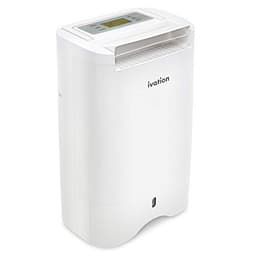
The only technology here that does not lose to the cold, which makes it the right answer in exactly the rooms where a compressor is the wrong one.
Average draw
Not published
Not published, and desiccant units are not represented in the ENERGY STAR certified dehumidifier list, which covers compressor portables and whole-home units. Desiccant machines use a resistive heater to regenerate the rotor, so their draw is roughly flat with temperature rather than falling off with it - the opposite trade to a compressor. We will not print a number for this one without a published source.
What is good
- Keeps extracting at temperatures where a compressor's coil ices and its output collapses
- No compressor, so it is quieter and lighter than any refrigerant unit here
- Continuous drain hose included
- Warm, dry exhaust, which is useful in a cold room and a nuisance in a warm one
What is not
- No published wattage, and desiccant units are generally less efficient than compressors at normal room temperature
- 410 sq ft coverage - this is a small-space machine
- It heats the room, which is the last thing a summer basement needs
Who it is for
Unheated garages, boats, sheds and crawl spaces in winter, where a compressor unit spends its time defrosting.
Skip it if
Skip it for a warm summer basement. Above roughly 65F a compressor removes more water per kWh, and the desiccant's waste heat works against you.
What it costs to hold the line
Mold work is unattended work, so the running-cost question is not "what does an hour cost" but "what does a season cost". A 50-pint unit averages 487 W:
A 50-pint unit holding a basement below 60% RH
(487 W / 1000) x 12 h x $0.1834/kWh = $1.07 per day
0.487
kWh per hour
$32.63
per month, 12 h/day
$65.25
per month, 24 h/day
Rate is the US residential average of 18.34 cents/kWh from the EIA Electric Power Monthly, June 2026. Yours will differ - use the calculator.
That is the cost of a correctly sized machine reaching its target and idling. An undersized one never gets there, so it never idles - it runs flat out around the clock, costs roughly double, and the humidity stays where it was. That is the most expensive mistake available here, and it is why capacity comes before price. Work out your own number.
Where mold actually grows, and which machine suits each
| Where | Why mold is there | What to buy |
|---|---|---|
| Basement | Below grade, cool, gains moisture through the slab and walls all summer | 50 DOE pints with a pump if the drain is above the floor, gravity if below |
| Crawl space | Bare earth or failed vapor barrier, unheated, nobody ever goes in | A low-profile unit that fits under the joists and works cold - and seal the ground first |
| Bathroom | Liquid water on cold tile after every shower, not vapor in the air | An extractor fan does more than any dehumidifier. Why |
| Behind furniture on an outside wall | Cold surface, no air movement, condensation forms and sits | Any correctly sized room unit, plus moving the furniture off the wall |
| Unheated garage or store | Cold enough that a compressor ices and stops extracting | A desiccant unit - a compressor is a summer appliance here |
| Closet or wardrobe | Enclosed, no airflow, a musty smell rather than a measured problem | A small unit or an absorber. A basement machine is absurd for the volume |
Every row assumes the water source has been dealt with. None of these is a substitute for that.
The cold-room problem, which is where most mold lives
There is an awkward overlap in this category that almost nobody states: mold prefers cool damp spaces, and compressor dehumidifiers are worst in exactly those conditions.
A compressor works by chilling a coil below the air's dew point. As the room gets colder the coil has to run colder still, and below roughly 41F it ices faster than the defrost cycle can clear it. Ivation's own published comparison puts a desiccant rotor at 11.8 pints a day at 41F against a compressor's 2.9 - a four-fold difference in the conditions an unheated basement or garage actually sits at through winter.
For a heated or partly heated basement in summer, ignore this - a compressor is more efficient and higher capacity, and that is the season the moisture arrives anyway. For an unheated space you need dry year-round, a desiccant unit is the machine that keeps working. The full comparison.
What we would skip
Any unit sold on the claim that it removes or kills mold
No dehumidifier does. It removes water vapor from the air, which takes away the condition mold needs to keep growing. Existing growth still has to be cleaned off the surface, and the water getting in still has to be stopped. A listing that blurs those three jobs into one is telling you something about the seller, not the machine.
A gravity-only unit for a mold problem you cannot check on weekly
Mold work is unattended work - the whole point is holding humidity down for months, not for an afternoon. A machine whose bucket fills in six hours will spend most of its life switched off with a full tank, and the humidity climbs straight back. Either the drain runs downhill or you need a pump. Pump versus gravity.
A thermoelectric mini, in any room with visible growth
About a pint a day against a 50-pint machine's fifty. It is the right tool for a musty wardrobe and it will not move the humidity of a room, which is the only thing that stops mold coming back.
One thing a dehumidifier will not fix, and one it might
It will not fix a smell coming from inside the machine. Standing condensate in a warm tank grows biofilm, and a unit run on its bucket in a damp room can end up producing exactly the musty smell you bought it to remove. Rinse the tank when you empty it, or run a hose and let the tank sit dry - one of several quiet arguments for continuous drainage. Maintenance.
It might fix the smell in the room, and this is the honest version of what buyers usually mean by "mold smell". A musty basement that has no visible growth is usually damp materials - cardboard, paper, fabric, timber - holding moisture and off-gassing. Hold the air at 45 to 50 percent for a few weeks and those materials give up their moisture and the smell goes. That is a real result and it is the most common good outcome from a purchase on this page.
FAQ
Questions
Will a dehumidifier get rid of mold?
What humidity level stops mold?
What size dehumidifier do I need for mold?
Should I run a dehumidifier or an air purifier for mold?
Can a dehumidifier make mold worse?
How long until the mold smell goes?
Sources
Sources
- US EPA, Mold Course Chapter 2 - indoor relative humidity should be kept below 60 percent, ideally between 30 and 50 percent
- US EPA, Mold Cleanup in Your Home - the 10 square foot DIY threshold and the instruction to fix plumbing leaks and other water problems as soon as possible (retrieved 2026-09-03)
- ENERGY STAR Certified Dehumidifiers product list - class capacities, IEF and the computed wattages used here (retrieved 2026-09-01)
- Ivation desiccant dehumidifier listing - 11.8 pints/day at 41F for a desiccant rotor against 2.9 pints/day for a compressor (retrieved 2026-09-01)
- EIA Electric Power Monthly, Table 5.6.A, June 2026 - the electricity rate used
Read next
- What to set it to45 to 50 percent, why lower is only more expensive, and the setting that doubles your bill.
- Dehumidifier or air purifier?One removes water and no particles; the other removes particles and no water. Not substitutes.
- Dehumidifier or humidifier?Opposite machines, one letter apart, and why the wrong one makes the problem worse.
- The best dehumidifiers for a basementFive basement units ranked on drainage first, with computed running costs and a unit we would not buy.
- The best crawl space dehumidifiersFour crawl space options, and the 3.1x gap between the pint number on the box and the certified one.
- Desiccant or compressor?11.8 pints against 2.9 at 41F, and the crossover point where the obvious answer stops being right.
- The best dehumidifiers for a musty smellThe smell is the exhaust of a damp problem. Four units for the room producing it, and the search that comes first.