Troubleshooting / Symptom
It is not collecting any water
Three of the four most common causes are the machine working correctly in conditions its owner did not expect. Here is how to tell those apart from an actual fault, in order.
The short answer
Check the room temperature, the humidity target you set, and whether the drain cap is still fitted while a hose is connected. Those three cover most cases and none of them is a fault. After that: the filter, the room's actual humidity, and how long it has been running.
Work down this list in order
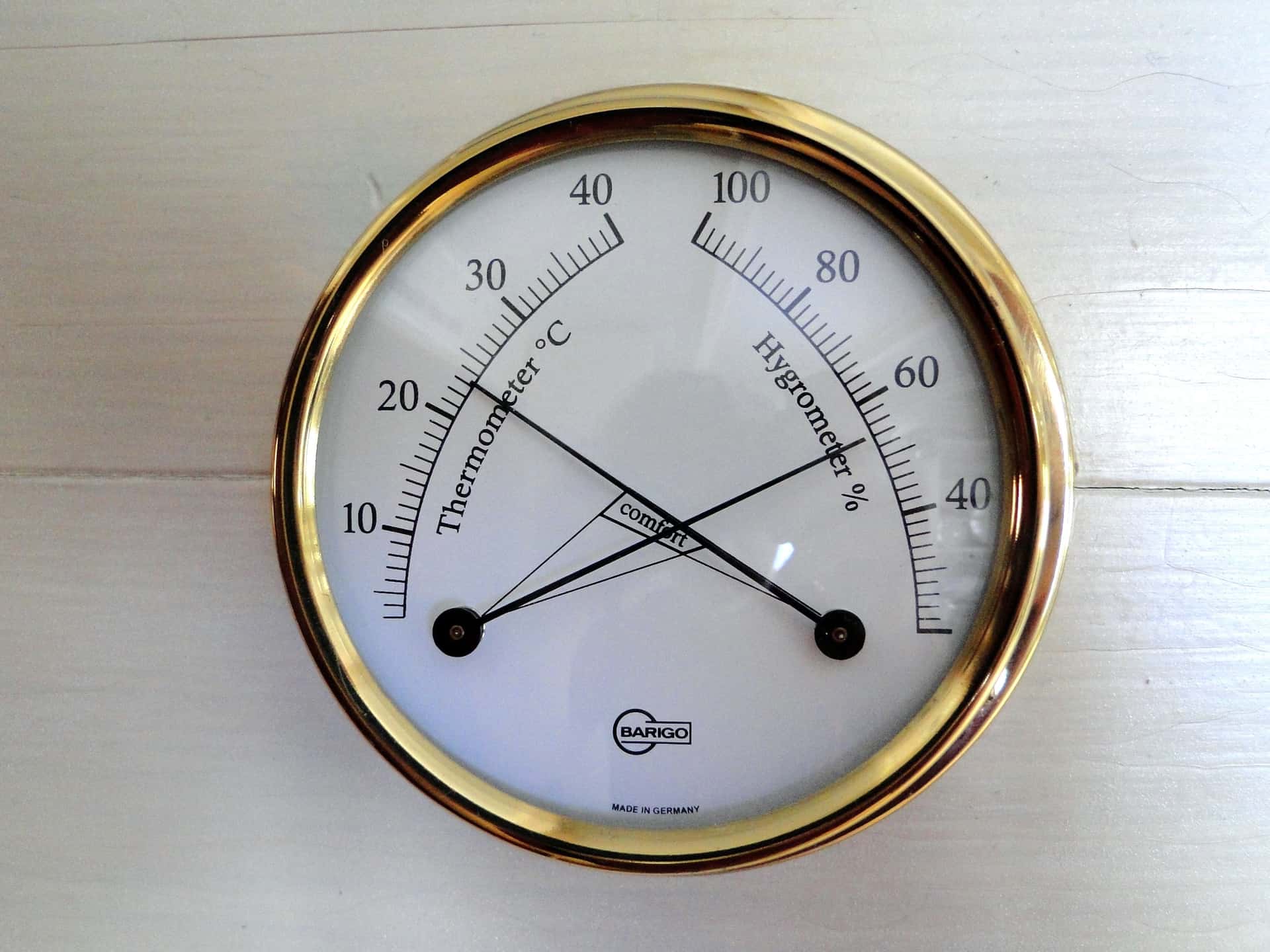
- 1How cold is the room? Below about 60F a compressor unit's output falls sharply; below roughly 41F it ices and effectively stops. This is physics, not a defect. Check with a thermometer rather than by feel. Icing up.
- 2What have you set the humidistat to? If the target is 60% and the room is at 55%, the machine is supposed to do nothing. Set it to its lowest setting temporarily; if the compressor starts, there was never a fault.
- 3Is a hose connected with the drain cap still in? Units with a threaded gravity port ship with a plastic cap fitted. The water goes to the tank instead - or, with the tank removed, nowhere. This is the most common false fault in the category. Drain not working.
- 4Is the room actually humid? Buy a hygrometer if you do not have one. A room at 45% has very little water available to remove, and a machine collecting nothing in that room is a machine that has finished.
- 5Is the filter clogged? A blocked filter starves the coil of airflow, which drops extraction sharply and can ice the coil even in a warm room. Most are washable. Cleaning and maintenance.
- 6How long has it run? A correctly sized unit produces a great deal of water in its first day in a damp room and much less by the tenth. Falling collection over time is success.
- 7Is the coil iced? Unplug it, open the front, and look. Frost or ice on the fins means either a cold room, a blocked filter or a genuine refrigeration fault, in that order of likelihood.
- 8Is the compressor running at all? Fan only, with no change in note and no warmth from the exhaust after ten minutes, points at a compressor or control fault. That is a warranty call, not a home repair.
The temperature effect, quantified
Warm air holds substantially more water than cool air, so there is simply less to collect as the room cools. The rated capacity assumes 65F and 60% relative humidity - that is the post-2019 DOE test condition - and every degree below it reduces the yield.
The scale of the effect is easy to underestimate. Ivation's own published figures for its desiccant units put a compressor at 2.9 pints a day at 41F against a desiccant rotor's 11.8. A 50-pint compressor machine in a 41F garage is not broken; it is being asked to do something a compressor cannot do. Desiccant versus compressor.
The humidistat, and the reading nobody trusts
Built-in humidistats on household dehumidifiers are approximate. They sit in the intake airstream, which is not the same as the room average, and they are not laboratory instruments. A machine reading 55% in a room a separate hygrometer reads at 62% is not unusual.
That matters because the machine acts on its own reading. If it thinks the room is at target, it stops - regardless of what your hygrometer says. Setting the target a few points lower than you actually want is a reasonable response to this, and cheaper than a service call.
When it is genuinely broken
The signature is: warm humid room, correct settings, clean filter, no cap in the drain, and the compressor either never runs or runs continuously without the exhaust air ever feeling warm and dry. That points at the sealed refrigeration system - a leak, a failed compressor, or a control fault.
None of that is a home repair. A sealed system needs recovery equipment and certification to open. Most portables carry a one-year warranty; AlorAir publishes six years on its crawl space units. Call the manufacturer rather than opening it, and be aware that on a low-cost portable the economics usually favor replacement over repair. If the machine is a Frigidaire and it is showing a code rather than just failing quietly, read it first - Frigidaire error codes separates the two that an owner can clear from the ones that are a phone call. If you have worked through all of this and the coil still never gets cold, repair or replace sets out which faults are worth fixing and which end the machine. If the panel is showing a code rather than nothing, see Frigidaire error codes or Hisense error codes depending on the brand.
FAQ
Questions
Why is my dehumidifier running but not collecting water?
How much water should a dehumidifier collect in a day?
Does a dehumidifier work in a cold basement?
Should I set my dehumidifier to the lowest setting?
Sources
Sources
Read next
- The coil has iced upNormal below 60F, a filter problem above it, and the one cause that is a warranty call.
- The continuous drain has stopped workingSeven checks in order of likelihood, and the two that solve most cases without a tool.
- What to set it to45 to 50 percent, why lower is only more expensive, and the setting that doubles your bill.
- Keeping it workingFour jobs on four schedules, and the five-minute one that prevents most faults on this hub.
- What size dehumidifier do I need?A four-step method that uses measured humidity instead of the square-footage claim on the box.
- Dehumidifier or just open a window?Free and effective in cold dry weather, actively counterproductive in summer. Compare dew points, not humidities.
- Frigidaire dehumidifier error codesNine codes, five faults, and the two Frigidaire documents that give different answers for F0.