Compare / Buying decision
Are dehumidifiers worth it?
This is the question that comes before which one, and a site that sells them has an obvious incentive to answer yes. So here is the case with the running cost attached and the situations where the answer is plainly no.
#adThis page contains affiliate links. We earn a commission on qualifying purchases, at no cost to you, and it never changes a ranking. Full disclosure.

The short answer
Worth it when a hygrometer says a room is consistently above 60% relative humidity - that is the level at which mold, mildew and dust mites have what they need, and a machine is the only practical way to change it. Not worth it when the reading is already in the 30 to 50% band, when the cause is liquid water rather than humid air, or when the room is too cold for a compressor to work.
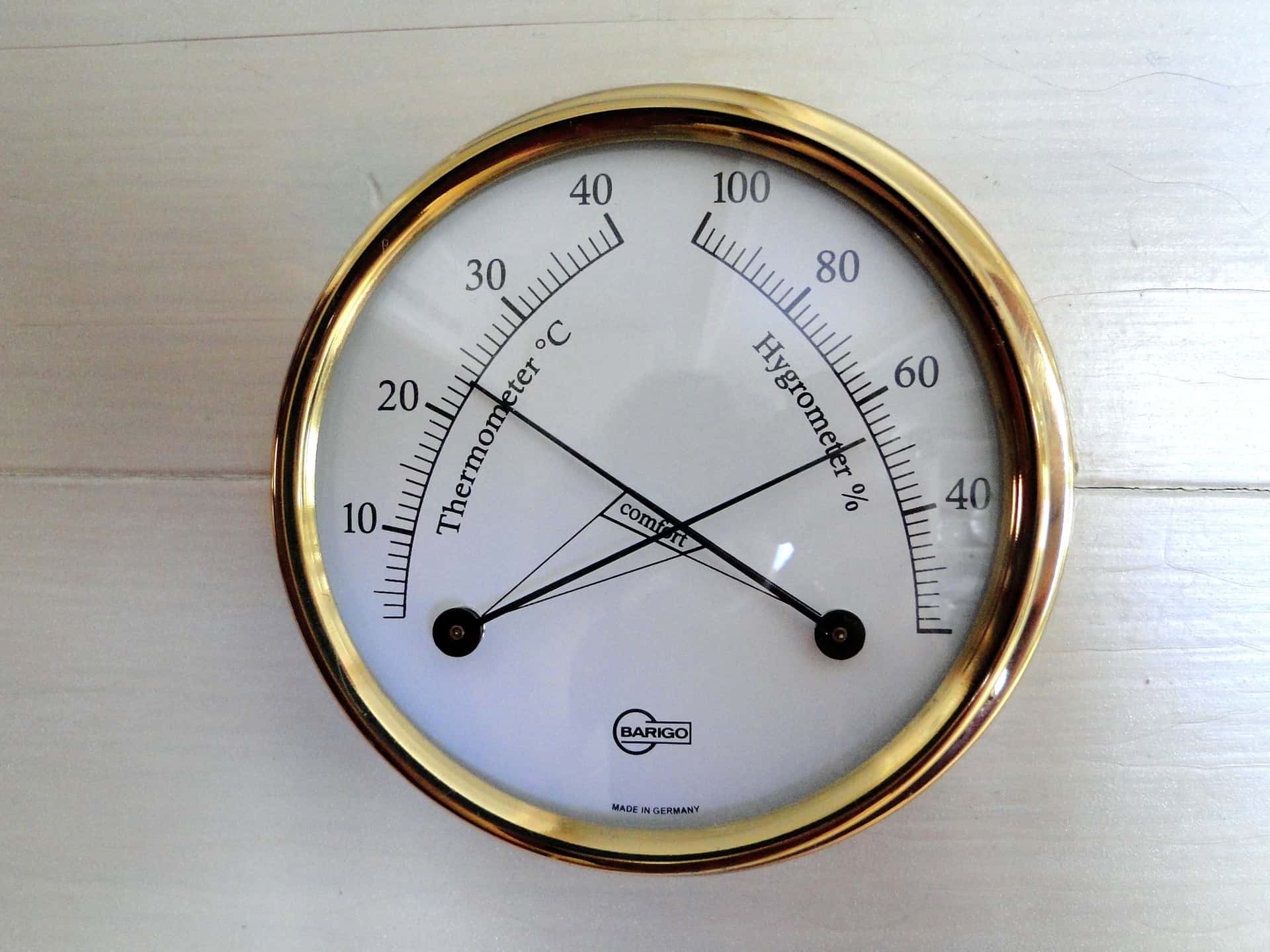
Buy the ten-dollar instrument first
Everything on this page depends on one number you do not currently have. A hygrometer costs less than a takeaway meal, and three or four days of readings at the same time each day will tell you whether you have a problem worth spending two to three hundred dollars on.
The EPA's guidance is to keep indoor humidity below 60 percent, ideally between 30 and 50 percent. That gives you a decision rule that does not depend on anyone's opinion, including ours:
| Reading | Verdict |
|---|---|
| Under 50% | No. You do not have a humidity problem. Whatever is bothering you has another cause |
| 50-60% | Probably not yet. Worth watching through the most humid month before spending |
| 60-68% | Yes, for that room. This is the range where a correctly sized unit pays for itself in avoided damage |
| Over 68%, or visible moisture | Yes, and size up. Also find the water source before you buy |
Take the reading in the room you are worried about, not in the hallway, and at the same time of day. A single spot reading after a shower tells you nothing.
The four cases where it is genuinely worth it
- 1A basement or crawl space that stays above 60 percent. The strongest case in the category. You are not buying comfort, you are buying the absence of mold on stored possessions, on joists and on the underside of a floor. The EPA is explicit that above 60 percent is where growth becomes likely, and the damage compounds quietly for years.
- 2A bedroom with dust mite or mold exposure. EPA-funded research recorded live mite counts falling from 401.2 per gram of dust to 6.7 per gram in homes held below 51 percent relative humidity. That is a large effect from one environmental change. Dust mites and allergies.
- 3A room with persistent condensation on the glass. If the room reads above 60 percent, dropping the humidity moves the dew point below the window temperature and the water stops appearing. Condensation.
- 4Storage of anything that corrodes or warps. Tools, instruments, paper, a safe, a stored vehicle. Here you are insuring an asset rather than improving a room, and the arithmetic usually favors the machine by a wide margin.
The four cases where it is not
- 1The reading is already under 50 percent. A dehumidifier in a room that is not humid does nothing except cost money and make the air less comfortable. This is the most common wasted purchase in the category.
- 2The problem is liquid water. A leaking pipe, a failed damp course, groundwater coming through a wall, a downspout discharging at the foundation. A dehumidifier treats humid air; against running water it runs continuously at full draw and loses. Fix the water first.
- 3The room is too cold for the machine you are buying. Below about 41F a compressor unit's coil ices faster than the defrost cycle clears it. Buying one for an unheated garage in a cold-winter climate buys a winter of paying for nothing. Desiccant versus compressor.
- 4You want the whole house done with one portable. Air does not cross closed doors. A single machine conditions the space it stands in, and the rooms behind doors stay exactly as they were. What a home actually needs.
What it actually costs to own
The purchase price is the part people compare and the running cost is the part that decides whether it was worth it. A 50-pint unit averages 488 watts. Twelve hours a day at the US average residential rate is the figure to hold in your head:
A 50-pint unit, twelve hours a day
(488 W / 1000) x 12 h x $0.1834/kWh = $1.07 per day
0.488
kWh per hour
$32.69
per month, 12 h/day
$65.38
per month, 24 h/day
Rate is the US residential average of 18.34 cents/kWh from the EIA Electric Power Monthly, June 2026. Yours will differ - use the calculator.
A 30 to 32-pint unit at 318 W is about $21 a month on the same schedule. Over a five-month damp season the gap between those two classes is larger than the price difference between the machines, which is why sizing is a running-cost decision rather than just a performance one.
Your own number depends on your electricity rate more than on your choice of machine: the same 50-pint unit costs about $23 a month in Nevada and about $93 in Hawaii. Rates by state, or work out yours.
Do they actually work?
Yes, and the mechanism is not in doubt - it is refrigeration, the same physics as a fridge, applied to pulling water out of air. What varies is whether the machine is matched to the room, and almost every complaint that reaches us is a matching problem rather than a hardware one.
- "It collects no water." Usually correct behavior. If the room is already at the target, or the air is cold, there is very little to collect. Not collecting water.
- "It runs constantly." Usually undersized, or the space is not sealed and humid air is being replaced as fast as it is removed.
- "It will not get below 60 percent." Usually one of five causes, and a refrigeration fault is the least likely of them. Why.
- "It blows warm air." Correct - every watt it draws ends up as heat in the same room, plus the heat released when water condenses. Why.
The cheaper things to try first
A site that earns commission on dehumidifiers should still tell you when something free works better, so:
- Open a window when the outdoor dew point is lower than indoors. In cold dry weather this dries a room for nothing. In warm humid weather it does the opposite. Which and when.
- Stop drying laundry indoors. A single load is liters of water going straight into the room air, and it is the most common cause of winter condensation.
- Run the bathroom fan for longer, and check it vents outside. A surprising number terminate in a joist bay or an attic.
- Move the downspouts and check the grade. The most common root cause of a damp basement is water arriving at the foundation, and correcting it costs an afternoon.
Quick picks
| # | Product | Best for | Draw | Price |
|---|---|---|---|---|
| 1 | 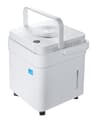 Midea Cube 50 Pint Dehumidifier with PumpSame machine as the Cube above with a condensate pump added, which is the difference between a hose you can run and a hose you cannot. Midea Cube 50 Pint Dehumidifier with PumpSame machine as the Cube above with a condensate pump added, which is the difference between a hose you can run and a hose you cannot. | A basement whose only drain is upstairs | 487 W | |
| 2 |  hOmeLabs 32 Pint DehumidifierThe one hOmeLabs unit with a named entry in the ENERGY STAR list, so it is the one where the running cost is a published figure rather than a class estimate. hOmeLabs 32 Pint DehumidifierThe one hOmeLabs unit with a named entry in the ENERGY STAR list, so it is the one where the running cost is a published figure rather than a class estimate. | A bedroom that is damp but not wet | 318 W | $234.99View on Amazon #ad Price as of September 14, 2026. How we are funded |
| 3 |  Pro Breeze Electric Mini DehumidifierA thermoelectric unit that removes about one pint a day, which is roughly one fiftieth of a 50-pint machine and needs saying out loud before anyone buys one for a basement. Pro Breeze Electric Mini DehumidifierA thermoelectric unit that removes about one pint a day, which is roughly one fiftieth of a 50-pint machine and needs saying out loud before anyone buys one for a basement. | A wardrobe, and honestly not much more | Not published | $42.99View on Amazon #ad Price as of September 14, 2026. How we are funded |
Midea
Midea Cube 50 Pint Dehumidifier with Pump
Best for: A basement whose only drain is upstairs
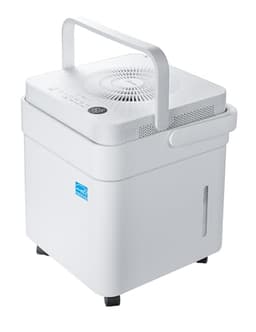
Same machine as the Cube above with a condensate pump added, which is the difference between a hose you can run and a hose you cannot.
Average draw
487 W
Computed from the ENERGY STAR certified entry for Midea MAD50PS1QWT-A, the pump variant of the same platform: 49.67 pt/day at IEF 2.01 L/kWh. The current retail revision is the -B; every Midea 50-pint Cube revision in the certified list, pump or not, computes to 487-490 W, so the pump does not move the number meaningfully. The pump itself only runs in bursts.
What is good
- Pump means the destination can be higher than the machine - a laundry sink, a window, a stack
- Identical DOE capacity and IEF to the non-pump Cube, so the pump costs you nothing in efficiency
- The split body still works, so you can also run it on gravity and keep the pump as the backup
- Certified 49.67 pt/day, an honest 50-pint rating
What is not
- Costs more than the identical machine without the pump
- A pump is one more thing that can fail, and when it does the unit stops rather than overflows
- No published wattage from Midea - the figure above is computed
Who it is for
Anyone whose drain is above the floor. That is most finished basements and nearly every crawl space.
Skip it if
Skip it if you already have a floor drain within hose reach and below the machine. You would be paying for a pump you will never switch on.
hOmeLabs
hOmeLabs 32 Pint Dehumidifier
Best for: A bedroom that is damp but not wet
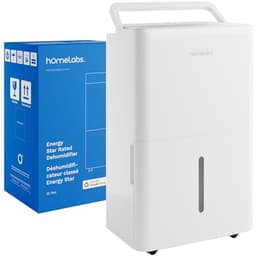
The one hOmeLabs unit with a named entry in the ENERGY STAR list, so it is the one where the running cost is a published figure rather than a class estimate.
Average draw
318 W
Computed from the ENERGY STAR certified entry hOmeLabs HME0089: 32.46 pt/day at IEF 2.01 L/kWh. This is the only hOmeLabs capacity in this registry with a named certified entry, which is why it is the only one carrying a number rather than a band.
What is good
- 318 W against the 50-pint class median of 488 W - about 35% less to run, hour for hour
- Named in the ENERGY STAR certified list, so its IEF is public
- Quiet enough for a bedroom in a way that a 50-pint compressor generally is not
- Wi-Fi and auto shut-off at a small-unit price
What is not
- 32 DOE pints is genuinely less water than 50 - undersizing a wet basement costs more than the machine saved
- Gravity drainage only
- 4,500 sq ft coverage for 32 pints is another claim to ignore
Who it is for
A bedroom, a home office, or a small basement that is humid rather than actively wet.
Skip it if
Skip it if the floor is ever damp to the touch or the walls sweat. That is a 50-pint problem, and a 32-pint machine will run continuously and still lose.
Pro Breeze
Pro Breeze Electric Mini Dehumidifier
Best for: A wardrobe, and honestly not much more
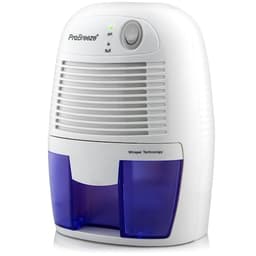
A thermoelectric unit that removes about one pint a day, which is roughly one fiftieth of a 50-pint machine and needs saying out loud before anyone buys one for a basement.
Average draw
Not published
Not published, and thermoelectric units are outside the ENERGY STAR dehumidifier program entirely. Peltier modules of this size draw far less than any compressor here - but less power and less water are the same fact, not two selling points. It removes 17 oz a day, which is 1.06 pints.
What is good
- Genuinely silent - there is no compressor to cycle on and off next to your head
- Small and light enough to sit on a shelf inside a wardrobe
- Auto shut-off when the 17 oz tank fills
- Cheap enough to buy two for two closets
What is not
- About one pint a day. A 50-pint unit removes fifty times as much
- Stops working below 41F, which rules out the unheated spaces people usually buy it for
- No drain option - the tank is the only outlet
Who it is for
A wardrobe, a gun safe, a bathroom cabinet, or a single small enclosed space with a musty smell.
Skip it if
Skip it for any room. This is the single most common mis-purchase in the category: it is not a small dehumidifier, it is a different class of device, and no number of them adds up to a basement machine.
How we are funded, since it is relevant here
We earn a commission when you buy through a link on this site, at no cost to you. That is exactly why this page carries a list of situations where the honest answer is do not buy one - a recommendation is only worth anything if the recommender is willing to say no. Every figure above is quoted or computed from a named public source, and the arithmetic is shown so you can check it. The full disclosure, and how we work.
FAQ
Questions
Are dehumidifiers worth the money?
Do dehumidifiers really work?
How much does it cost to run a dehumidifier?
Is it worth running a dehumidifier all the time?
When is a dehumidifier not worth it?
Sources
Sources
- US EPA - A Brief Guide to Mold, Moisture and Your Home: keep indoor humidity below 60 percent, ideally between 30 and 50 percent
- US EPA research project, Factors Controlling the Dust Mite Population in the Indoor Environment - 401.2 mites/g falling to 6.7 mites/g in homes below 51 percent RH
- ENERGY STAR Certified Dehumidifiers product list - the class wattages used throughout (retrieved 2026-09-01)
- EIA Electric Power Monthly, Table 5.6.A, June 2026 - the electricity rate used
Read next
- Dehumidifier running cost calculatorYour own rate, your own hours, and every default value shown on screen with its source.
- Dehumidifier or just open a window?Free and effective in cold dry weather, actively counterproductive in summer. Compare dew points, not humidities.
- What size dehumidifier do I need?A four-step method that uses measured humidity instead of the square-footage claim on the box.
- What to set it to45 to 50 percent, why lower is only more expensive, and the setting that doubles your bill.
- The best dehumidifiers for a homeOne machine will not do a house - air does not cross closed doors. What each space needs, and what running three costs.
- The best budget dehumidifiersThe electricity costs more than the machine. Five value picks, and the false economy that costs $49 a season.